Financial Times: Trump’s plan to end Gaza war faces serious risk of collapse
-
Financial Times: Trump’s plan to end Gaza war faces serious risk of collapse
Pars Today – Western diplomats have warned that U.S. President Donald Trump’s plan for Gaza is at serious risk of collapse due to Israeli obstruction during the withdrawal phase and ambiguity in the implementation details.
According to the Financial Times, the second phase of Trump’s plan—which involves the Israeli military withdrawing from Gaza and the disarmament of Hamas—is considered the most critical part of the proposal. Diplomats warn that the risk of renewed clashes is very high at this stage.
Pars Today, citing Iranian Students’ News Agency (ISNA), reported that a Western diplomat explained the danger, stating: “There is a possibility that Israel could resume attacks under the pretext that Hamas has not been disarmed, while Hamas may refuse disarmament if Israel does not withdraw.”
One of the main pillars of Trump’s plan is the creation of an “International Stability Force” (ISF) to fill the security vacuum following Israel’s withdrawal. However, details about this force—including its size, composition, and authority—remain unclear.
According to a Western diplomat, no one expects the international forces to engage in combat with Hamas. The ISF’s primary mission would be to maintain positions, assist in delivering humanitarian aid, and monitor the ceasefire.
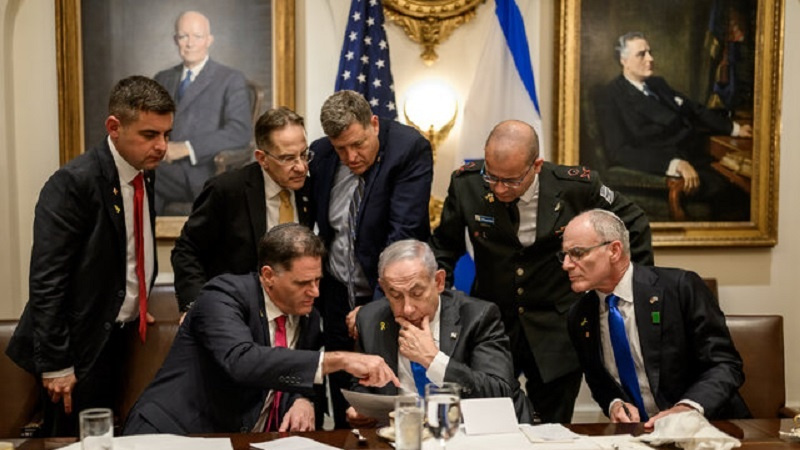
Diplomatic sources have also reported changes made by Benjamin Netanyahu, prime minister of Israel, to the original version of Trump’s plan. These changes include adjusting the timeline for Israeli troop withdrawals and reducing the role of the Palestinian Authority, which has drawn dissatisfaction from Arab countries.
Although countries such as Turkey and Indonesia have expressed readiness to deploy forces, many Arab nations are acting cautiously, as they do not want to be seen as executing Israel’s directives. These countries have made their participation conditional on the establishment of a legitimate political framework for a two-state solution.
The success or failure of the plan appears to hinge on addressing these fundamental challenges, for which there is currently no clear prospect.