Europe’s biggest show on brink of collapse
-
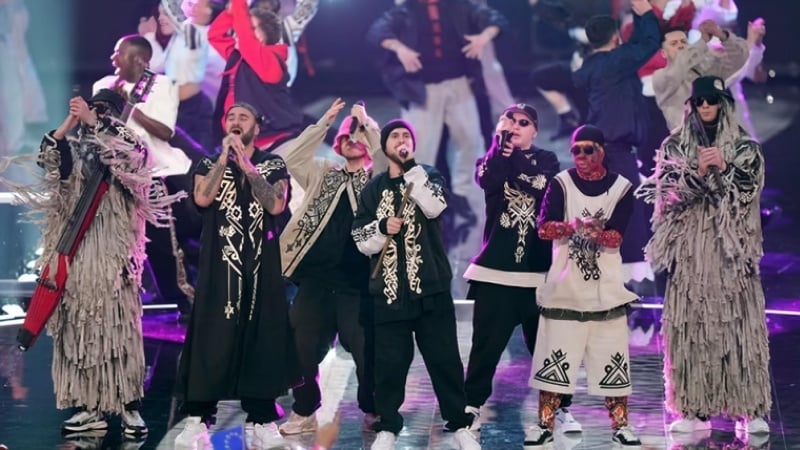
A band performance at the Eurovision Song Contest
Pars Today — Boycotts of Eurovision by Spain, the Netherlands, Ireland, and Slovenia in protest against Israel’s participation now pose a direct threat to the contest’s budget and revenue model—an event that generates hundreds of millions of euros in annual turnover.
The Eurovision Song Contest, long regarded as Europe’s biggest non-sporting television event, is facing one of the most critical moments in its 70-year history—a crisis that, despite the show’s musical and entertaining appearance, has deeply political and economic roots.
According to Pars Today, citing Fars News Agency, the European Broadcasting Union’s decision to allow Israel’s participation, despite war crimes in Gaza and widespread criticism of the regime’s actions, has now backfired on the contest itself, shaking its financial structure in an unprecedented way.
Eurovision holds a status in Europe that goes beyond a singing competition. Public television networks of the member countries of the European Broadcasting Union (EBU) participate in it—meaning the “participants” are not the singers, but the national broadcasters themselves.
Each network contributes a set financial share, which gives them both a role in organizing the contest and the rights to broadcast it and select their country’s representative. In other words, Eurovision is a joint television project among 40 countries, funded through public broadcaster budgets, sponsorships, and the sale of broadcasting rights.
This complex structure means that the withdrawal of several countries, especially major ones, delivers a direct blow to the contest’s financial balance—something that is now unfolding.
The situation began when four European countries—Spain, the Netherlands, Ireland, and Slovenia—announced last Thursday that they would not participate in the next Eurovision due to the European Broadcasting Union’s refusal to remove Israel.
This decision is not only a media shock but also a direct threat to the contest’s budget, as some of these countries are among Eurovision’s largest financial contributors.
Spain alone contributes more than €330,000 annually to the organization of the contest—a sum that, with its withdrawal, will have to be divided among other countries, at a time when many European governments are grappling with budget crises and inflationary pressures.
European media experts have warned that a reduction in participating countries would lead to fewer viewers, fewer sponsors, and a decline in the contest’s advertising value. Eurovision has attracted around 160 million viewers in recent years, but the withdrawal of major countries could reduce this number by millions, directly threatening the contest’s commercial revenues.
However, this crisis is not just a financial issue; at its core, it tells a story of deep political division. Many European broadcasters, particularly in Ireland, have openly stated that continuing to participate in the contest while “Gaza continues to suffer” would be unethical.
Some broadcasters have also accused the organizers of succumbing to political pressure and Israeli lobbying, calling into question the contest’s claimed “neutrality.”
In response, the Israeli regime and the state broadcaster Kan have framed the criticism as “cultural boycott,” claiming that removing Israel would politicize the contest. Many critics, however, argue that Eurovision has been politicized precisely by Israel and its supporters, not by the protesting countries.
Now, concerns have also grown for the next host, Austria. The head of ORF has stated that the withdrawal of several countries imposes a “significant financial burden” and will make managing the contest’s budget even more difficult.