Caracas, latest victim of US repeated policies
-
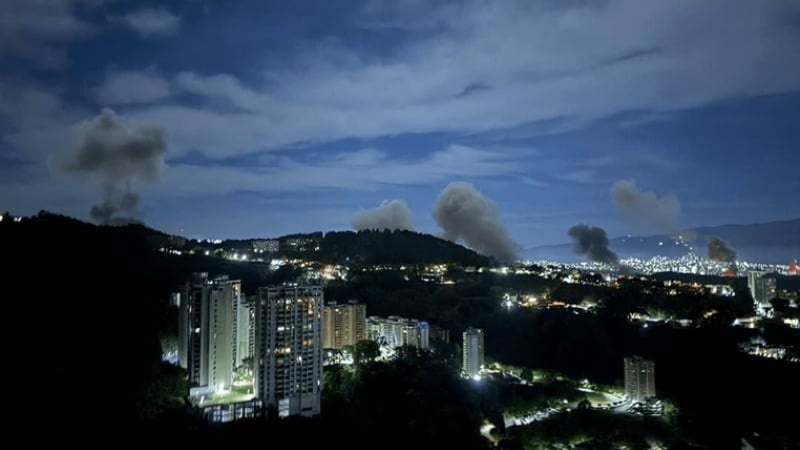
US attack on Venezuela
Pars Today – Maduro’s willingness to negotiate with the U.S. was met less than 24 hours later with a military strike on Caracas—a familiar pattern from Washington.
According to Pars Today, less than 24 hours after Maduro announced that his country’s oil resources were open to the Americans and called for dialogue with the U.S., Caracas was bombed. On Thursday night, many global news agencies reported Maduro’s video message, in which he expressed his readiness to hold talks with the U.S.
In an interview with Venezuela’s state television on Thursday night, he said he was ready to negotiate with the U.S. “at any time and in any place they want.” However, Maduro’s flexibility did not prompt the Americans to sit at the negotiation table; instead, less than 24 hours after his announcement, the U.S. bombed Caracas.
It seems that in this approach, nothing about the U.S. has changed. Anyone willing to negotiate with the U.S. ends up being bombed. Over the past two decades, the U.S. has repeatedly carried out military strikes or bombings after an opposing side showed willingness to negotiate—or even during negotiations with targeted countries.
Libya, 2011: While international negotiations were underway to resolve the internal crisis and facilitate a transfer of power, the U.S. and NATO conducted extensive airstrikes on government bases and military infrastructure, ultimately leading to the fall of Gaddafi’s regime.
Iraq, 2003: Diplomatic negotiations under the UN to inspect weapons and resolve tensions with Saddam Hussein were ongoing, but the U.S. launched a military invasion, starting the Iraq War.
Afghanistan, 2001: Following the September 11 attacks, the U.S. held secret talks with certain groups and regional countries to cooperate against al-Qaeda, while simultaneously conducting large-scale airstrikes on Taliban and al-Qaeda bases.
Syria, 2018: The U.S. and its allies carried out airstrikes on the Syrian government before official negotiations on de-escalation could take place, even while the UN and other parties were mediating.
Iran, 2025: The U.S. and Israel attacked Iran’s nuclear facilities on June 21–22, 2025, while nuclear negotiations between Iran and the U.S. had already completed five rounds, with a sixth round imminent.
And now, in the first days of 2026, the U.S. has set Caracas ablaze to continue this long-standing pattern in international relations. These examples show that negotiating with the U.S. is practically futile—and even harmful—for targeted countries. Historically, the mere mention of “negotiation” has often been interpreted as “preparing for attack.”
This pattern offers a historical lesson for the world: seeking negotiations with the U.S. often means unconditional acceptance of American demands. The global community faces only two choices in the face of U.S. bullying: complete submission or total resistance.