What role saboteurs and terrorists play in Iran unrest
-
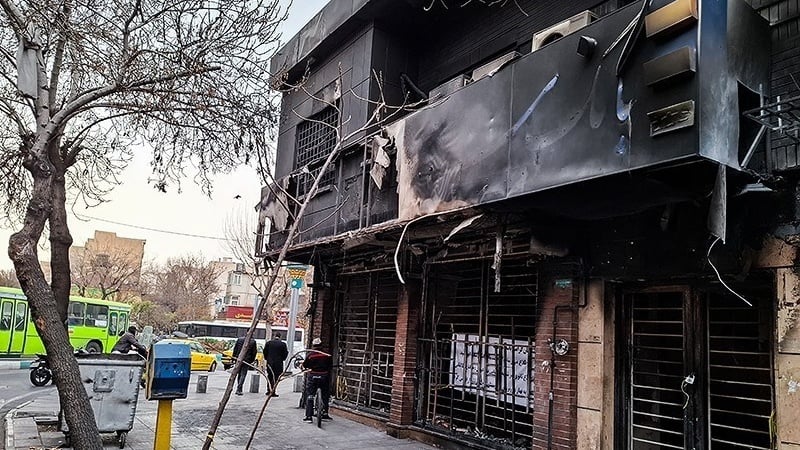
Damages caused by the unrest in Iran
Pars Today – At the same time as economic protests have emerged in Iran, numerous pieces of evidence have been published pointing to the role of saboteur elements and foreign terrorist groups in steering these protests toward violence and insecurity; a role that has shifted the nature of these events from social protest to organized unrest.
Over the past few days, following rising prices in the market, some gatherings and protests have taken place in certain parts of Iran. These were legitimate protests reflecting the Iranian people’s grievances over economic and livelihood conditions, as citizens sought to make their voices heard by officials. Subsequently, protests were seen in various parts of the country, while rioters attempted to endanger public security through disruptive and law-breaking actions.
Security experts and observers have explicitly warned that these actions are part of a multidimensional and organized foreign project, possibly representing the second phase of the Zionist regime’s and the United States’ war against the Iranian people. This project is designed and implemented with the aim of undermining national security, social cohesion, and state authority. Within this framework, saboteur elements and foreign terrorist groups play a key role in diverting protests from their natural and legal course.
Therefore, the recent unrest is being assessed as a form of “hybrid warfare” against Iran. This warfare involves a combination of hard and soft tools that are employed simultaneously and in a coordinated manner. Economic sanctions and livelihood pressure, media and cognitive warfare, cyber and intelligence operations, the exploitation of social and identity fault lines, and on-the-ground destabilization through the use of terrorist elements are among the key components of this “hybrid war.”
The primary objective of these actions is to erode governance capacity, widen the gap between the people and the state, and gradually destabilize the country.
Terrorist, separatist, and hostile groups—largely benefiting from foreign intelligence and media support—play an active operational role during periods of unrest. Their activities include targeted infiltration of protest gatherings, steering demonstrations toward violence and clashes, attacks on security and law enforcement forces, destruction of public property and critical infrastructure, and terrorist acts against Iranian citizens.
These directed actions against the public and public spaces underscore the non-spontaneous and organized nature of the unrest.
One of the key aspects of the role played by foreign actors is the creation and direction of sabotage networks inside the country. Using decentralized and cell-based structures, these networks engage in training methods for confronting security forces, transferring experiences from similar unrest in other countries, instructing on the manufacture and use of destructive tools, and conducting operational coordination through secure communication platforms. This level of preparedness indicates direct foreign backing.
Media outlets and social networks affiliated with hostile currents also function as the media arm of the unrest. Promoting narratives of instability and collapse, distorting or exaggerating events on the ground, spreading fake and inflammatory news, and encouraging the continuation of unrest and violence constitute the core functions of these media platforms.
The Iranian people’s disregard for hostile media and their refusal to go along with unrest-driven projects are the result of deep-rooted social awareness and long historical experience. Iranian society clearly recognizes that these outlets—due to their political and financial dependence on foreign governments—produce one-sided, exaggerated, and crisis-focused narratives. Their aim is not to inform, but to generate discontent, widen social divisions, and destabilize the country.
The Islamic Republic of Iran does not deny the existence of economic, livelihood, and social problems. However, it emphasizes that foreign saboteur elements exploit the people’s genuine demands in an attempt to divert protests from their legal path and turn them into security confrontations.
Foreign saboteur and terrorist elements play a guiding, intensifying, and organized role in the unrest and are considered part of a broader hybrid warfare project against the country. By linking social grievances to violence, insecurity, and psychological warfare, these elements seek to undermine Iran’s national security, social cohesion, and political independence. The Islamic Republic of Iran stresses the distinction between legitimate popular protest and organized, terrorist unrest, and regards confronting the latter as a security and sovereign necessity.