Sacred Defense era (2)
Sep 25, 2019 08:22 UTC
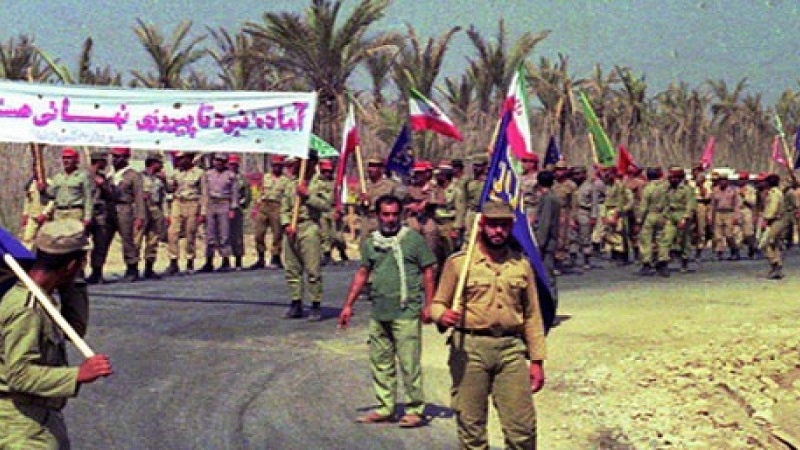
The Iraqi imposed war broke out 19 months after the victory of Iran's Islamic Revolution, based on a premediated plot, with the US greenlight.
Throughout the Iraqi imposed war, the US and European regimes maintained an unwavering support for the former Iraqi Ba'th minority regime, equipping Saddam's troops in the massacre of the innocent Iranian nation. The Western regimes, via their staunch support for the former Iraqi regime paved the ground for the prolongation of the Iraqi imposed war, while endangering the collective regional security via their meddlesome policies. The US and European regimes blatantly encouraged the former Iraqi regime to continue the Iraqi imposed war.
Such sinister coalitions are rooted in the colonial and domineering policies of the West.
The historian and member of Tehran University's academic board, Ibrahim Mottaqi, has studied the historical examples of the US and European regimes' coalitions against the Iranian nation, prior and after the victory of Iran's Islamic Revolution. He notes: In late 19th Century, we are witness to formation of interactions among the then global powers in acting against Iran.
In further remarks, this historian refers to the 1953 coup against Dr. Mohammad Mosaddeq government, noting: This coup set the stage for establishment of new treaties. Iran's membership in regional agreements made a surge in military and security cooperation with the US, inevitable. Within this process, more than 12,000 American missionaries continued their activities in Iran in different military realms until the victory of Iran's Islamic Revolution.
Based on this fact, Iran was an occupied country as of 1953 till 1979. Iran paid for the costs of maintenance of US regional security in West Asia.
In the post-1953 coup era, the US and European regimes paved the way for institutionalization of their power in Iran, confronting the Iranian nation after the victory of Iran's Islamic Revolution.
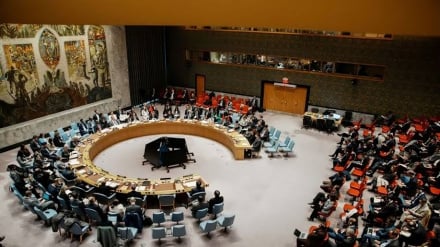
Given these realities, the Iraqi imposed war on the Iranian nation was never slammed by Western regimes. Even the resolutions that were ratified by the UN Security Council, with the exception of Resolution 598, which was accepted by Iran due to its emphasis on identification and announcement of the party which waged the imposed war; reflected an open and evident support of the US and European regimes for the former Iraqi regime.
However, the fate of the imposed war turned out to be in vivid contrast to the initial calculations and assessments of its plotters.
The National Interest Publication, in a report, pinpoints some of the hollow dreams of the US officials on swift and rapid victory in wars, while reminding that mankind's history has been witness to numerous wars, which were wrongly supposed to reach a rapid and easy conclusion in the view of the political leading figures and the public opinion.
The Leader of Islamic Revolution and the Islamic Republic of Iran's Armed Forces Commander-in-Chief, Ayatollah Seyed Ali Khamenei, in his keynote remarks in an address to the commanders and officials of Islamic Republic of Iran Army's Navy, referred to the wide-scale coalition of enemies and rivals against the Islamic Republic of Iran, reminding that: "The Islamic Republic of Iran has no intention of waging a war against anyone, however it should boost its abilities and capacities to an extent that the enemy would not dare to attack Iran."
Formation of a bilateral military pact similar to NATO, which according to Wall Street Journal includes Egypt, Jordan, Saudi regime, and United Arab Emirates; in fact, marks the continuation of the previous US policies. The main goal behind establishment of such coalitions is to impose crises, and, if possible, an imposed war, and to ultimately commercialize crises in the region, which in the past decades has resulted in sale of hundreds of billions of dollars, worth of weapons, to Persian Gulf littoral Arab states.
The incumbent US president, Donald Trump, has on several occasions, has pointed out that if Arab regimes, including the Saudi regime, want security, they should afford its costs. These approaches show that Trump; in addition to selling weapons, has counted on the revenues resulting from the American-style commercialization of security. Several media outlets have pointed out that Trump acts like a commercial dealer, taking advantage of the baseless Iranophobia campaign as a means to blackmail Arab regimes, and to immerse them in tribal wars.
In the meantime, a senior aide to three former US presidents, in an article in American Conservative Publication, notes: A US war against Iran could destroy Donald Trump's presidency.
Furthermore, a well-known retired American admiral notes: If Iran choose the path of war, it will act highly effectively. In fact, military-wise, Iran maintains highly powerful capacities, especially in asymmetrical war. Cyberattacks, tactical speedboats, submarines, especial forces, and surface-to-surface cruise missiles are part of the advanced equipment of Iran. Iranian forces are also highly seasoned and skilled in usage of these equipment in West Asia.
An acclaimed Arab author and analyst reminds that the real goal behind this coalition is not to declare war against Iran. the real aim is in fact to take advantage of the so-called threat posed by Iran for complete normalization of relations of Arab countries with the usurper Zionist regime, and to plunder the remaining wealth of the Persian Gulf littoral states in order to finance the infrastructural projects of the US, which Trump had promised in his election campaign.
Meanwhile, the Islamic Republic of Iran is vigilantly monitoring US moves, while putting emphasis on its transparent stances in security and military arenas, and will never allow US to stir tension.
MR/ME
Tags