Homage to the Sage of the Age
Jun 03, 2016 04:50 UTC
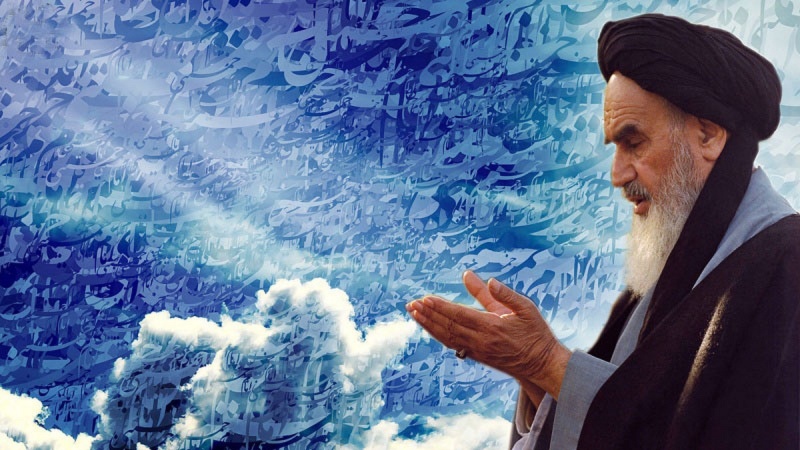
Today, Friday, June 3, the rendezvous of the faithful is the mausoleum of the Father of the Islamic Revolution. It is the 27th anniversary of the passing away of Imam Khomeini (God bless him) and as usual, millions of devotees, including have converged since the early morning hours at his resting place, to pay tributes to him, to reaffirm allegiance to his ideals, and to demonstrate to the world that the path charted out for Iran by that Sage of Age proceeds with full force.
The commemoration ceremony, attended by scores of foreign dignitaries, is being covered by journalists from all over the world, who have streamed into Tehran. The main speaker at the ceremonies is the present Leader of the Islamic Revolution, Ayatollah Seyyed Ali Khamenei.
Without the least doubt, Iran owes its might, its atmosphere of freedom, its peace and security, its cultural and political influence on the region and beyond, its technological and scientific progress in various fields, its mastering of the nuclear fuel cycle, its self-sufficiency in defence, its venture into outer space, and its steadfastness against the plots of Global Arrogance, to the Founder of the Islamic Republic. Seyyed Ruhollah Musavi Khomeini (RA) was indeed a man who was larger than life, both in his lifetime and 27 years later today, although, he is no longer physically present in our midst. The fact that this year the anniversary of his departure for his heavenly abode occurred 12 days after the blessed birthday of the Lord of the Age, Imam Mahdi (AS), the 12th and Last Infallible Successor of Prophet Mohammad (SAWA), whose promised reappearance the faithful are all eagerly awaiting for establishment of the global government of peace, prosperity, and justice; and for whose cause the Father of the Islamic Revolution relentlessly strove, is yet another proof of his dynamism in setting up the Islamic Republic system of government in Iran for arousing the conscience of the modern for confronting tyrants and their unjust world order. This makes us recall the famous hadith mentioned in “Bihar al-Anwaar” the Hadith Encyclopedia, from Imam Musa al-Kazem (AS):
“A man from Qom will rise and invite people towards truth. Around him will gather people like slabs of iron (of iron-resolve), who will stand firm against strong winds and storms, and will never get tired of war. They know not fear and have trust in Allah. The outcome is for the pious.”
A study of this statement expressed over a millennium and two centuries ago by an Infallible Imam, shows that no such event had occurred in the Iranian city of Qom throughout all these centuries until the year 1963 when a venerable jurisprudent raised his voice against the Godless Pahlavi regime that was installed by the British and backed to the hilt by the Americans in order to keep the Muslim nation of Iran in thrall. True to the words of this hadith, if the despots and the hegemonic powers quaked at the uprising of this man of God from Qom and put him under detention, the seekers of truth responded to his call and rallied to his side, forcing the fearful regime to release him from prison and exile him to Turkey and Iraq. The loyal masses of Iran never for a moment desisted from expressing support for their Beloved Leader and in the years 1978-79 rewrote his history by flocking to the streets in millions and bare-handedly defeating the armed-to-the-teeth regime. They then gathered in millions to welcome him home from 15 years of exile, and like slabs of iron stood beside him – never tired of war – when the US imposed on Iran the 8-year (1980-88) through its agent, Saddam of the tyrannical Ba’th minority regime of Baghdad. When he departed from the mortal world on 4th June 1989, tens of millions of Iranians bid him a fitting farewell, and since them have continued to gather in huge numbers every year at his mausoleum to renew allegiance to his ideals.
This was Seyyed Ruhollah Musavi Khomeini, who was a descendant of Imam Musa Kazem (AS), and had reached the status of ijtehad, earning the title “Ayatollah”, because of his erudite learning, wisdom and prudence that covered political developments as well. Subsequently, on the triumph of the Islamic Revolution, a grateful nation gave him the honorific title of “Imam” or Leader that should not be confused with the divinely-designated 12 Infallible Imams of the Prophet’s Household, whose loyal servant he was.
This humble scholar of the School of the Prophet’s Ahl al-Bayt put into practice the heritage of Islamic learning and strove to enlighten mankind with higher humanitarian ideals which are conspicuously absent in bodies and souls burdened with animal instincts and traits. This was where the iconoclast came into open conflict with the materialistic West, especially with the US, the ‘Great Satan’ and its blinkered vision of life and culture.
Here was Imam Khomeini and his followers of iron-resolve frustrating every sinister plot to tarnish the image of Islam that devilish minds could conceive. The man who foresaw the doom of communism and whose dynamic decree hangs like the Sword of Damocles on the head of apostasy, also spoke of his views on economy, politics, arts, industry, culture, science and religion, all of which function as an integrated whole in human life. Iran may not yet have reached the ideal stage of a truly Islamic state as desired by him, but the change he wrought has been positively profound, and in accordance with the principles of Shari’ah.
Among the dynamic steps he took was uplifting of the status of women, restoring to them their dignity which the Pahlavi regime had brutally trampled upon by exposing their delicate feminine features to the plots and brazen attacks of depraved western culture. He focused on Islamic Solidarity by building the bridge of Islamic Unity Week to span the 12th and 17th of the month of Rabi al-Awwal – the two days regarded by the Sunni and Shi’ites respectively as the birth anniversary of Prophet Mohammad (SAWA). He declared the last Friday of the fasting month of Ramadhan as World Qods Day in order to garner support for Islam’s first Qiblah, that is, Bayt ol-Moqaddas which is under Zionist occupation. Perhaps, one of the most brilliant measures of Imam Khomeini was the concept of Wilayat-e Faqíh or the Governance of the Supreme Jurisprudent in the physical absence of the Imam of the Age (may God hasten his reappearance). As the person who lived and breathed Islam, as is evident from his words, deeds and writings, he went on to state that the qualified ruler must also possess excellence in morals and belief, he must be just and untainted by major sins. Anyone who wishes to enact the penalties provided by Islam, to supervise the public treasury and the income and expenditures of the state must not be a sinner. Furthermore, he should not be ignorant and unaware of the law, lest in his ignorance he misleads the people. Nor must he fear world states so that he seeks the friendship of some and treats others with enmity. Imam Khomeini proceeded to give perfection to these rudiments of the rule of the righteous, as the concept of Wilayat-e Faqih, on the basis of his conviction that authority in state matters was not the prerogative of the infirm in faith, the unprincipled, the immoral and the unjust. He firmly believed in hadith that “the fuqahà’ are the heirs of Prophets”, and thus in the absence of the 12th Infallible Imam (may God hasten his reappearance), it was the duty of the just “fuqaha” or the most able of them all, to administer state and social affairs according to the Book of God and the Sunnah of the Prophet.
AS/MG
Tags