Neyshābūr, Iran Book Capital City
Jun 07, 2016 06:14 UTC
The acclaimed and famed Iranian author and historian, Abul-Fazl Baihaqi, has noted that books are the best of companions. Whenever your friends leave you, you can start reading a book. Books never reveal your secrets and you can acquire knowledge and attain goodness by reading books.
On November 2014, the Ministry of Culture and Islamic Guidance presented a plan for selection of Iran’s book hub for the first time. The goal of this plan was cultural development, promotion of book reading, collection of innovative recommendations, and appealing and popular plans in this field.
Meanwhile, every year, United Nations Educational, Scientific and Cultural Organization (UNESCO) chooses the World Book Capital, naming a city which has made noticeable and significant efforts to reinforce the status of books, and book reading. Each World Book Capital City earns this title as of April 23, which marks the Global Book Day, till April 22, next year. On this basis, the World Book Capital Cities have been chosen every year as of the year 2001.
In the national plan for selection of Iran’s book capital, a city is chosen based on its merits, and activities that it has carried out for promotion of books and book reading. One of the goals of this project is to boost book reading and to assess the capacities and potentials of Iranian cities in the field of books. In the first round of this contest, many cities, with rich cultural and historical backgrounds, took part and finally the city of Ahwaz was elected as Iran’s Book Capital City in the year 2015.
In the second round of this national contest, the city of Neyshābūr was selected as Iran’s Book Capital City, with the cities of Bushehr and Shiraz respectively holding the second and third spots.
A hundred cities had participated in the second round of this national contest. Upon the assessments of the board of arbitrators, fifteen cities entered the final phase, and ultimately the city of Nayshapour earned the title of Iran Book Capital City.
Neyshābūr has earned this title due to preparation and presentation of innovative, collective, effective and uniformed plans; focus on the cultural background and utilization of the capacities of the private sector, non-governmental organizations, industries, and sports and cultural centers. In the first round of this contest which was staged last year, this city was ranked second nationwide.
In the current year, the superior villages in the field of book reading were also chosen and introduced. The awards which are granted to these cities and villages include a series of measures for promotion of book reading, and development of the related infrastructures. Meanwhile, ten villages were praised, receiving plaques of honor and awards.
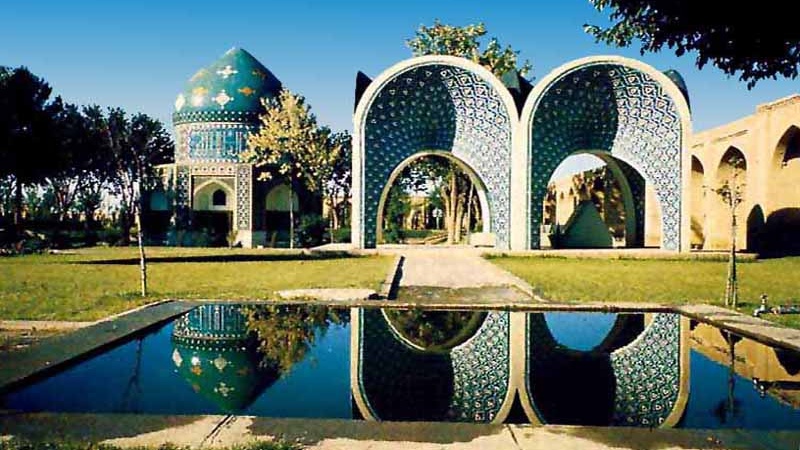
Neyshābūr is an important city and the largest city of Greater Khorasan, after the holy city of Mashhad. It is situated in eastern Iran. It is one of the cultural, tourism, industrial and historical hubs in northeastern Iran, whose history remains partly unknown.
In accordance to ancient writings, this city maintained an especial cultural, artistic, and commercial status in 3rd Millennium BC.
This city has seen its share of ups and downs throughout the course of history and has always captured the attention of a number of ethnicities, given its distinguished geographical position, fertile land, and appropriate climate. The identity of the ethnicities which settled in this region, prior to entry of Aryans, remains unknown. However, upon the arrival of Aryans to Iran, some of them settled down in Khorasan and Neyshābūr, making utmost efforts to develop this region. These ethnicities did not blend with their neighboring ethnicities, prior to rule of Islam over this region. However, later on, the especial position of Neyshābūr caught the attention of Arabs; some of which took up residence in this city.
This city was conquered by Muslims in the year 31AH. In the early years of 3rd Century AH, Neyshābūr was chosen as the capital of Taherian Dynasty. In the years 548 AH and 618 AH, the city was razed to the ground by the raiding Mongol forces. In the Ilkhanid era, it was rebuilt. However, this region was jolted in a massive, destructive earthquake in the year 808 AH.
This region has been witness to clashes of thoughts, and disputes, which has led to the cultural enrichment of this city in different phases of history. Twenty-seven out of thirty-third initial schools and universities of the World of Islam have been founded in this city. In 4th and 5th Centuries AH, this city has seen the emergence of some branches of mysticism in the Islamic world. Also, Neyshābūr has been home to 4300 prominent scientific and cultural figures up until the 6th Century AH. Poets such as Attar and Khayyam have risen to fame from this city.
Meanwhile, researchers and historians opine that Neyshābūr has played a highly decisive role in the domains of culture and science throughout Iran’s history.
The contemporary author and researcher, Dr. Mohammad Ali Eslami Nadoushan, notes: In the post-Islamic era, Neyshābūr maintains an especial status in Iran. It is situated on a vast, fertile plain, on the glorious foothills of Binaaloud Mountain, at a short distance from the city of Tous.
It should be said that Neyshābūr remains alive and dynamic like the previous centuries.
UNESCO chose Nayshapour as Iran’s scientific capital since the year 2005 for a period of five years. In the year 2010, UNESCO named Neyshābūr as the most sustainable city in Iran’s history.
Given the noticeable natural, spiritual and cultural aspects of this city, and its distinguished geographical position, Neyshābūr has captured the attention of many. This city’s fame has compelled many oriental scholars to admire and adore Neyshābūr.
MR/SS
Tags