Art in the light of Islamic Revolution (4)
Feb 04, 2018 11:46 UTC
The main elements of the art of the Islamic Revolution can be examined in two categories of conceptual elements and aesthetic elements.
In the name of God. The art of the Islamic Revolution, on one hand, comprises the heavens (metaphysics) and; on the other hand, contains of the earth (physics and terrestrial matters). It has created an aesthetic form to materialize both spheres.
The main elements of the art of the Islamic Revolution can be examined in two categories of conceptual elements and aesthetic elements. Conceptual elements form the content of the work separate from the method of touching and expressing it. These elements include political, social and psychological factors which spring from the epics of revolution and the sacred defence which are in turn intertwined with historical and religious factors emanating from the beliefs deeply rooted in the hearts of the Iranian people.
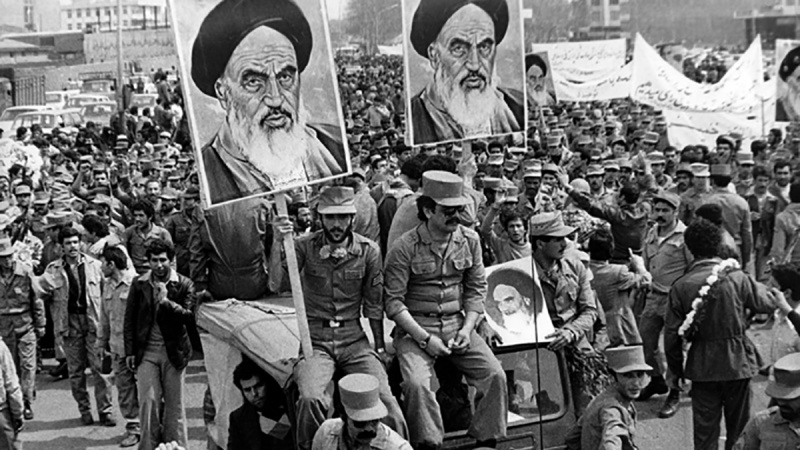
The events that were effective in the shaping and victory of the revolution and the epic scenes of the war can be seen amply in the works of artists after the Islamic Revolution. It should be noted that the unique personality of Imam Khomeini and his unmatched leadership was the main element that the artists paid attention to and illustrated in their works. The relationship of the Imam with the revolutionaries and the people had an especial status among artists.
As a continuation of the revolution and a new stage of it, the 8-year holy defence was a source of artistic works, too. The 8-year war imposed by the US through its stooge, Saddam, drew the attention of artists as they found an unbounded ocean of epical scenes to portray in these works. Art of the Islamic Revolution is a kind of artistic school which is not fully compatible with any other school. The main source of this art is Islam.
In the Islamic art, the material world is a sign and guide to the Hidden and Unseen world. This view, which had been taken from the principles of Islam, had existed in the Iranian art during the past centuries. However, it flourished in a new form after the Islamic Revolution. This belief was shaped in the visual and dramatic arts through the usage of material elements and creation of a metaphysical atmosphere with the help of light, shade, colour, tinges of colour, perspective and so on. Furthermore, in other arts such as cinema which is much younger than arts like painting or architecture, valuable experiences were gained and new patterns were presented by cinematographers and filmmakers. The experiences of Iranian filmmakers and actors were more welcomed by lovers of art and cinema-goers. This trend attracted audiences from across the world, too.
The unparalleled epic of Ashura and the heroes of the first years of Islam have always been the sources of inspiration for Iranian artists. The name of Imam Hussein, Hazrat Abul Fazl, Lady Zeinab and to lesser extent other personalities of Karbala have always been mentioned in the works of poets and myriads of poems and artistic works have been created on them through centuries. Imam Mahdi (May God expedite his reappearance) has also been a source of inspiration as he will come to cleanse the earth from oppression and establish the global government of justice.
The point to note is that, unlike the western art which focuses on the material and earthly aspect of human being and other events, the Islamic art and the art of the Islamic Revolution concentrate on supernatural and metaphysical aspect of human being and events. The ultimate goal and usage of western art, for the most part, is to gain carnal desire and satisfy his base inclinations. This, while the Islamic art invites toward sublimity and lofty virtues rather than restricting man in the worldly pleasures.
Moral issues constitute an essential part of the art of Islamic Revolution. This means that the artist is duty-bound to approach immoral issues like corruption, crime, theft, etc. with much precision and delicacy. That is, the artist applies symbolic elements and doesn't express immoral scenes or subjects explicitly. This is in sheer contrast with the western art in which the most erotic matters are shown and expressed as "art". As Imam Khomeini said, "Art is to breathe the spirit of commitment into the corpse of human beings".
Therefore, art should be committed to human beings and should never keep silent against oppression, corruption, ignorance, backwardness and so on.
RM/EA
Tags