40th anniversary of Imam Musa Sadr's abduction (2)
Sep 01, 2018 05:22 UTC
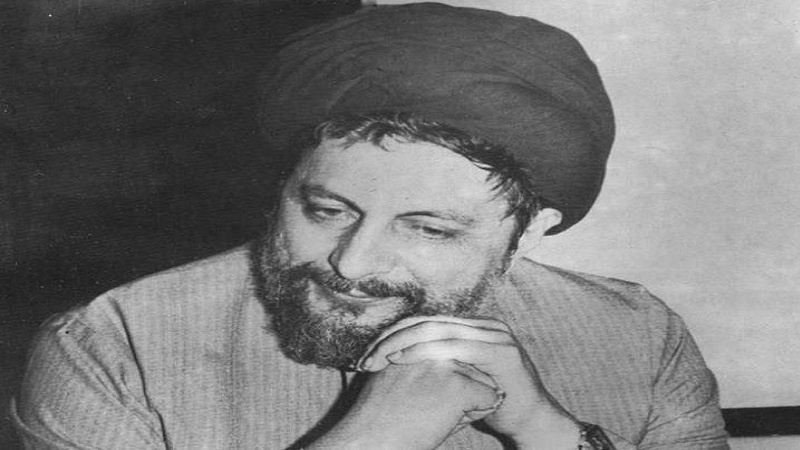
Welcome to the second and last part of our program. Today we'll discuss the second chapter of the life of Imam Musa Sadr and his views and plans to promote the position of Lebanese Shias and co-existence among followers of various schools in this small and multi-cultural and multi-ethnic country.
In the previous program we talked about the first chapter of Imam Musa Sadr’s life. He studied Islamic sciences at the seminaries of Qom and Najaf under the prominent scholars of these two Islamic centers. He also studied at Tehran University and graduated from there in economics. Imam Musa Sadr never limited his life to scientific activities. Therefore, he was very active in various political, social and cultural fields. He was the first editor of Matkab-e Islam (the School of Islam) magazine. Traveling to different Islamic countries, he saw the dire conditions of those countries and was concerned about unity and solidarity of Muslims. The same concern led him to Lebanon. Prior to his migration to Lebanon in 1959, Imam Musa Sadr had gone twice to this country and became aware of the disastrous situation of the Lebanese Shias. Imam Musa Sadr, with this awareness, migrated to Lebanon at the age of 31 on the recommendation of religious leaders such as Grand Ayatollah Borujerdi. In this way, the second chapter of the life of this great revolutionary clergyman began in Lebanon.
The main goal of Imam Musa Sadr in Lebanon was to improve the political conditions of the Shias and promote their position in Lebanon's political, economic, cultural and social spheres. But he never sought to promote the position of Shias through competition and marginalizing the followers of other religions or religious sects. In the first days of his arrival in Lebanon in the winter of 1959, he laid the foundations for friendly and sincere relations with the leaders of the Christian and Sunni communities through the slogan "Dialogue, Understanding and Coexistence".
During the two decades of the presence in Lebanon until his disappearance on August 31, 1978, there was no gathering of Shias on various occasions was attended by Imam Musa Sadr unless some of the leaders or figures of different Christian sects and Sunnis accompanied him. In the early summer of 1962, the support of Imam Musa Sadr for the Christian ice-cream seller attracted the attention of all Lebanese Christian circles in the city of Tyre. Imam Musa Sadr, with this act, issued a decree on the purity of people of the book and provided grounds for greater closeness between Muslims and Christians. Following this in the late summer of 1962, "Matran Grigwar Haddad", a Christian leader in Lebanon, came to Tyre and invited Imam Musa Sadr to join the board of trustees of Social Movement. Since early 1963, Imam Musa Sadr's began widely attending the churches and religious-cultural communities of Christians. His historical lectures in Deir-al Mokhles in the south and Marmarun church in the north of Lebanon in 1962 and 1963 had profound spiritual effects on the Christians of the country.
In the summer of 1963, during a two-month trip to North African countries, Imam Musa Sadr launched a new plan for cooperation of the Islamic centers of Egypt, Algeria and Morocco with the Shia theological schools of Lebanon. In the spring of 1965, he launched the first round of the Dialogue between Islam and Christianity at the Cultural Institute of “Al-Nadwa Al-Lobnaniya” with the participation of the great figures of the two religions. After the six-day Israeli-Arab war in 1967, Imam Musa Sadr met with the Pope. The meeting was supposed to take half an hour but it extended for more than two hours at the request of the Pope. Imam Musa Sadr joined the Center of Islamic Studies in Strasbourg from 1968. In the spring of 1969, immediately after the opening of the Shia Islamic Supreme Council, invited Sheikh Hassan Khalid, the Sunni Mufti of Lebanon, to think together for the unity of rituals, festivals and social activities of Islamic sects and Muslim tribes. In this regard, he presented the legal plan to the 1970 Conference of the Islamic Assembly in Cairo, and subsequently became a permanent member of the Assembly.
In 1970, Imam Musa Sadr gathered the religious leaders of Muslims and Christians in South Lebanon within the framework of the "Southern Defense Committee" in order to think on a solution for the Israeli aggression.
In the winter of 1973, in an unprecedented effort, he delivered sermons of Eid al-Fitr in the presence of top Christian leaders at St. Louis Capuchin church in Beirut; and, had there not been the fear of flare-up of civil war, he would have invited the Lebanese Maronite Cardinal to deliver sermons of one of the Friday prayers in Beirut. In the winter of 1975, at the gathering of editors of Beirut newspapers, with a clear prediction of the removal of distances and the trend of globalization in the late 20th century, Imam Musa Sadr called the 21st century the century of co-existence among the followers of various religions, sects, cultures, and civilizations and stressed Lebanon's mission to present a successful model in this regard.
Imam Musa Sadr's practical behavior during 20 years in Lebanon was an indicative of close relationship between Christians and Muslims. That a Shia mujtahid can be trusted by the pope and the bishops, while sticking to all Islamic red lines, was a successful model in the field of interfaith proximity. Many thinkers who have taken big strides in this field have rather failed to properly combine these two goals. In order to attain that position, we must identify the cognitive foundations underlying all activities of proximity; thereby achieve a correct pattern.
Imam Musa Sadr viewed the universe as an interconnected, harmonious and consistent being; hence, he always stepped in the direction of convergence of the people who themselves were part of this being.
In the thought of Imam Musa Sadr, religion is one. Although each person enters it from a particular path he does not consider these paths as factors of discord. The basis of every religion is God and cognizance of God; and the Sharia, injunctions, and other teachings, even the faith in the prophets are all subdivisions to the faith in God. The human being, seen by Imam Musa Sadr through the eyes of religion, is not a Muslim or a Christian, but a man without Islam and Christianity. He regards people as equal with respect to their humanity.
The noteworthy point in the religious view of Imam Musa Sadr is that he never considered differences as a problem or disaster. He rather deemed differences of opinion as important factors for movement and emergence of inherent talents. Accordingly, he did not consider approaching Christians as something to be denounced, but a means of getting closer to God. He maintained that one should serve human beings both Christians or Muslims. Therefore, he viewed the proximity of Muslims and Christians as an inevitable concept. Imam Musa Sadr's perception of Islam and Shia culture in Lebanon fascinated not only Sunnis but also Christians and priests. The great Christian thinker and author of Lebanon George Jordac said to Imam Musa Sadr: "This Shia culture that you are showing, if everyone had presented it like you, there would have remained no trace of Sunni sect and Christianity in this country. This culture with these features is acceptable to all people."
Imam Musa Sadr stresses the general meaning of Islam and describes Islam in a way that embraces the religion of Christianity. He regards the two divine religions of Christianity and Islam on the same path because their God is the same, their Prophets attended common fronts, the essence of their revolution is the same, and the origin and destination of the two religions are the same. He believes that recognizing the reality of religion leads to the realization of religious coexistence.
The enemies of Islam believed the presence of Imam Musa Sadr with these lofty thoughts on the followers of various religions as a threat to their illegal interests in Lebanon. Thus, they did not endure this great reformer to carry out his lofty thoughts in Lebanon. However, the thoughts and ideals of Imam Musa Sadr remain as a roadmap not only for different religions and sects in Lebanon but also for the entire humanity to coexist peacefully and abandon racist and religious bigotries or fake phobias like Islamophobia and so on.
FK/RM/ME
Tags