UK-Based Anti-Iranian TV Channel's Links to Saudi Arabia
Nov 17, 2018 17:26 UTC
Startling facts are emerging about the connections between Saudi Arabia and the American and British funded Persian language channels in the US and UK engaged in a disinformation campaign against the Islamic Republic and the Iranian people.
Here is a report in this regard by Saeed Kamali Dehqan titled: “UK-Based Anti-Iranian TV Channel's Links to Saudi Arabia.”
A UK-based Persian language Channel, deceptively called ‘Iranian TV Station’ is being funded through a secretive offshore entity and a company whose director is a Saudi Arabian businessman with close links to the Saudi Heir Apparent Mohamed bin Salman (MBS).
These disclosures by the British newspaper ‘Guardian’ are likely to raise concerns about the editorial independence of the self-styled ‘Iran International’, and comes at a time of growing fears about a number of Saudi-linked stations operating across London.
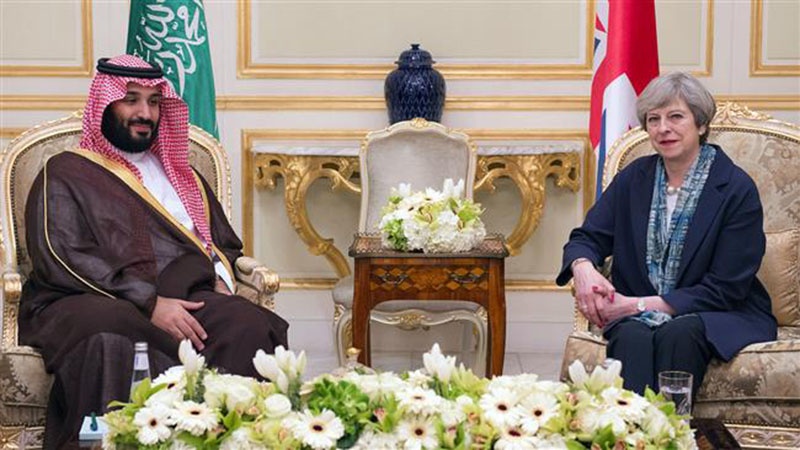
A source has told the Guardian that MBS, who is widely believed to be responsible for the murder of the journalist Jamal Khashoggi, is the force behind ‘Iran International’. The station, which is operating out of Chiswick, has not denied claims that it receives its funding from the Saudi court.
The so-called ‘Iran International TV’ emerged abruptly on the London media scene last year; many of the 100-strong staff network were offered generous salaries, often double what rivals paid, but was elusive about its source of funding.
London has become a hub of such anti-Iranian channels, which include BBC’s Persian service and Manoto TV.
The source claimed Saud al-Qahtani, the information tsar of MBS, who was among two senior officials removed in connection with the Khashoggi affair, was involved in the funding behind ‘Iran International TV’.
The source said: “You could have a larger picture about how those kids [Saudi media moguls] with that money being thrown around [by MBS] trying to change the world by buying media … It is money coming from the royal court,”
While Saudi Arabia shows zero tolerance for criticism of its absolute British-created monarchy, as underlined by Khashoggi’s murder, it is setting up media organisations in other languages promoting free speech, particularly about the Islamic Republic of Iran.
Eskandar Sadeqi-Boroujerdi, a postdoctoral research fellow in modern Iranian history at the University of Oxford, said: “It appears that Iran International is part and parcel of the Saudi Heir Apparent’s decision to take a more aggressive posture against Iran, emboldened, no doubt, by the Trump administration.”
Employing a wide range of Iranian anti-revolutionaries ready to sell their homeland, Iran International has not disclosed any Saudi Arabian funding links to its staff, potentially putting their families at risk.
One insider said: “I can say that Iran International TV has turned into a platform for ethnic partisanship and sectarianism.”
Earlier this summer, the station was criticised for airing extensive live coverage of a rally by the MKO terrorists, a cult-like outfit that espouses change of government in Iran and has links to Saudi Arabia.
Senior Trump administration officials, including John Bolton, are advocates of the group, which was listed as a terrorist group in the US until 2012, and whose members are called hypocrites in Iran for their siding with Saddam of the repressive Ba’th minority regime of Baghdad during the 8-year war that the US imposed on the Islamic Republic in the 1980s.
The insider claimed the editorial content of the station had been influenced by its secret investors who were hidden behind an offshore Cayman Islands company. The MKO coverage, the insider said, was one such example.
Ofcom has recently scrutinised Iran International for giving airtime to the spokesperson of a group that praised a terrorist attack in Iran last month.
Volant Media, the company that runs Iran International, has a director named Adel Abdul-Karim, who is a Saudi national. He has had a long working relationship with well-connected Saudi executives, some of who have links to the court in Riyadh, including Abdur-Rahman ar-Rashed, who sits on the board of Saudi Research and Marketing Group (SRMG), the largest publishing company in West Asia.
Multiple sources claim Rashed, who is the former general manager of the Saudi-owned news channel Al Arabiya, was also involved in the operations and funding behind Iran International.
Nabeel al-Khatib, a consultant working with Iran International, has been described by its editors to staff as supervisor of the station or representative of the investors. It has been claimed Iran International editors have used Khatib’s Palestinian nationality to remain evasive about the channel’s Saudi funding.
The Guardian newspaper has seen leaked documents that suggest he raised questions and offered input into Iran International’s coverage of human rights in Saudi Arabia, as well as suggesting certain story ideas, particularly related to Iran and Saudi Arabia.
Last month, Khatib emerged as Bloomberg Asharq project director in a deal signed between Bloomberg and SRMG.
According to one source, Saudi Arabia gave $250 million in funding to help the launch of Iran International, which runs no commercial advertising. The source did not give a timeframe, but a scrutiny of its office’s rent and employee salaries points to an initial five-year period – $50 million per year. Volant Media lost 34 million dollars in 2017, according to accounts filed on 4 October.
Rob Beynon, the acting head of the anti-Iranian television station, did not deny that funding for it came from the Saudi court.
AS/SS
Tags