Moderate Saudi? That's an Oxymoron
Dec 15, 2017 17:16 UTC
Scientists do all kinds of experiments with mice in the laboratory. In one particular case, a mouse is placed in a wheel. As the mouse attempts to climb out, the wheel begins to turn. The faster the mouse runs, the faster the wheel spins and the mouse stays at the same spot exhausting itself in the process.
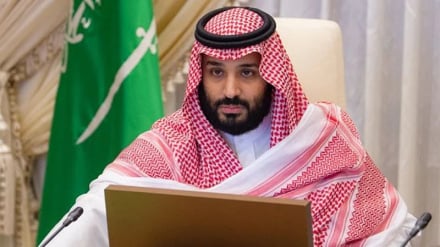
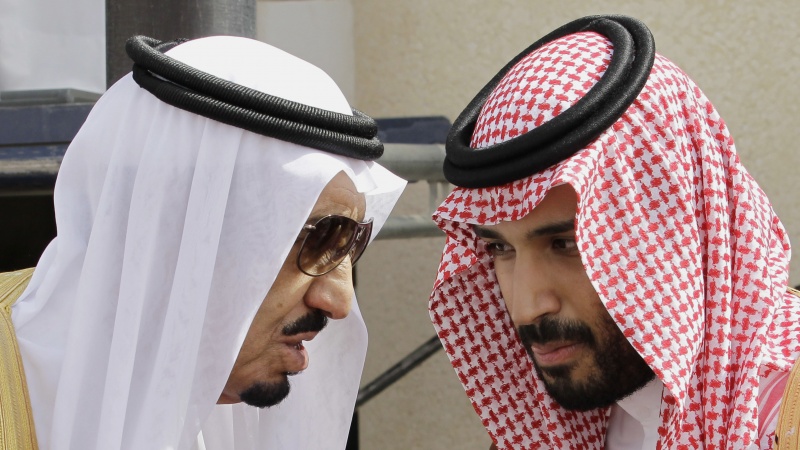
Saudi Crown Prince Muhammad bin Salman’s plight is something akin to that of the laboratory mouse. He keeps throwing up harebrained ideas that go nowhere because there is no thinking behind them. Using high-sounding titles — Vision 2030, Future Investment Initiative, the NEOM megacity as the Saudis’ own Silicon Valley — may appear impressive but how to implement them is the multi-billion-dollar question.
Experts are skeptical about the NEOM megacity project. “The initiative is overambitious, involves immense execution risks, and will not help effectively address employment challenges,” the analysis firm Eurasia Group was quoted by the French news agency AFP on October 29. “Saudi Arabia’s continual roll-out of new initiatives and investment plans… conveys the image of dynamism. However, the government does not have the capacity to carry out multiple ambitious programs.”
More scorn was hurled by the research firm Capital Economics that said in its report that the Kingdom has “poor form” when it comes to implementing large-scale projects. The King ‘Abdullah Economic City near Jeddah that was supposed to rival Dubai as a trading hub is a prime example. Capital Economics’ report says, ‘Abdullah is long dead and buried but the project that carries his name has been dogged by repeated delays'.
Aside from the need to diversify Saudi regime’s economy by reducing dependence on oil — a sensible approach — what really has prompted Bin Salman to announce these megaprojects? These will go hand in hand with an entertainment city in Riyadh — the Saudi version of Walt Disney — and the Red Sea resort where everything will be permissible (no restrictions on dress, drinking, dancing, gambling, — the works).
Bin Salman’s message is directed to Westerners. Bin Salman is sending the message that they need not worry. He wants to turn parts of “Saudi” Arabia into Dubai City, albeit several decades late.
The seven-star hotels with a satanic clock tower in Mecca or the equally expensive hotels in Medina have a small client base among Muslims. Only a miniscule percentage of the 1.8 billion Muslims can afford such exorbitant prices, hence the need to appeal to Westerners and their tastes.
Of the three projects, it is safe to assume that the Red Sea beach resort would be the most “successful.” Would Saudi citizens be permitted to visit the resort? What about citizens of other Muslim countries?
Quite aside from the financial non-viability of Bin Salman’s mega-projects, there is likely to be strong pushback from the religious establishment. Most regimes in the Muslim world would be able to ride out such a storm — Tunisia, Morocco, and Egypt already has such beaches — but not Ale Saud. Here is why.
There is a compact between Ale Saud and the Wahhabi zealots that forms the basis for the establishment of the “Kingdom of Saudi Arabia.” This compact dates back to 1744 when the lay preacher and zealot Muhammad ibn Abdul-Wahhab and Muhammad ibn Saud, a petty clan leader, struck an agreement in Dir‘iyah, north of present-day Riyadh. Under the deal, Ale Saud would deal with temporal affairs while religious matters would be left to the heirs of Abdul-Wahhab (to be known as Al al-Sheikh).
This combination has proved disastrous not only for inhabitants of the Arabian Peninsula but also for Muslims worldwide. Their first eruption from Dir‘iyah toward Mecca and Medina occurred in 1802 but the Ottoman governor Muhammad Ali and his son Ibrahim Pasha drove the Saudi-Wahhabi hordes out of Mecca and Medina. In 1819, Ibrahim Pasha besieged Dir‘iyah as well and after defeating the Wahhabis, his forces razed it to the ground.
The Wahhabi zealots moved down the Wadi Hanifah to Riyadh to build their second “state” only to lose that also in 1891 to Banu Rashid from Ha’il. In 1902, Ale Saud, now led by Abdul-Aziz ibn Saud erupted again and in a series of deadly attacks carried out stealthily at night with the help of British colonialism, defeated Banu Rashid.
Even with such success — and the ubiquitous practice of attacking and robbing caravans, whether of pilgrims or traders — Abdul-Aziz was still a petty clan chief, and one among many in the Arabian Peninsula. To be successful, he needed foreign backing. The Turks were out since they were supporting Banu Rashid. Learning from the experience of Banu Mubarak of Kuwait, he thought he could also get help from the British who were deeply involved in intrigue in the Muslim East.
Abdul-Aziz, however, faced numerous hurdles. First, he was one among many petty clan chiefs. There was nothing special about him to attract British attention even if he was totally ruthless. Besides, the British had their eyes on Mecca and Medina where Sharif Hussain held sway. While he was supposed to be the governor of the Hijaz representing the Ottoman Turks, Hussain also harbored ambitions of his own. The British promised to make him the “king of all the Arabs” — imagine the British colonialists making such a promise to an Arab chief in his own land — in return for his revolt against the Turks. The British were making promises to different groups that they had no intention of fulfilling, the only exception being their promise to establish a homeland for the Jewish people in Palestine (Balfour Declaration, November 1917).
In the Arabian Peninsula, ‘Abdul-Aziz ibn Saud came out on top because of the deadly combination of the Bedouins’ ruthlessness and the religious crutch provided by the descendants of Abdul-Wahhab. It is this combination, together with support, first from the British and then from the Americans that have kept Ale Saud in power.
Bin Salman is trying to change this compact through his recently announced plans. How this will pan out is anybody’s guess. There is bound to be resistance from the religious establishment that may result in unforeseen consequences. Equally uncertain is the reaction of some members of Ale Saud, especially princes that are far more senior than Bin Salman. In the desert kingdom, age still matters.
Besides, Bin Salman has made a mess of a lot of things. The war in Syria is lost; so is the one in Iraq. Ale Saud are getting nowhere in Yemen despite killing thousands of innocent people and destroying much of the country’s infrastructure. The war in Yemen is costing $72 billion annually, according to a Harvard University study.
With oil prices still hovering around $50/barrel, stable there for three years now, Saudi revenues have shrunk drastically. The perks the Saudis had hitherto enjoyed are being withdrawn. This has already led to grumbling among the people. Coupled with rising unemployment and lack of basic skills among most Saudis, those 48% who are unable to own a house spells a recipe for trouble.
Bin Salman’s “moderate Islam” ploy (An Islam validated by the US and Israel that forgets about the liberation of the Holy Land) is likely to fall equally flat. For nearly a century, the Saudis’ brains have been stuffed with extremist nonsense. Such extremism has also been exported to other countries causing massive social problems. Can a mere announcement reverse such a trend?
Those were excerpts of an essay authored by Yusuf Zia Allah, who regularly writes for Crescent International.
RM/SS
Tags