Why is Netanyahu defending bin Salman?
Nov 09, 2018 05:18 UTC
For the past month, while governments and media outlet around the world sounded a drumbeat of shock and dismay over the murder of Saudi journalist Jamal Khashoggi, all that could be heard on the subject from the Zionist regime was the sound of crickets. Jewish columnist Ben Caspit said Zionist leadership was avoiding the subject "like the plague".
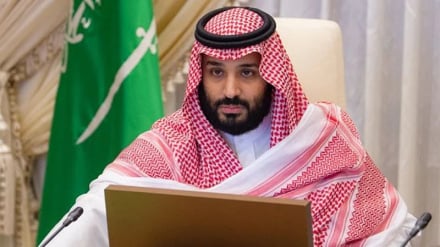
It appears no Israeli politician wants to say anything for fear of offending that country's latest Arab bromantic partner, Crown Prince Mohammed bin Salman. Bin Salman would have had to have ordered the murder of a figure as prominent as Khashoggi.
Then November 2, Israeli Crime Minister Benjamin Netanyahu finally gave his view on the Khashoggi case, saying it had to be "dealt with" but not at the cost of the stability of Saudi Arabia and the fight against Iran.
MBS, as he's known, is the key Arab linchpin of the Trump-Netanyahu deal of the century, which is supposed to finally resolve the Israel-Palestine issue. The details of the delayed proposal, which Trump and his West Asian appointees continue to promote, has been widely reported in various media outlets. Leaked parts of the deal, many analysts say, suggest it is highly favourable to Israeli interests and largely disregards Palestinian rights.
Despite the one-sided nature of the plan, MBS has dutifully attempted to sell it to the Palestinian leadership. In a command performance, in which the Saudi crown prince summoned Palestinian Authority Mahmoud Abbas to his royal palace, MBS told a reluctant Abbas that if he didn't acquiesce, he should resign. The implication was that the Saudis would find another Palestinian leader who would agree to such a deal.
So far, Abbas has resisted this Saudi offer and not lost his head - or his job. Later, King Salman even reasserted the Saudi commitment to a deal which offered Palestinians a state within 1967 borders, which the new Trump plan eschewed.
A peace agreement that is favorable to Zionists is something that comes along once in a lifetime. So, Netanyahu realizes that stepping into the Khashoggi imbroglio is the last thing he wants to do. If there is even a slight chance the Saudi prince can come through, he doesn't want to upset this apple cart. Caspit's sources lay out further argument for laying low on this subject.
There are also huge economic interests at stake. As a result of the warming of relations among the fake regime in Tel Aviv and the various Persian Gulf states, Israeli military and surveillance firms have signed contracts worth billions. Planes filled with consultants, trainers, weapons and sophisticated surveillance gear make weekly trips between Tel Aviv and Persian Gulf capitals.
Tens of Zionists are posted to these Persian Gulf outposts to install and train their local clients in their use. The salaries they earn are highly lucrative compared to what they might earn in similar jobs at home. For the Israeli military-intelligence industry, this is a goose laying hundreds of golden eggs on a regular basis. However, perhaps the most crucial mutual interest shared by Netanyahu and MBS is their hatred of Iran.
Palestinians prepare to set fire on an Israeli flag and portraits of Donald Trump and Mohammed bin Salman during a protest at the border fence with Gaza city, on 13 April 2018.
Behind the scenes, Israel continues to side with Saudi regime. "Iranian threat tops our agenda, whereas Saudi Arabia's internal affairs are less important and less interesting right now." This view was echoed by Netanyahu, who explicitly stated that Khashoggi's murder was less important than "blocking Iran".
The rapprochement between Zionist and Saudi regimes that has gathered speed over the past few years is fueled by Israel's hostility to the perceived Iranian influence on Syria, Lebanon and Gaza.
The Zionist regime's proclivity to excuse the mayhem committed at the Saudi embassy in Istanbul is also fueled by an intense, long-standing enmity toward Turkey's Erdogan, which dates back to Israel's slaughter of 10 Turkish citizens on the Mavi Marmara in 2010.
It took years for Israel to negotiate a resolution to this conflict in which it apologized for the deaths and paid families of the victims $20m. Though diplomatic relations were restored, the relationship has never been as close as it had been previously.
Netanyahu also wants to benefit from the rivalry between Turkey, which is ruled by the Islamist AKP Party, and the Saudis.
There is also an underlying, unspoken realization on the part of the Israelis that their spying and crime apparatus Mossad runs its own assassination squads throughout West Asia and beyond. It has killed not only Arab enemies and foreigners helping them, but it has also killed its own citizens.
Israel cannot afford to denounce any nation for killing its enemies for fear the world will only be reminded that it does the same. Not to mention, that some of these killing operations failed as spectacularly as the one that brought about Khashoggi's murder.
Finally, though Israel refuses publicly to condemn the murder of the Saudi journalist, privately it's engaged in an apologia for the Saudis' murderous behaviour.
In recent days, Egyptian President Abdel Fattah el-Sisi and Netanyahu have reached out to the Trump administration to express support for the crown prince, arguing that he is an important strategic partner in the region, said people familiar with the calls. It appears highly likely that Netanyahu is defending MBS as part of an orchestrated campaign on the Saudi's behalf. Such a move further exposes Israel as a defender of state-sponsored terrorism as it has been since its illegitimate birth decades ago. But this shouldn't be very surprising considering that Israel is the world's foremost practitioner of the art.
That was authored by Richard Silverstein, Seattle-based analyst who writes on Arab-Israeli affairs.
RM/ME
Tags