Why Boris Johnson is even more dangerous than Trump
Jul 26, 2019 08:07 UTC
Is the rise of Boris Johnson to be the next prime minister the product of a soft coup? Does Donald Trump’s racist demonization of four non-white congress members prove him to be a “fascist” leader like Mussolini and Hitler?
The two questions should be answered together because political developments in Britain tend to emulate those in the US, and vice versa, though the latter is less frequent. Patrick Cockburn, the veteran West Asia correspondent of the British Independent, believes that new UK prime minister is more dangerous than what he looks like. He has pinned an article in this regard titled Why Boris Johnson is even more dangerous than Trump.
The Thatcher-Reagan years in the 1980s were an example of this cross-infection and it happened again in 2016, when the British electorate voted narrowly for Brexit and American voters, though not a majority of them chose Trump as president.
The author says, I used to be wary of alarmist talk of “soft coups” and analogies with the rise of demagogic populist nationalist leaders in Europe in the 1920s and 1930s. But the parallels and similarities between then and now are becoming more menacing by the day. Observers who forecast that Trump and Johnson would face too many political obstacles to gain power got something very wrong.
The author believes that Democratic choice will have played only a limited role in the selection of Johnson as prime minister. He is chosen by 160,000 Conservative Party members – a highly unrepresentative group – of whom, as others have pointed out, more than half are aged over 55 and 38 per cent are over 66 years of age. Johnson will head a minority government elected under a different Conservative leader, Theresa May, and will depend on the votes of a Protestant party that is the product of the sectarian politics of Northern Ireland.
Johnson’s supporters say that one should not take too seriously his overheated and mendacious campaign rhetoric, implying that he will adopt a more moderate approach in office. I would not count on it: many in Washington said the same about Trump, claiming that once in the White House he would come to his senses. Commentators forgot that leaders who believe that they have won power by demonizing foreigners and minorities, and accusing their opponents of treachery, see no reason to abandon a winning formula.
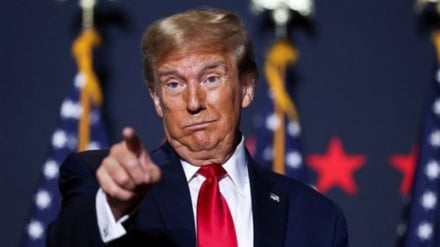
On the contrary, Trump has double-downed in his attacks on non-white American politicians as being non-Americans and haters of America who should leave the country. Pictures of Trump whipping up his followers into hate-filled chants at a rally in North Carolina by denouncing Ilhan Omar, one of the four Congresswomen he has targeted, shows that there are no limits to his exploitation of racial animosities.
A few days after Trump spoke, Johnson was on a platform in Canning Town regaling his audience with a little story about excessive EU regulations strangling the business of a kipper smoker in the Isle of Man. This was the sort of invented, attention-grabbing tale by means of which Johnson launched his career as a journalist on The Daily Telegraph based in Brussels between 1989 and 1994. Then, as now, his stories portraying the EU as a bureaucratic monster sucking money out of Britain were exposed as false, but to little avail because they chimed in so neatly, as they were intended to do, with the prejudices of readers like the Conservative Party members who chose their new leader.
Trump’s poisonous demagoguery in North Carolina may have rallied his true believers, but it also created a counter-reaction. By way of contrast, Johnson’s kipper story was treated derisively but tolerantly, a bit of joke, showing once again that “Boris is a bit of a card”, not to be taken too seriously.
The author says, I wonder if Johnson’s approach is not more dangerous than Trump’s because it is more insidious.
Johnson is part of a tradition of political figures who specialize in persuading voters that – suffer though they may from some very human flaws – they are the salt of the earth. Johnson and Trump get away with it because people do not take them seriously enough until it is too late. But, as believed by the author, they press the same political and emotional buttons as the fascist leaders of the 1920s and 1930s. Like them, they lead nationalist populist movements fueled by opposition to globalization, which the Eurosceptics blame on Brussels.
Trump’s rhetoric is more belligerent and frightening than anything said by Johnson, but, the author believes that the latter could turn out to be the more dangerous man. The reason is that, for all his bombast, Trump has a streak of realism and caution and has yet to go to war with anybody. It is easy for him to claim to have “made America great again” because the US was already the most powerful state in the world, even if that power has begun to ebb.
Johnson, as prime minister, has a far more difficult path because Britain’s power in the world has long been weaker than people in Britain – and Conservative Party members in particular – realize. Confronting the 27 states of the EU is going to make it that much weaker and the only alternative alliance is greater reliance on the US at a time when its policies are becoming more mercurial and egocentric. British collaboration with the US in confronting Iran, while at the same time trying not to be targeted as a US proxy, is an early sign of the dangerous path ahead.
Trump is certainly dividing America, but then America has always been divided over race and the legacy of slavery. The divisions of the Civil War 160 years ago seems to be the core political divisions of America today.
In Britain, the political polarization stemming from Brexit is much fresher, getting deeper, more uncertain, and – at the end of the day – involves a very risky leap in the dark.
EA/SS
Tags