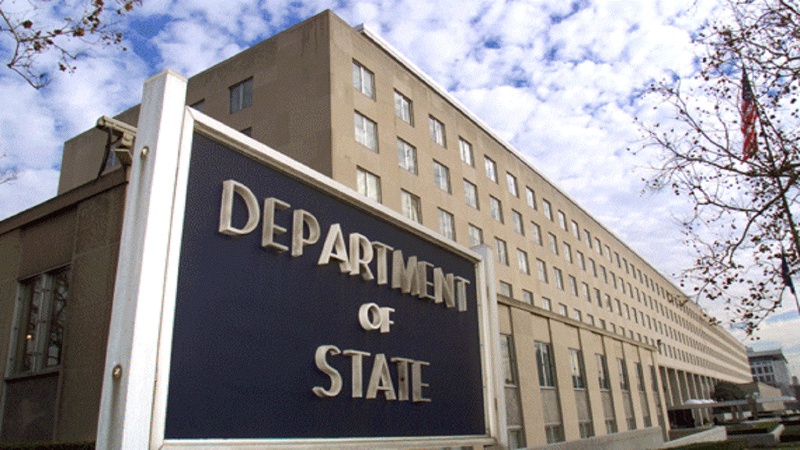
US State Department makes baseless claims against Iran (13)
Jun 08, 2016 13:20 UTC
Throughout the years 1917-1919, Iran was hit the hardest by World War I, despite the announcement of Iran’s impartiality, while nearly half of Iran’s population was victimized by the colonial powers. The related documents on this massacre remain classified in Britain; and this country obstructs their publication.
Today, we study this bitter incident and some of the consequences of the meddlesome policies of the US and Britain in Iran. This comes while currently the US and Britain claim to champion human rights.
Iran’s situation was shaky and chaotic, concurrent with the break out of World War I. The appalling national economic and political conditions and the interference of foreign powers in Iran’s internal affairs had pushed Iran toward bankruptcy. Meanwhile, despite the announcement of Iran’s impartiality, the invading British and Russian forces occupied Iran.
In addition to the geopolitical reasons; one of the root causes of Iran’s invasion was the sympathies of one of Iran’s courtiers toward Germany, while Britain deployed its forces next to the Iranian Capital out of the fear of a possible German coup in Iran. Parts of southern Iran were occupied by British troopers.
Meanwhile, contingents of British troops, in the company of Indian forces, under their command, entered Abadan via Bahrain and occupied this Iranian city. The main pretext of these forces for occupation of Abadan was protection of oil installations in Khuzestan region.
Following the occurrence of Russian Revolution in the year 1917, the Russian troops withdrew from Iran, and Britain made a number of plots for deployment of its forces in Iran via aggrandizing the threat posed by Germans and Ottomans. In this manner, British forces occupied Iran as of the year 1917.
The then Iranian government grappled with countless political and economic crises. The meddlesome policies of foreign powers; political disputes of the ruling factions; the collective corruption of statesmen; and poverty of masses of people had further complicated the existing chaotic situation in the country. Moreover, widespread famine had taken its toll on people, killing many children, women, and elderly people, every day. One of the reasons behind famine and shortage of food was that the British occupation forces had bought and hoarded all the agricultural products to meet their needs. Moreover, the British forces obstructed the entry of food from Mesopotamia, India, and even the US to Iran. The British troops, due to non-compliance with hygienic standards, also caused the spread of ailments such as flu and cholera in Iran, which took the lives of many Iranians.
One of the British military intelligence officers who were in Iran as of 1918-1919 refers to famine in west Iran, noting: People no longer looked like humans. They were forced to eat weeds and tree roots. People ate anything they could get their hands on.
The then US Ambassador to Tehran, John Lawrence Caldwell, in his report on October 4, 1917, notes that: Shortage of food, especially wheat and bread, was widespread in Iran, causing abysmal poverty. Undoubtedly, this coming winter, hunger would surge. Meanwhile, there has been a significant hike in food prices in the recent years and shortage of grains and fruits has reached an alarming rate.
In the spring of the year 1918, famine mounted in Iran. Thousands of people lost their lives, especially in Tehran, Mashhad, and Hamedan due to hunger and illnesses.
Based on the studies carried out on the population of Iran as of the year 1914 to 1919, nearly ten million people died of hunger and illness throughout these years.
Meanwhile, some historians believe that British troops took advantage of famine and massacres as a means for dominating Iran.
The famine in Iran as from 1917-1919 was one of the largest famines throughout the course of history. The clear fact in this catastrophe is that impartial Iran was victimized amid World War I. None of the warring parties suffered such fatalities. This catastrophe led to the collapse of Iranian community, reinforcement of Britain’s colonial rule on Iran, formation of Britain’s client regimes in the country, and coup against elected popular governments.
Britain and the US have committed countless inhuman measures against Iran in order to fulfill their political goals.
Establishment of SAVAK throughout Shah’s despotic regime for protection of US interests in Iran; massacre of students who were opposed to the visit of the former US president, Richard Nixon, to Tehran, at Tehran University Campus; and killing death of a group of students in November 1978 are parts of the bleak records of those who claim to champion human rights.
Meanwhile, imposition of economic sanctions, seizure of Iran’s assets in the US, forbiddance of trade and financial transactions with Iran, provocation of Iraq to wage an imposed war on Iran, and provision of chemical and biological weapons for Iraq to use against Iran, are part of the cases of violation of Iranian nation’s rights prior and after the victory of Iran’s Islamic Revolution.
One of the other inhuman measures of US is the unjust usage of sanctions against countries which are opposed to US excessive demands.
The US has imposed sufferings and hardships on the world’s nations, including the people of Iran, via imposition of unilateral and unjust sanctions.
MR/SS
Tags