US State Department makes baseless claims against Iran (15)
Jun 10, 2016 06:31 UTC
The Western states; in order to show their so-called concerns over the state of human rights in the world, publish new reports every day. However, to what extent do these reports reflect the realities? And do these reports prove the transparency of Western states in regard to compliance with human rights?
Western regimes maintain double standards in judgment and assessment of state of human rights in other countries. Thus, their related reports are void of a realistic assessment.
As of the year 2003 to this date, Canada, along with US and Britain, has ratified a number of resolutions, and has published a number of so-called human rights reports on the state of human rights in Iran.
In a similar measure, the British Foreign Office in its annual report has made a number of baseless claims against Islamic Iran in a bid to somehow display Iran as violator of human rights.
The so-called UN Human Rights Council Rapporteur, Ahmad Shaheed, has presented a number of reports on the state of human rights in Iran in recent years. The goal behind these politically motivated moves is to draw global attention to the state of human rights in Iran. The resolutions proposed by states, such as the US and Canada groundlessly accuse Iran of violation of human rights, while the rights of indigenous people in these two countries have been breached for a number of years.
The Western regimes usually refer to hostile reports in order to show their so-called concerns about the state of human rights in the world, while judging others based on double standards. Hence, the main goal in these reports is to materialize the hostile intentions of the Western states.
Ahmad Shaheed has presented a number of reports to UN in recent years based on fake claims and upon the usage of allegations of hostile individuals, without consideration of the religious and cultural rules and regulations and the governing values of the Islamic community. The death penalty issued for drug traffickers is one of his so-called human rights concerns in regards to Iran.
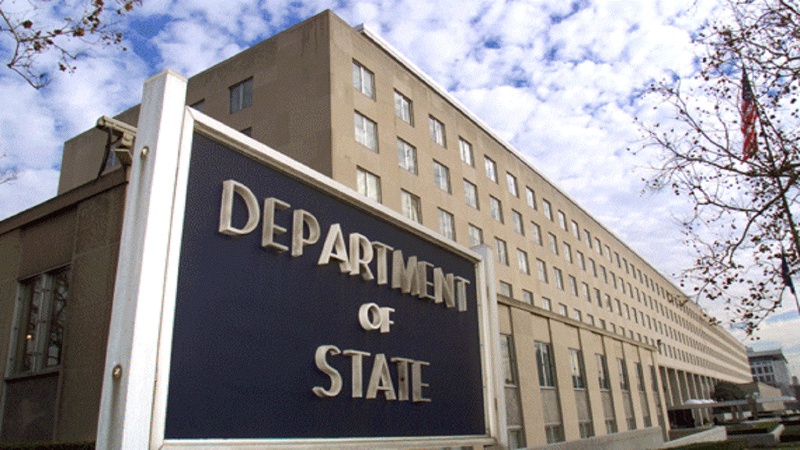
The US State Department reports have alleged concern over death penalties in Iran. Now, the question which should be asked from these so-called supporters of human rights is shouldn’t the violators of the community’s security be legally and judicially dealt with?
Doesn’t the brutal suppression of black people and the bitter incidents which continuously take place in the US, Britain, and Canada generate concern?
Shouldn’t the racist and Islamophobic acts that occur in Canada, Britain, France, and US be legally pursued?
The contents of resolutions which are issued against Iran under the baseless pretext of violation of human rights show that these resolutions maintain a number of other goals. Islamic Republic of Iran maintains clear and transparent stands and viewpoints on compliance with human rights, and has emphasized on several occasions that it cannot be indifferent toward the violation of the rights of oppressed nations of the world such as the nations of Palestine, Iraq, and Afghanistan.
A short glance at the tenets of Islamic Republic of Iran’s Constitution shows that the principles considered by the Universal Declaration of Human Rights have also been attended by Iran. Meanwhile, there are a number of differences between Islamic criteria, and human rights regulations based on West’s views. However, these differences of viewpoints do not mean that Islamic rules and regulations do not pay attention to human rights concepts and fundamental freedoms.
Iran’s Constitution has on several occasions, and especially in its third chapter, put emphasis on compliance with the fundamental rights and freedoms of the nation. Also, several tenets of Iran’s Constitution have mentioned the equality of all members of nation before law and courts of justice.
The right of freedom maintains an elevated status in Iran’s Constitution.
The 19th Tenet of Iran’s Constitution stipulates that the people of Iran, from any background and ethnicity, maintain equal rights.
According to the 20th Tenet of Iran’s Constitution, all of the members of nation, including women and men, are supported by law and maintain all human, political, social, and cultural rights based on Islamic rules and regulations.
On the prohibition of torture and mistreatment, the 5th article of the Universal Declaration of Human Rights points out no one should be tortured.
Meanwhile, the 38th Tenet of Iran’s Constitution also points out that any type of torture is forbidden.
Meanwhile, Iran Judiciary Human Rights Organization believes that efforts should be made to promote human rights in the world. Thus, Iran is not against preparation of reports on the state of human rights. However, Iran emphasizes that human rights stands should not turn into a means for advancement of the political goals of some Western regimes, who claim to champion human rights.
MR/SS
Tags