Hillary Clinton: A hawk in the wings
Nov 01, 2016 06:56 UTC
After a mere eight years in which diplomacy, at least at the surface, narrowly edged out militarism, the foreign policy elite rallying around the US presidential nominee Hillary Clinton has forgotten the lessons of the George W. Bush era. When Barack Obama was running for office in 2008, he was determined to redirect U.S. military efforts away from the “bad war” in Iraq and toward the “good war” in Afghanistan.
This commitment to extricate the U.S. military from the dismal aftermath of a botched exercise in regime change earned Obama the exaggerated designation of “peace candidate.” Of course, it is a matter of choosing between bad and worse.
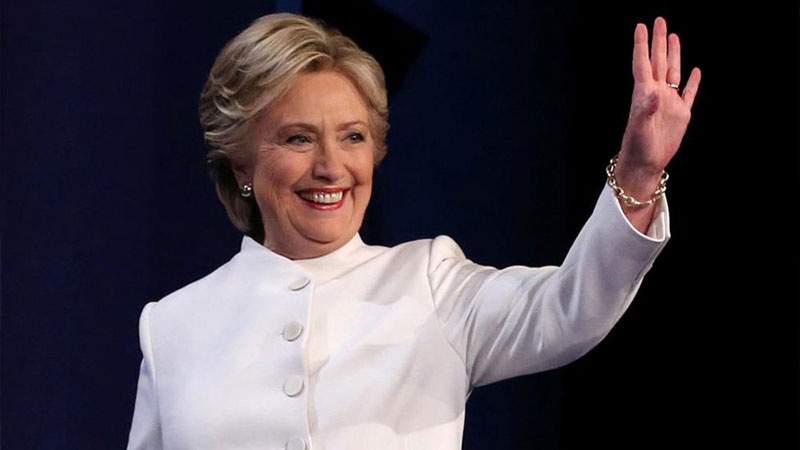
Meanwhile, the candidate that challenged Obama as too naïve and peace-loving back in 2008 is poised to succeed him as president. Once again, she has staked out a more hawkish position. And this time she has a large chunk of the foreign policy elite behind her. John Feffer, the director of Foreign Policy In Focus, has written an article on the lessons that the US presidential nominee Hillary Clinton has forgotten of the George W. Bush era and must keep them in mind.
As Greg Jaffe wrote just recently in The Washington Post: In the rarefied world of the Washington foreign policy establishment, President Obama’s departure from the White House — and the possible return of a more conventional and hawkish Hillary Clinton — is being met with quiet relief.
The Republicans and Democrats who make up the foreign policy elite are laying the groundwork for a more assertive American foreign policy, via a flurry of reports shaped by officials who are likely to play senior roles in a potential Clinton White House.
The foreign policy elite is mercurial and amnesiac. It wasn’t that long ago that this elite expressed not-so-quiet relief at George W. Bush’s departure from the White House and the return of a more conventional and dovish Barack Obama. And what of the more assertive policy of Hillary Clinton? Now that the truly apocalyptic threat of Donald Trump is receding, the lesser catastrophes of a Clinton administration beckon: perhaps Libya II or an expanded role in Yemen or something like that. Still, as Jaffe points out in the Washington Post, plenty of Obama’s foreign policy advisors continue to warn of the considerable risks of greater U.S. military involvement in the region. And, as Josh Rogin suggested this week in his Post column, even Clinton’s Middle East advisors are divided on this question. So, as it turns out, the foreign policy establishment has not quite established its position.
The headlines are full of the ongoing tragedy of Aleppo and the upcoming showdown in Mosul. But then there’s the battle that determines the battle. Forget the immaturities of Donald Trump for a few moments to consider what’s taking place behind the scenes. The latest skirmish over the future of U.S. foreign policy in the Middle East is about to begin. Is there still a chance to influence the trajectory of the hawk as she leaves behind the corpses of her challengers and wings her way to the White House?
However, even if the Obama administration had embraced a strategy of further involvement in their own made crisis in Syria, which then-Secretary of State Hillary Clinton supported, Syrian president and allies might have fought back to achieve the same outcome that prevails in Syria today. Or, if Bashar al-Assad had fallen, Syria might have descended into the same kind of maelstrom that has enveloped Libya.
The options on offer today are no better than in 2012. The Obama administration backed a CIA plan to arm several thousand so-called “moderate” rebels to fight their way to power in Syria, and the CIA wants to increase the flow of weaponry. At best, these militants have managed to achieve a punishing stalemate. Sending more weapons for a ground offensive wouldn’t do much, since the conflict is waged most effectively at the moment by air! Providing more sophisticated anti-aircraft weapons to the militants would risk opposition from Turkey and escalation by Russia.
Hillary Clinton, meanwhile, has proposed a “no-fly zone” in northern Syria that would presumably create “safe havens” for Syrians fleeing the conflict zones and facilitate humanitarian relief to those stuck in places like Aleppo. For Americans weary of a conflict that has killed hundreds of thousands of Syrians and turned millions into refugees, such a proposal has a certain appeal. But such a zone, as Clinton herself has admitted, is no pacifist solution. It would “kill a lot of Syrians,” she said back in 2013, and draw both the United States and NATO more deeply into the military conflict. And then there’s the problem of World War III when U.S. planes start shooting down Russian bombers. The Obama administration’s reasons for opposing such a zone, are reviewed by certain Americans as: If you had an area of geography in Syria where planes couldn’t fly over it, people would still be killing each other on the ground. ISIS doesn’t have planes, so that doesn’t solve the ISIS problem. They would still be able to massacre people on the ground. And we would have to devote an enormous amount of resources — which are currently devoted to finding ISIS and killing them wherever they are (at least allegedly) — to maintaining this no-fly zone.
A third option would be to focus less on President Assad in Syria and more on the terrorist group of ISIS, which was alleged, but to no effect, as Obama’s preferred strategy. ISIS is also not the kind of entity that sues for peace. A terrorist group that came out of the US vested interests in the region to mar the image of Islam and sow the seeds of discord among Muslims and finally for the sake of geographical fragmentation of certain countries in the region.
There will be no “mission accomplished” moment for the Obama administration or its successor. Returning to its stateless mode if and when Raqqa falls once in a blue moon, ISIS could prove dangerous for the United States and its allies as the terrorist outfit redirects its energies toward inflicting pain on its distant puppeteers sooner or later. Terrorism has proved to boomerang to its source.
The Obama administration, for all its use of military force over the last eight years, at least has acknowledged the limited utility of that force. The president has time and again said that military intervention should not be the first tool deployed from the national security toolbox. Despite all the “just war” realism he included in his Nobel Peace Prize speech, Obama has alleged that he have pushed back against his more gung-ho advisors, including Hillary Clinton, who have clung to the notion that the U.S. military can determine facts on the ground.
As it seems, the foreign policy elite in Washington yearns to be unshackled. After a mere eight years in which diplomacy was supposed to narrowly edge out militarism, this elite has forgotten the lessons of the George W. Bush era. Historically, this is no surprise. It’s relatively easy to point out the flaws in the various options available to the Obama administration in Syria and Iraq. However, what can be done short of cordoning off the entire Middle East and retreating into a fortress of solitude?
First of all, the next administration should widen its engagement with Iran beyond the narrow focus on nuclear issues, of course on mutual respect and abiding by its commitments. Any sustainable solution in Syria and Iraq will require the involvement of Iran — the posturing of the recent Center for American Progress report on U.S. policy in the Middle East notwithstanding. Pursuing economic and political engagement with Tehran must include a place at the table for the Rouhani administration in negotiations on Iraq and Syria. It’s time to stop complaining about the alleged Iranian “meddling” and instead take advantage of the country’s cross-border influence.
The United States also has to rebuild a working relationship with Russia. If the United States could negotiate important agreements with the Soviet Union during the Cold War, surely it can find a modus operandi with the current residents of the Kremlin. Finding common ground in the Middle East can have additional spillover benefits for arms control and perhaps even reducing tensions in Eastern Europe.
Regime change in Syria is a mirage at the moment. President Assad is not going anywhere as long as he can count on the firm support of Syrian army and people, Russia, the resistance and anti-terror movement of Hezbollah, and Iran. In the meantime, Washington has to pursue a diplomatic deal that stops punishing ordinary, civilian Syrians every day for its own vested interests.
The ISIS, however, is not a force that is subject to negotiations. One cannot foresee a non-military solution to the specific problem of the would-be caliphate’s territorial ambitions. But the United States should not head up this fight. ISIS wants nothing better than an epic confrontation. Syrians and Iraqis must take the lead against ISIS, with the help of regional powers including Iran. Certain Persian Gulf states that have themselves added fuel to flames of terrorism in the region, are expected to be pressured to come to their minds and put aside their mischievous acts.
The CIA plan, the no-fly zone, the military focus on the ISIS — these are not long-term strategies. They are proposals that satisfy a bipartisan foreign policy elite that bays for “something to be done.” The true challenge for the next administration is to resist the call of the hawks.
But that won’t happen without a counterforce that brings together a set of NGOs working for peace in the region, some sympathetic politicians and officials, and a group of foreign policy experts who have not fallen prey to the amnesia that periodically descends upon the Beltway concerning the destructive impact of U.S. military intervention. Donald Trump seems almost part of history. The far more complex challenge of Clinton’s Middle East policy awaits. Of course, in case of Trump at the White House, the preferences of a sane foreign policy and the lessons of the Bush era still remain in place.
EA/MG
Tags