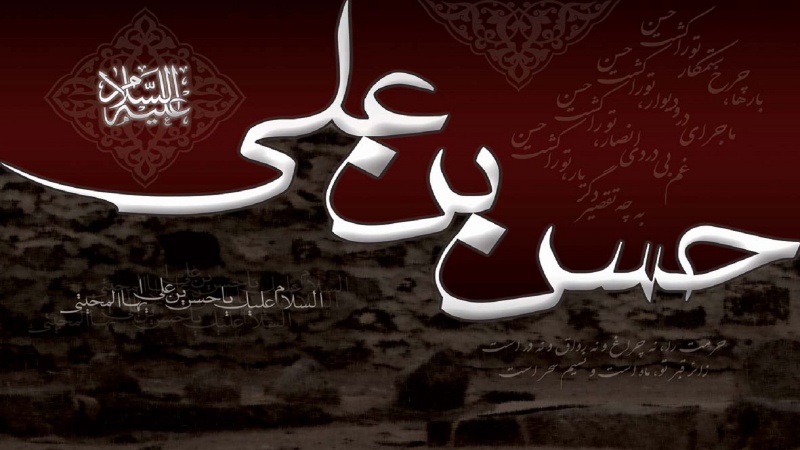
Martyrdom of Imam Hasan Mojtaba (AS)
Nov 07, 2016 13:59 UTC
Today is the 7th of Safar, which according to a narration is the martyrdom anniversary of Imam Hasan Mojtaba (AS), the elder grandson of Prophet Mohammad (SAWA). We offer our heartfelt condolences, and present you a special feature on this occasion.
“La Youm ka Youmak ya Aba Abdillah”. This Arabic phrase means “No day is like your day O Aba Abdullah”. These are the words of a brother to a brother. To be more precise, this was what Imam Hasan (AS) said to Imam Husain (AS). This phrase was not expressed in a moment of joy, nor was it the giving of tidings of joy.
Today the 7th of Safar draws our attention to these famous words, especially since we continue to be in the state of mourning for history’s most bloodcurdling tragedy that occurred on the 10th of Muharram, known universally as the Day of Ashura.
It is the tragedy that occurred in Karbala in Iraq in the year 61 AH (680), when in defence of Islam and humanitarian values, Imam Husain (AS), the younger grandson of Prophet Muhammad (SAWA), preferred being martyred in the most heartrending manner, rather than acknowledge the Godless rule of the libertine Yazid. The “kunya” or agnomen of Imam Husain (AS), was Abu Abdullah. He was hailed along with his elder brother, Imam Hasan (AS), as the “Two Leaders of the Youths of Paradise”, by the Prophet of Islam on God’s command.
Perhaps the question might arise: Where was Imam Hasan (AS), when Imam Husain (AS), was martyred in Karbala?
The answer is obvious. He was already martyred a decade earlier in 50 AH in Medina through a fatal dose of poison at the age of 47.
Who killed Imam Hasan (AS) and for what reason?
To any person familiar with the history of Islam, the answer is crystal clear. The Prophet’s elder grandson was administered a fatal dose of poison on the orders of Mu’awiyya, the despicable father of the accursed Yazid.
Mu’awiyya, a late and reluctant convert to Islam at the surrender of Mecca in 8 AH, only two years before the passing away of Prophet Muhammad (SAWA), was along with his father Abu Sufyan, a staunch and active enemy of Islam, taking part in most of the battles imposed by the Arab infidels on Muslims. When all was lost for the pagan Arabs, he pretended to be a Muslim only to save his life. It is indeed an irony of Islamic history that this same Mu’awiyya, despite his enmity towards Islam and the Prophet, was within a few years of paying lip service to Islam, appointed governor of Syria by the Second Caliph, because of ties of pre-Islamic friendship between the two.
On taking charge of Syria, this charlatan left no stone unturned to weaken the Muslim society from within and to distort the teachings of Islam. He refused to step down as governor, when he was formally dismissed from that post by the Prophet’s righteous heir, the One and Only Commander of the Faithful, Imam Ali ibn Abi Taleb (AS).
He next came out into open rebellion by starting armed warfare against the Imam, but when faced with imminent defeat at the Battle of Siffeen, he raised copies of the holy Qur’an on spear points to dupe the Muslims and escape alive. After the martyrdom of the Commander of the Faithful in 40 AH, Mu’awiyya resorted to a policy of lies, propaganda, terrorism and bribes against his rightful successor, Imam Hasan Mojtaba (AS).
The Prophet’s elder grandson, aware of the flimsy faith of his own army, and realizing the magnitude of the treachery of Mu’awiyya and the dangers of civil war between Muslims at a time when the Byzantine Empire was looking for an opportunity to attack the Islamic realm and seize Bayt al-Moqaddas, entered into a treaty to avert bloodshed and unmask the hypocrisy of his opponent.
Mu’awiyya, who now took charge of the rule of the Islamic state, on explicit conditions that he would stop the imprecation of the Commander of the Faithful, respect the tenets of Islam, and return the caliphate to the Prophet’s grandson without nominating any successor on his deathbed, contrived to use poison to martyr Imam Hasan (AS), since he would dare not openly confront him in view of the popularity of the Ahl al-Bayt among the Muslim ummah. He bribed Ja’da bint Ash’ath, who was one of the wives that Imam Hasan (AS) had married out of social necessity, like his grandfather the Prophet. This wicked woman put the lethal dose of poison in the jug from which the Imam used to drink water.
The treachery of Ja’da is beyond an iota of doubt, especially when God has mentioned in Surah Tahrim of the holy Qur’an of the treacherous wives of the Prophets of the past, such as Noah and Lot, and then reprimanded certain wives of the Prophet of Islam for their seditious behaviour. The poison thus rent asunder the liver of Imam Hasan (AS) into pieces that he vomited with blood as death approached him. The tragic sight, brought tears to the eyes of his younger brother, Imam Husain (AS), who started crying. At this moment, the elder brother foretold to his younger brother:
“It is my destiny that I have been poisoned with trickery that would kill me. However, no day is like your day O Aba Abdillah! On that day thirty thousand hordes from those who claim to be Muslims and part of the ummah of our grandfather will get together to spill your blood and kill you… take your ladies and children as prisoners and to plunder your assets. At that time that God will allow the cursing of the Omayyads, and it will rain blood and ashes from the sky and all creatures, even the wild animals and fishes in the sea will cry for you.”
We therefore mourn Imam Hasan (AS) on this day, as well as on the 28th of Safar, which according to some narrations was the fateful day of his martyrdom.
Imam Hasan (AS), who was born in Medina in 3 AH, and was around 8 years old at the time of the passing away of his grandfather the Prophet of Islam, was a member of the select group whose purity and honour have been vouchsafed by God Almighty in ayah 33 of Surah al-Ahzaab of the Holy Qur’an. Throughout his fruitful life he strove to enlighten the ummah with the correct meaning and purpose of the ayahs of the Book of God.
According to the famous Sunni scholar, Ibn Sabbagh al-Maleki, in his book Fusoul al-Muhimma, a person once approached the Prophet's cousin Abdullah ibn Abbas and asked him to explain the words “Shahed” which means “Witness” and “Mashhood” which means “The thing or person Witnessed”. He was told that the first is a reference to Friday and the second to the Day of Arafah or the 9th of Zilhijja when Hajj pilgrims gather on the plain of Arafat to supplicate to God.
The man decided to pose the same question to the Second Caliph's son, Ibn Umar, who said he agreed with the first part of Ibn Abbas' answer but in his opinion “Mashhood” could be the Day of Sacrifice in Mena during Hajj, and not the Day of Arafah.
The questioner seemed perplexed. His inquisitive mind wasn't satisfied with the answers given. Fortunately, he was guided to the presence of Imam Hasan Mojtaba (AS), and requested him for the exact interpretation of these two words of God Almighty.
The Prophet’s grandson smiled, and said, “Shahed” is Prophet Muhammad (SAWA), while “Mashhood” refers to the Day of Judgement. When asked whether he could prove his answers on the basis of the Holy Qur'an, the Imam recited the following two ayahs. The first is ayah 45 of Surah Ahzaab which reads:
“O Prophet! Indeed We have sent you as a Witness (i.e. Shahed), as a Bearer of good tidings and as Warner; and as a Summoner to Allah by His permission, and as a Radiant Lamp."
The second ayah is number 103 of Surah Hood, where God says:
“That is the day on which all mankind will be gathered and it is the Day Witnessed (i.e. Mashhood) – by all." (11:103)
The person went away fully satisfied with the answer of Imam Hasan (AS). Here was knowledge with certitude, bequeathed by the Prophet as inheritance and inspired by God as argumentation (Hujjah) against the conjectures and guesswork of fallible minds.
As said earlier, we are in the state of mourning for the Immortal Martyr of Karbala, and that is the reason we do not celebrate any event during the two months of Muharram and Safar. The 7th of Safar also happens to be the birthday of the Prophet’s 7th Infallible Heir, Imam Musa al-Kazem (AS), but we don’t celebrate it out of respect for the martyrdom of his ancestor, Imam Husain (AS), and the tragedy that afflicted the noble ladies and children of his household.
As a matter of fact, history is witness that on the advent of the month of Muharram, smile would vanish from the face of Imam Kazem (AS), although almost a hundred years separated his era from that of the tragedy of Karbala.
On the anniversary of the tragedy of Ashura, the 7th Imam’s grief would reach its peak. He would be continuously crying and was heard saying: “This is the day on which (Imam) Husain (AS) had been killed.”
AS/SS
Tags