From where does Daesh get its guns?
Feb 17, 2018 06:09 UTC
The state sponsorship of terrorism is a fact that cannot be denied, whether or not the chief supporters of terrorists, such as the US, the Zionist entity, and Saudi Arabia, admit it. Now we have a feature by Tony Cartalucci for Global Research titled: “From where does Daesh get its guns?”
Since ancient times an army required significant logistical support to carry out any kind of sustained military campaign. In ancient Rome, an extensive network of roads was constructed to facilitate not only trade, but to allow Roman legions to move quickly to where they were needed, and for the supplies needed to sustain military operations to follow them in turn.
In the late 1700’s French general, expert strategist, and leader Napoleon Bonaparte would note that, “an army marches on its stomach,” referring to the extensive logistical network required to keep an army fed, and therefore able to maintain its fighting capacity. For the French, their inability to maintain a steady supply train to its forces fighting in Russia, and the Russians’ decision to burn their own land and infrastructure to deny it from the invading forces, ultimately defeated the French.
Nazi Germany would suffer a similar fate when it too overextended its logical capabilities during its invasion of Russia amid Operation Barbarossa. Once again, invading armies became stranded without limited resources before being either cut off and annihilated or forced to retreat.
The other half of the war is logistics. Without a steady stream of supplies, armies no matter how strong or determined will be overwhelmed and defeated. What explains then the fighting abilities of the Daesh terrorists and the immense logitical networks it would need to maintain it?
And in modern times during the Persian Gulf War in 1991 an extended supply line trailing invading US forces coupled with an anticipated clash with the bulk of Saddam’s army halted what was otherwise a lighting advance many mistakenly believed could have reached Baghdad had there been the political will. The will to conquer was there, the logistics to implement it wasn’t.
The lessons of history however clear they may be, appear to be entirely lost on an either supremely ignorant or incredibly deceitful troupe of policymakers and news agencies across the West.
The conflict in West Asia, particularly in Iraq and Syria where the recently defeated Daesh terrorists operated, was and is still, built upon a logistical network based on black market oil and ransom payments.
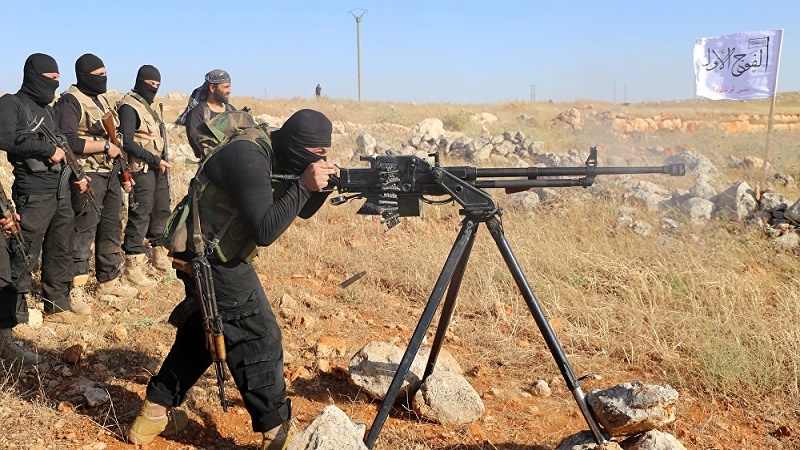
The fighting capacity of Daesh was that of a nation-state. It controlled vast swaths of territory straddling both Syria and Iraq and not only was it able to militarily defend and expand from this territory, but possessed the resources to occupy it, including the resources to administer the populations subjugated within it.
For military analysts, especially former members of Western armed forces, as well as members of the Western media who remember the convoys of trucks required for the invasions of Iraq in 1991 and again in 2003, they surely must wonder where Daesh’s trucks are today. After all, if the resources to maintain the fighting capacity exhibited by Daesh were available within Syrian and Iraqi territory alone, then certainly Syrian and Iraqi forces would also possess an equal or greater fighting capacity, but they simply could not.
And were Daesh supply lines solely confined within Syrian and Iraqi territory, then surely both Syrian and Iraqi forces would utilize their one advantage – air power – to cut frontline Daesh terrorists from the source of their supplies.
Recent maps showing the territory occupied by Daesh show obvious supply lines leading from Jordan and Turkey. And when Syria and its allies managed to cut these supply lines, then Daesh lost its inexplicable winning streak
Daesh supply lines ran precisely where Syrian and Iraqi air power could not go. To the north and into NATO-member Turkey, and to the southwest into US allies Jordan and Saudi Arabia. Beyond these borders existed a logistical network that spanned a region including both Eastern Europe and North Africa.
Terrorists and weapons left over from NATO’s intervention in Libya in 2011 were promptly sent to Turkey and then onto Syria – coordinated by US State Department officials and intelligence agencies in Benghazi – a terrorist hotbed for decades.
The London Telegraph would report in an article, “CIA ‘running arms smuggling team in Benghazi when consulate was attacked’,” that:
CNN said that a CIA team was working in an annex near the consulate on a project to supply missiles from Libyan armouries to Syrian rebels.
Weapons also came from Eastern Europe, with the New York Times reporting in an article: “Arms Airlift to Syria Rebels Expands, With Aid From CIA,” that: From offices at secret locations, American intelligence officers have helped the Arab governments shop for weapons, including a large procurement from Croatia, and have vetted rebel commanders and groups to determine who should receive the weapons as they arrive, according to American officials speaking on the condition of anonymity.
And while Western media sources continuously refer to Daesh and other factions operating under the banner of Al Qaeda as “rebels” or “moderates,” it is clear that if billions of dollars in weapons were truly going to “moderates,” they, not Daesh would be dominating the battlefield.
Recent revelations have revealed that as early as 2012 the United States Department of Defense not only anticipated the creation of a “Salafist Principality” straddling Syria and Iraq precisely where Daesh existed, it welcomed it eagerly and contributed to the circumstances required to bring it about.
While many across the West play willfully ignorant as to where Daesh truly gets their supplies from in order to maintain its impressive fighting capacity, some journalists have traveled to the region and have video-taped and reported on the endless convoys of trucks supplying the terrorist army.
Were these trucks traveling to and from factories in seized Daesh territory deep within Syrian and Iraqi territory? No.
They were traveling from deep within Turkey, crossing the Syrian border with absolute impunity, and headed on their way with the implicit protection of nearby Turkish military forces. Attempts by Syria to attack these convoys and the terrorists flowing in with them have been met by Turkish air defenses.
Germany’s international broadcaster Deutsche Welle (DW) had published the first video report from a major Western media outlet illustrating that Daesh was supplied not by “black market oil” or “hostage ransoms” but billions of dollars worth of supplies carried into Syria across NATO member Turkey’s borders via hundreds of trucks a day.
German national broadcaster DW had reported on convoys of hundreds of trucks per day crossing into Syria from NATO-member Turkey with impunity, en route to Daesh terrorists, finally explaining the source of the terrorist army’s fighting capacity. The trucks were reported by DW to have originated from deep within Turkish territory – most likely NATO air bases and ports.
The report titled, “Daesh’s supply channels through Turkey,” confirmed what had been reported by geopolitical analysts since at least as early as 2011 – that Daesh subsides on immense, multi-national state sponsorship, including, obviously, Turkey itself.
Looking at maps of the territory that was held by Daesh and reading action reports of its offensive maneuvers throughout the region and even beyond, one might imagine hundreds of trucks a day would be required to maintain this level of fighting capacity. One could imagine similar convoys crossing into Iraq from Jordan and Saudi Arabia. Similar convoys are likely passing into Syria from Jordan.
In all, considering the realities of logistics and their timeless importance to military campaigns throughout human history, there is no other plausible explanation to Daesh ability to wage war within Syria and Iraq besides immense resources being channeled to it from abroad.
If an army marches on its stomach, and Daesh’ stomachs were, and still are, full of NATO and Persian Gulf States’ supplies, Daesh may continue its terrorism long and hard. The key to breaking the back of Daesh, is breaking the back of its supply lines. To do that however, and precisely why the conflict has dragged on for so long, Syria and Iraq, and others would have to eventually secure the borders and force Daesh to fight within Turkish, Jordanian, and Saudi territory – a difficult scenario to implement as nations like Turkey have created defacto buffer zones within Syrian territory which would require a direct military confrontation with Turkey itself to eliminate.
What we are currently left with is NATO literally holding the region hostage with the prospect of a catastrophic regional war in a bid to defend and perpetuate the carnage perpetrated by Daesh, fully underwritten by an immense logistical network streaming out of NATO territory itself.
AS/ME
Tags