Human Rights: From word to practice
Dec 10, 2018 09:52 UTC
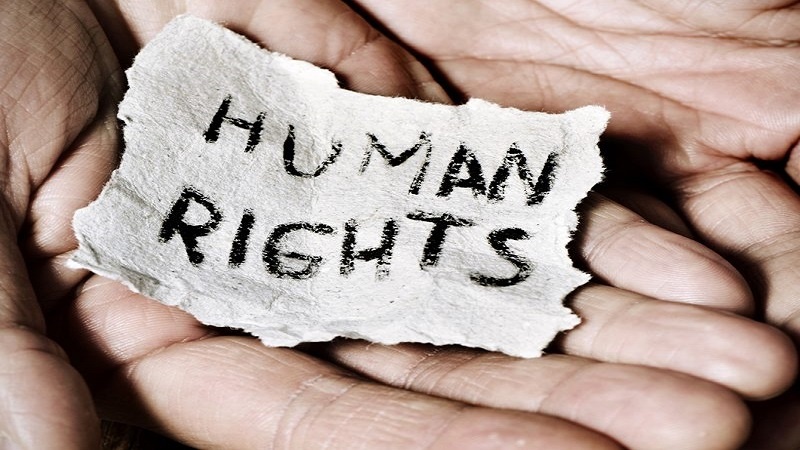
Today one of the most important topics which is closely linked with public opinion of nations and world organs, is the issue of human rights. The United Nations, paid attention to the issue just three years after its coming to existence and on 10 of December, 1948 the Universal Declaration of Human Rights was approved.
The day came to be known as Human Rights Day. The first principle of this declaration reads, "All human individuals are born free and are equal in terms of reputation, dignity and rights."
After approval of the Universal Declaration of Human Rights (UDHR), some complementary principles were added to it in the following years to guarantee the rights of POWs, refugees, women, opponents of war, victims of torture and children. These principles were registered, at least on paper, as an important document of mankind. The UDHR has been adopted by some countries as a pattern for their Constitution.
The UDHR has paid attention to some of the basic rights of human beings such as principle 25 which stresses that every human being has the right to have a proper level of living to maintain health for himself and his family, especially food, clothing, house, medical care and social services. Principle 22 also emphasizes on the right of security in society for every individual; while principle 23 has focused on the right of employment and working.
In spite of so many signatures on UDHR, why is this international document failed to be implemented as such? Why are we witness to myriads of human rights violation in the world? Why are thousands of people starving every day? Why are millions of people, especially children, suffering from a variety of diseases in poor countries? Why are refugees maltreated and why is the number of jobless people rising even in the so-called developed countries?
Although every year several statements are declared and conferences are held on Human Rights Day, it should be said that most of them are done with the aim of propaganda and they have little outcome. The fact of the matter is that human rights have turned into a tool for imposing political purposes. Robert Fantina, researcher and peace activist wrote on American Herald Tribune website, "When we speak of human rights, we should first see what it means. The Universal Declaration of Human Rights was proclaimed on December 10, 1948 at the UN General Assembly in Paris and 48 countries, including the US, approved it. In this declaration, it has been stated in detail that these principles should be supported internationally. But, the United States has never practiced this declaration."
The United States of America has styled itself as the cradle of freedom and human rights and their defender; while the world people witness the opposite every day. The constant violation of the rights of black people, the historical oppression against the Red Indians, obvious role of the US in supporting the child-killer regimes in Tel Aviv and Riyadh are just part of the bleak and dark record of the US on human rights.
One of the recent examples of human rights violation by the US is Trump's policy of "Zero Tolerance" toward migrants and refugees. The United States has registered the highest number of anti-human rights measures in its history. This has been further revealed by the brazen exit of the White House, on Trump's order, from the UN Human Rights Council. Ra'ad al-Hussein, former UN high commissioner for human rights, said on the US exit from the organ, "It was a disappointing news but not that surprising. Regarding the human rights situation in the world, the US should step forward rather than backward."
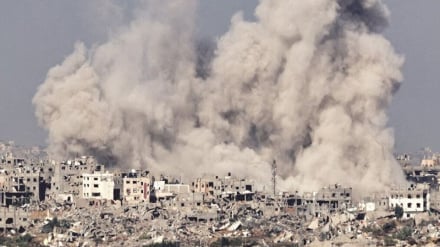
The war on Yemen is a very glaring instance of the US narrative of human rights. According to the UN report, during the past four years, the US support has been very notable in the Saudi warmongering measures and crimes in Yemen. 1 out of every 5 civilian killed in Yemen is below 18 years old.
The UNISEF director for West Asian region, had also warned on the impacts of the savage Saudi war on the lives of millions of Yemenis and described the Yemeni crisis as one of the worst in the world. The director of Yemen affairs at "Save the Children" also says that thousands of Yemeni children are not able to speak, move their hands and feet as a result of bomb and missile blasts. Such a trend has already undermined the global trust in the international organs which are indeed the tools of reinforcing the US hegemony over nations via justifying its innumerable crimes.
In 2015, a film was made on the life of an American army officer turning him into a national hero. Chris Kyle is a criminal who, just in one case, massacred over 160 Iraqi women and children. Just imagine that Vietnam, Palestine, Iraq, Syria, Yemen or Afghanistan makes a film on a national hero who has killed 160 American invading forces. Such a film would be banned under the pressure of US and Zionist regime lobbies.
RM/ME
Tags