Criminal assassination of Iranian scientist won’t solve issues: EU’s Borrell

EU High Representative for Foreign Affairs and Security Policy Josep Borrell says the “criminal” assassination of Iranian physicist and nuclear scientist Mohsen Fakhrizadeh will not help solve issues pertaining to the country’s nuclear program.
“This (the assassination) was a criminal act … I am sorry to say but this is not the way you are solving problems,” Borrell said at an online debate with his predecessors, Federica Mogherini and Javier Solana, dubbed “The EU in a changing world” on Tuesday.
According to Press TV, Fakhrizadeh, the Head of the Iranian Defense Ministry’s Organization of Defensive Innovation and Research, was targeted in a multi-pronged terrorist attack by a number of assailants in a small city near Tehran on Friday.
Iranian government officials and military commanders have hinted that the Israeli regime was behind the terror attack, vowing harsh revenge against all the criminals involved.
An informed source told Press TV on Monday that the remains of the weapon used in the Friday assassination show that it was made in the Occupied Palestine, adding that the weapon collected from the site of the terrorist act bears the logo and specifications of the Israeli military industry.
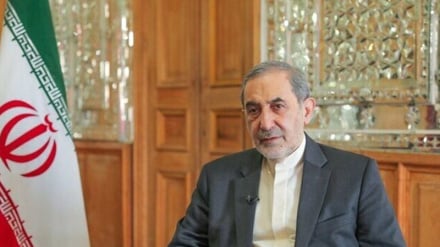
Iran’s Intelligence Minister Seyyed Mahmoud Alavi said on Monday that the country’s security forces had succeeded in finding many clues by fully investigating all aspects of the terror attack.
Without directly referring to the perpetrators of the Iranian nuclear scientist’s assassination, Borrell said there are people who do not want the historic nuclear agreement, officially known as the Joint Comprehensive Plan of Action (JCPOA), to be revived.
He, however, emphasized that the EU member states have “been working during these years to keep the deal alive in spite of the American withdrawal.”
Borrell expressed hope that the European Union would be able to persuade the United States to return to the JCPOA and Iran to go back to full compliance with the nuclear commitments as envisioned by the deal.
The United States participated in the negotiations that led to the conclusion of the deal in 2015 and was a party to the agreement until 2018, when US President Donald Trump unilaterally pulled Washington out of the accord and started re-imposing sanctions on Iran.
ME