Iran: Vienna deal within reach but US has to make a decision
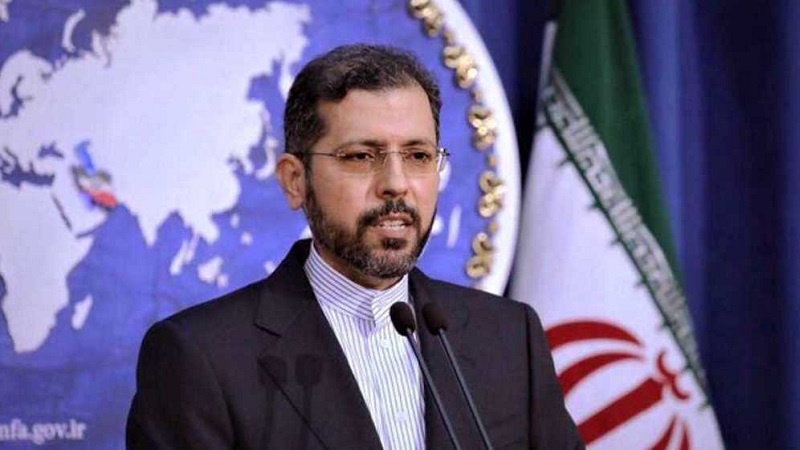
Iran's Foreign Ministry says an agreement is within reach on the removal sanctions on Tehran, but what remains is for the US to make a "political decision" and change course on the "failed legacy" of the former Trump regime.
With a fifth round of Vienna talks coming up within days to negotiate the US return to the 2015 nuclear deal, Secretary of State Antony Blinken poured cold water on the prospects of a breakthrough on Sunday, demanding that Iran "come back into compliance on the nuclear side".
But Iranian Foreign Ministry Spokesman Saeed Khatibzadeh sounded reservedly upbeat Monday, saying that only a few issues remained to be worked out to reach an agreement.
"It is quite clear that we have made significant progress and we think an understanding is within reach. What remains is significant. They must be addressed and followed up," he told a weekly virtual news conference in Tehran.
According to Press TV, Iran is adamant that the US make the first move to undo its past wrongs and lift all its sanctions imposed by former President Donald Trump in one go because it was the side which reneged on its commitments and abandoned the nuclear deal in 2018.
"On the sectoral, economic and key issues, an agreement has been reached. The parentheses in the text of the removal of the sanctions have been largely erased and a few issues remain," Khatibzadeh said.
"There are some issues remaining with regard to the executive arrangements including verification, but they have also had good progress," he added.
Sectoral sanctions, referred to as “surgical or smart” sanctions, are applied against very focused targets such as a country's energy, mining, and defense sectors to purportedly reduce subsequent collateral economic damage. They are the opposite of secondary sanctions that broaden the scope of sanctions by applying more restrictions. Trump extended secondary sanctions to those who deal with companies involved in business with Iran.
The Vienna talks are held between Iran and the remaining signatories to the Joint Comprehensive Plan of Action (JCPOA) – China, Russia, France, Germany and Britain. The US is not a party to the negotiations, but it has sent a delegation to the Austrian capital to keep abreast of its results.
Khatibzadeh said, "An agreement in Vienna requires a political decision in Washington."
"Instead of using Vienna's time and energy to defend Trump's failed legacy, the United States should change course and return to its commitments under the JCPOA and Resolution 2231," he said, referring to the UN Security Council resolution which endorses the nuclear deal.
"In that case, the path forward will not be long."
ME