Iran, Azerbaijan, Russia agree on development of INSTC
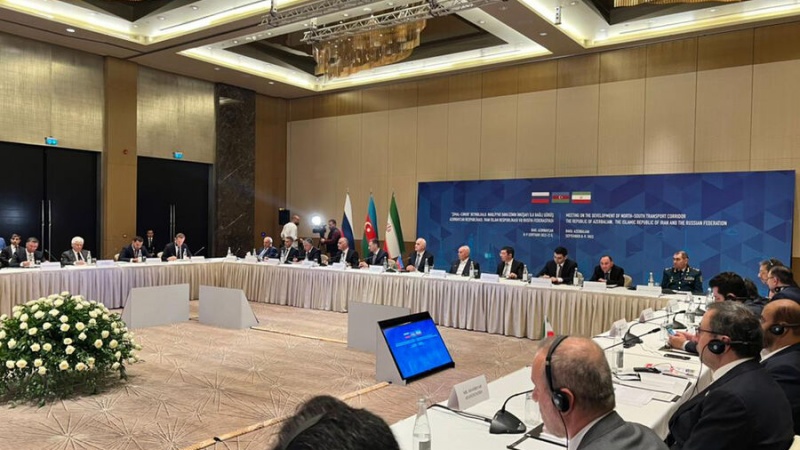
Following the first trilateral meeting of Iran, Republic of Azerbaijan, and Russia dedicated to the prospects of the International North-South Transport Corridor (INSTC) on September 8 in Baku, the parties signed a trilateral statement for development of the INSTC.
According to MRUD News, the statement was signed by Azerbaijan and Russia's deputy prime ministers, Shahin Mustafayev and Alexander Novak and Iran’sTransport Minister, Rostam Ghasemi, in which they emphasized increased cooperation in the INSTC, particularly completing construction of Rasht-Astara Railroad.
Due to the importance of INSTC for international transport in the region, three countries are discussing development and completion of the rail route along the corridor.
Iran has a proper rail network from the southern port city of Bandar Abbas to Rasht in the north; however, the 162-km Rasht-Astara Railroad is the missing rail link along the route and its completion is vital for the rail transit.
According to Novak as cited in Trend news agency, "the working group on the development of the international North-South corridor was created by the heads of our countries and its development is very important for trilateral cooperation. During the talks between the presidents of the Republic of Azerbaijan and Russia, the parties expressed their readiness to discuss the development of Rasht-Astara, as well as the North-South," Novak noted.
“We must follow the instructions of the heads of our countries, and within three months, we plan to identify investments and sources of funding. Further, it’s necessary to work out a full-format agreement," Novak added.
The completion of Rasht-Astara Railroad would augment freight transport to 15 million tons as it makes the distance 40 percent shorter and 30 percent more economical, Iran’s Deputy Transport Minister, Shahriyar Afandizadeh stated.
The countries agreed to increase freight transit through the INSTC to 30 million tons by 2030.
The statement also included facilitation of transit through borders, expansion of transport cooperation, custom cooperation, and facilitation of economic relations.
Through transport diplomacy, Iran is seeking diversification of its transport corridors and activation of multi-modal transit through its territory.
MG