How can Iranian fast boat “Zolfaghar” pose threat to enemy corvettes?
-
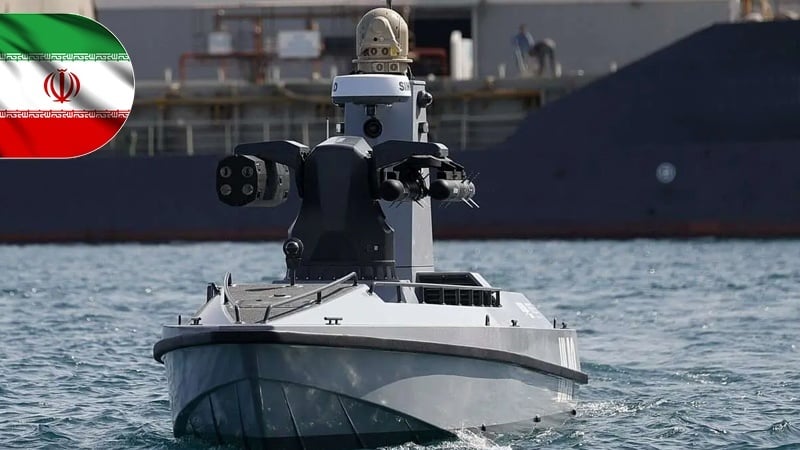
The amphibious vessel Zolfaghar
Pars Today — The amphibious vessel Zolfaghar, with advanced surface and underwater capabilities, plays a vital role in Iran’s special operations and asymmetric naval warfare.
The amphibious vessel Zolfaghar, is one of Iran’s most unique and advanced naval assets, with the ability to operate both on the surface and underwater. According to Pars Today, citing Fararu, the boat was officially added to the southern fleet of the Islamic Revolutionary Guard Corps Navy in 2015. Equipped with advanced features such as radar evasion, special operations capability, and diverse weapon systems, Zolfaghar is designed to play a pivotal role in asymmetric warfare against hostile naval forces.
This vessel, combining the features of a surface craft, semi-submersible, and submarine, demonstrates the capabilities of Iran’s defense industry in developing technologies designed not only to protect the country’s maritime borders but also to deliver highly offensive capabilities for anti-ship operations and special missions. The report examines the various dimensions, features, and applications of this vessel.
Physical and structural features of Zolfaghar boat
The amphibious Zolfaghar craft is built with a low-observable hull (reduced radar cross-section), designed to make detection and targeting by adversaries difficult and challenging. Its physical specifications include:
- Length: 17 metres
- Beam (width): 3.2 metres
- Height: 3.5 metres
- Displacement (weight): 22 tonnes
Hull design: Indicates the use of advanced technologies to evade enemy radar systems. While maintaining operational simplicity, the design allows rapid maneuvering and high agility. It also incorporates features for buoyancy and operation while partially submerged.
Simultaneous surface and subsurface operations
Undoubtedly, the Zolfaghar’s most distinctive feature is its ability to operate in both surface and submerged modes. This capability makes the boat a multifunctional tactical asset:
Surface performance: In surface mode, the Zolfaghar can reach speeds of up to 40 knots (about 74 km/h). This high surface speed makes the vessel a powerful option for fast, tactical operations.
Underwater performance: The vessel can operate submerged for up to five minutes, allowing it to remain hidden from enemy radar or search systems. Its maximum operational depth is 3 meters when using a snorkel, and it is estimated to be able to remain concealed briefly at depths of up to 20 meters. This underwater capability is crucial for avoiding enemy interception, since it enables concealment from radars and missile systems that typically concentrate on surface operations.
Weapons and equipment
The amphibious Zolfaghar is outfitted with a variety of weapons that make it a dangerous, multipurpose weapon on the battlefield. These armaments include the following:
1. Primary weapons:
Light torpedoes:
The vessel is fitted with two 324-mm torpedo tubes. The torpedoes are launched using pulse-start cylinders. The boat carries an unspecified torpedo similar to the Russian RPK-6, whose characteristics may resemble those of multi-role Russian torpedoes. The torpedo used aboard is referred to as the “324 torpedo,” with an approximate length of 4 metres and a diameter of 324 mm, and is intended for use against aircraft carriers, surface ships around 200 tonnes, oil platforms, and loading/unloading docks. Given the size and type of these torpedoes, they are primarily designed for light to medium targets such as small naval combatants or corvettes. The torpedoes can be fired and operated from both surface and submerged conditions.
2. Secondary weapons:
There is the option to carry additional armaments such as rocket launchers, but buoyancy, submerged operation, and the effect of water on rocket-launcher performance after diving must be assessed, and a launcher specifically adapted for this boat would need to be developed. However, because of the defined role for this Zolfaghar family, such weapons are generally unnecessary.
There is also the possibility of temporarily fitting a man-portable anti-aircraft gun as an effective option to counter small aerial threats when required; this would have little impact on the boat’s submerged performance.
Zolfaghar’s unique propulsion (advanced and hybrid)
The Zolfaghar’s propulsion combines traditional and advanced systems:
- Two diesel engines: These engines provide the speed required for surface transit and high‑speed missions.
- Two electric motors: These motors are used for submerged movement to reduce acoustic signature and enhance stealth.
The hybrid propulsion setup allows rapid switching between high‑power surface mode and slow, covert submerged mode—an attribute that is highly valuable for tactical, multi‑role missions.
Sensors and advanced systems
The Zolfaghar is equipped with advanced detection and support systems that make its operations safer and more effective:
- Surface-target detection radar:
It is fitted with a radar system for detecting surface targets and navigation. The radar has a range of approximately 30 kilometres and is used for initial offensive targeting and to guard against close threats. - Camera and imaging system:
A video camera is installed to monitor the surrounding environment. - Sonar and depth sounder:
Use of echo‑sounder systems to improve navigation in shallow depths and submerged conditions.
Operational roles and applications
The Zolfaghar is primarily designed for special and offensive missions in shallow waters (such as the Persian Gulf) and coastal environments. Its key tasks include:
- Infiltration and sabotage operations
Transporting special forces and infiltration teams into enemy lines. The Zolfaghar’s declared crew capacity is eight personnel. - Anti‑ship operations and coastal defense
The boat is designed to protect Iran’s maritime borders and to counter the presence of large hostile warships in the Persian Gulf. When defensive layers are active, it has a higher chance of survivability on the battlefield. Its 324‑mm light torpedoes provide an effective threat against medium‑sized surface vessels and can be used to engage enemy corvettes. - Security and coastal patrol
Zolfaghar plays an important role in protecting small islands, coastal defense sites, and preventing foreign incursions. Thanks to its unique operational characteristics, it is well suited to ambush and interdiction missions against hostile forces along the coast.