US responsible for turning protests into unrest in Iran
-
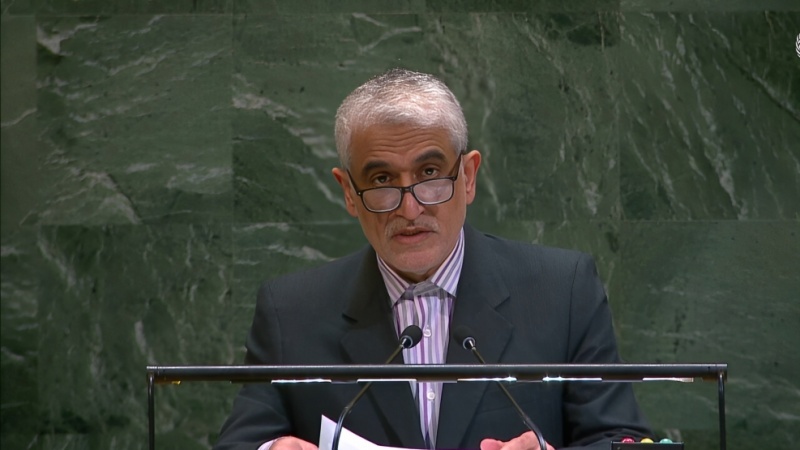
Amir Saeed Iravani, Iran’s ambassador and permanent representative to the United Nations
Pars Today – Iran’s ambassador to the United Nations stated that the United States is responsible for turning protests in Iran into unrest.
According to Pars Today, Amir Saeed Iravani, Iran’s ambassador and permanent representative to the United Nations, stated in a letter to the UN Security Council that the United States is responsible for turning peaceful protests in Iran into unrest and violent actions.
He condemned the illegal behavior of the US and its coordination with the Israeli regime to interfere in Iran’s internal affairs. Iravani added that this interference is carried out through threats, deliberate incitement to violence, and disruption of peace and stability. The Iranian ambassador emphasized: “We condemn this destabilizing action, which violates the UN Charter.”
The Supreme National Security Council of Iran, in a previous statement, noted that the United States and the Israeli regime have not abandoned their warmongering and hostility toward the Iranian people following the 12-day war. The statement emphasized that recent remarks by Donald Trump reflect a joint plan between these two regimes aimed at destabilizing the lives of the Iranian people.
It added that from the 12-day war until today, the Israeli regime has continued to oppress Iranians through hybrid warfare—sometimes changing tactics, but never abandoning its aggression toward the resilient Iranian nation. While recent incidents initially began as protests over market instability, they were escalated into insecurity across the country under the guidance and planning of Israel.
Iran’s emphasis on the direct and destructive role of the United States and Israel in instigating and encouraging unrest in the country is understandable given the recent actions of U.S. President Donald Trump and Israeli prime minister Benjamin Netanyahu.
In recent days, Trump has repeatedly expressed support for the rioters while threatening that any response by the Islamic Republic would be met with severe measures. His recent statements appear aimed at inflaming unrest, encouraging the continuation of protests, and promoting violent and destructive actions. Netanyahu has also repeatedly voiced support for the unrest and the rioters in Iran.
In fact, the U.S. president—who has inflicted the greatest damage on the Iranian people through his “maximum pressure” policy, imposing the harshest unilateral sanctions against Iran and later collaborating with Israel in attacks on Iran’s nuclear facilities during the 12-day war—is now claiming to support Iranian citizens.
During his first term—and now in his second term—Trump has aggressively pursued a “maximum pressure” policy against Iran, aiming to reduce the country’s oil exports to zero and force Tehran to submit to Washington’s excessive demands on nuclear, missile, and regional policies. This strategy includes broad economic sanctions that target not only the Iranian government but also the daily lives of ordinary citizens.
Unilateral U.S. sanctions have caused a sharp decline in Iran’s national currency, restricted access to medicine and essential goods, and increased livelihood difficulties for millions of Iranians. How can anyone accept that the person who designed and implemented such a policy now presents themselves as a well-wisher of the Iranian people? True concern for a nation is incompatible with imposing pressure and depriving people of their basic necessities.
At the same time, the recent statements by the U.S. president claiming concern for the Iranian people cannot be viewed separately from his past behavior and policies toward Iran. When someone who, during their time in office, repeatedly imposed economic, political, and even military pressures on a nation now claims to be acting out of concern, the assertion resembles a glaring contradiction rather than a sincere position. Critiquing this claim requires a review of his record regarding Iran.
At the present time, Trump’s interference in Iran’s internal affairs—as also highlighted in the letter from Iran’s ambassador to the United Nations—takes the form of threats, incitement, and deliberate encouragement of violence, aimed at disrupting peace and stability. One of the U.S. president’s key objectives in threatening the Islamic Republic appears to be both boosting the morale of rioters and intensifying a psychological campaign in parallel with severe economic sanctions and military threats against Iran.