Gharibabadi: International law must not be selective
-
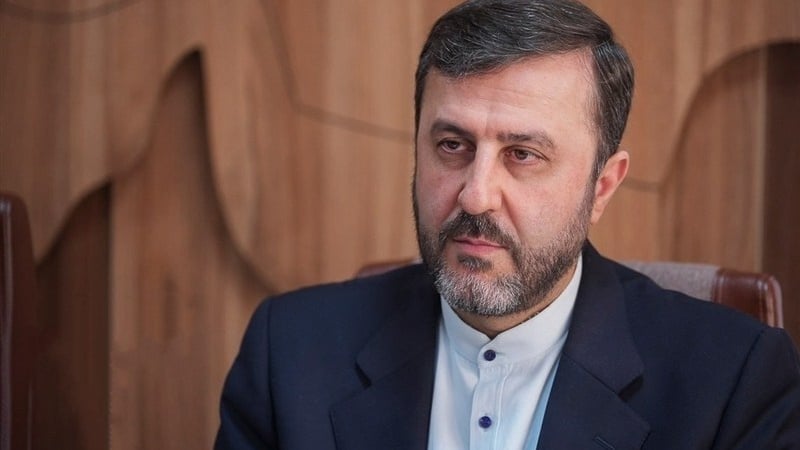
Kazem Gharibabadi, Iran’s deputy foreign minister said international law
Pars Today – Iran’s deputy foreign minister said international law, if it is to safeguard peace, cannot be a set of selective rules that are rigorously enforced against some states while being ignored in the case of others due to political considerations.
According to Pars Today, citing IRIB, speaking at a high-level meeting on defending international law at the United Nations on Friday night, Kazem Gharibabadi said the Islamic Republic of Iran believes that international law, if it is truly to safeguard peace, justice and human dignity, cannot be a set of selective rules that are rigorously enforced against some states while being ignored in the case of others due to political and power considerations, according to the Islamic Republic of Iran Broadcasting.
The Iranian deputy foreign minister said that in recent years, the Islamic Republic of Iran has faced blatant violations of the fundamental principles of the UN Charter. On February 28, 2026, a new round of military aggression by the United States and the Israeli regime against Iran began in the form of a 40-day war. On the first day of the war, the late and esteemed Leader of the Islamic Republic of Iran, along with 168 elementary school students and teachers in the southern Iranian city of Minab, were martyred.
He stressed: The position of the Islamic Republic of Iran is clear: the sovereignty and territorial integrity of states are not subject to violation or bargaining. No state can set aside the principle prohibiting the use of force solely on the basis of political claims or a unilateral assessment of a threat. If the fundamental principle enshrined in Article 2(4) of the UN Charter is undermined, no country, large or small, can have confidence in its security and sovereignty.
Gharibabadi added: Iran also believes that when faced with armed attacks, the right to self-defense, within the framework of the Charter and international law, is a legitimate and lawful right of the victim state. At the same time, the Islamic Republic of Iran emphasizes compliance with international humanitarian law, the protection of civilians, and the need to distinguish between military and civilian targets. These principles must be upheld without exception—whether in Palestine, Iran, Lebanon, Yemen or anywhere else in the world.
He emphasized: If international law is not applied equally to the powerful and the weak, allies and non-allies, and East and West, North and South, its credibility will be eroded. From this perspective, the role of the International Court of Justice is of even greater importance. As the principal judicial organ of the United Nations, the Court must be able to adjudicate disputes between states independently of political pressure and clarify states’ legal obligations.