Why did Imam Hossein stage an uprising against Yazid? What were the move's achievements for the Islamic Ummah?
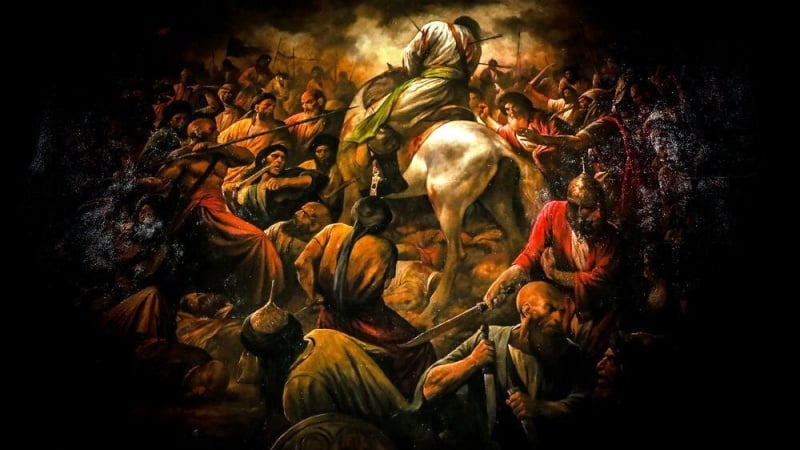
Pars Today- Imam Hossein's uprising occurred when the Islamic society was on the verge of total annihilation with the rule of Yazid, son of Muawiyah. Imam Hossein (Peace upon him) created Ashura epic and rescued Islam while he and all his companions were martyred.
Yazid corrupt ruler
Imam Hossein was contemporary with Yazid, an oppressive, licentious, habitually drunk, and anti-religion youth. Unlike his father Muawiyah who tried to observe religion, Yazid would commit many sins and insulted Islamic sanctities publicly.
Farewell to Islam with Yazid's rule
Imam Hossein, who was under pressure to pay allegiance to Yazid, said, "Farewell to Islam as Muslims are ruled by a ruler like Yazid."
He said in response to the invitation of the people of Kufa, "The Imam is the one who acts according to the Book of God, practices justice, follows the truth, and is totally obedient to God."
Factors of Ashura uprising
Ashura uprising was shaped in reaction to a series of political, social and religious factors. The main factor was the corruption of the ruler who had come to power as the representative of the Prophet.
The goals of Imam Hossein's movement can be briefed as follows:
- Revival of "Bidding what is right and forbidding what is wrong"
Imam Hossein said, "O God! Indeed, I love what is right and hate what is wrong."
- Reforming Prophet's Ummah
Before leaving Medina, Imam Hossein wrote to his brother Mohammad Hanafiyah, "I have departed not for selfishness, rebellion, seeking pleasure or causing corruption; my aim is to reform my ancestor's Ummah and practice the Sunnah of my ancestor and my father."
- Fighting innovations and revival of Prophet's Sunnah
After arriving in Mecca, the Imam wrote in a letter to the chieftains of Basra, "I invite you to the Book of God and Sunnah of the Prophet… if you listen to my words, I will guide you to the right path."
- Fighting explicit corruption
Imam Hossein (Peace upon him) said in a sermon to the troops of Horr in Iraq, "O people! Beware that they (Umayyad rulers) have abandoned God's obedience and obligated Satan's obedience for themselves. They have promoted corruption and left idle the divine limitations."
- Struggling against falsehood and practicing truth
The Imam said in Iraq, "Do you not see that truth is not being practiced and falsehood is not being prevented? In such a situation, a faithful should love to meet his Lord (to be killed in His way). [Thus], I don't see death except salvation and living with oppressors except pain and sorrow. People are the slaves of the world and religion is just a word on their tongue. They support it as long as they lead a comfortable life; and once they are put in test, few will stick to their religion."
- Rejection of disgraceful life
Elsewhere, the Imam said, "Humility is far away from us! God, His Prophet and the faithful do not accept this from us."
Some characteristics of Imam Hossein's uprising
- Divine nature and aim
- Universality of message
- Sincere self-sacrifice and martyrdom-seeking
- Key role of ladies, especially Lady Zeinab
- Historical and cultural durability
Some of the effects of Imam Hossein's uprising can be enumerated as follows:
- Revival of the spirit of freedom-seeking, struggle against oppression through enjoining what is right and preventing what is wrong
- Stabilizing the status of Imamate and rightfulness of the Prophet's Ahl al-Bayt
- Revival of the pure Mohammedan Islam
- Inspiration of all truth-seeking movements in history
- Exposure of true face of Yazid and the Umayyad dynasty
- Promotion of the culture of martyrdom and self-sacrifice in the way of truth
- Consolidating emotional and cognitive bond of the Ummah with the Prophet's Ahl al-Bayt
- Increase of political awareness and social responsibility among Muslims
RM/ME