Don't send wrong signals, China warns as US, allies flex muscles
-

Japanese Foreign Minister Yoshimasa Hayashi
Japanese foreign minister Yoshimasa Hayashi says the US has promised an "unwavering commitment" to defending his country, including in the case of southern islets disputed between Tokyo and Beijing.
Speaking at a news conference at the ministry in the capital, Hayashi said US Secretary of State Antony Blinken had assured of the support in a phone call on Saturday.
"Secretary Blinken stated that US commitment to defending Japan, including the application of Article 5 of the Japan-US Security Treaty for the Senkaku islands, was unwavering," he told reporters.
The uninhabited East China Sea islands of Senkaku lie about 220 km (135 miles) west of Chinese Taipei and are controlled by Tokyo but claimed by Beijing which calls them Diaoyu.
Tension between China and Japan escalated in 2012 when the Japanese government nationalized control over three of the Senkaku Islands in the East China Sea.
The uninhabited yet strategically-important island group has been under Japanese administrative control since the reversion of Okinawa to Japan from US administrative rule in 1972.
China maintains that the islands are an inherent part of its territory and that it has indisputable sovereignty over them. The Japanese government, instead, regards them as a part of its Ishigaki Island.
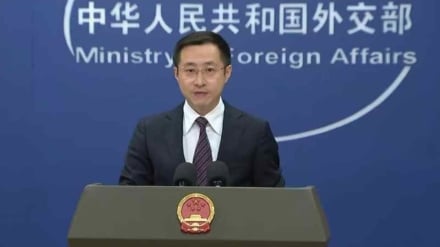
China's foreign ministry said in a statement on Saturday that senior Chinese diplomat Wang Yi had told Blinken not to "send wrong signals" to pro-independence forces in Taipei.
Both officials were also said to have spoken about the virtual meeting that Chinese President Xi Jinping and US President Joe Biden would have on Tuesday.
The US secretary of state threatened on Wednesday that the United States and its allies would take unspecified "action" if China were to use force to alter the status quo over Taipei.
China has sovereignty over Chinese Taipei, and under the "One China" policy, almost all world countries recognize that sovereignty. The US, too, recognizes Chinese sovereignty over the island but has long courted Taipei in an attempt to unnerve Beijing.
The United States, which backs Taipei's secessionist president, also continues to sell weapons to the island in defiance of Beijing and in violation of its own stated policy.
MG