Infectious diseases kill 324 in flood-ravaged Pakistan, alarm bells ringing
Authorities in Pakistan say skin infections, diarrhea and malaria in the flood-ravaged regions have claimed the lives of 324 people.
They said on Wednesday that the situation may get out of control if the required aid does not arrive in time.
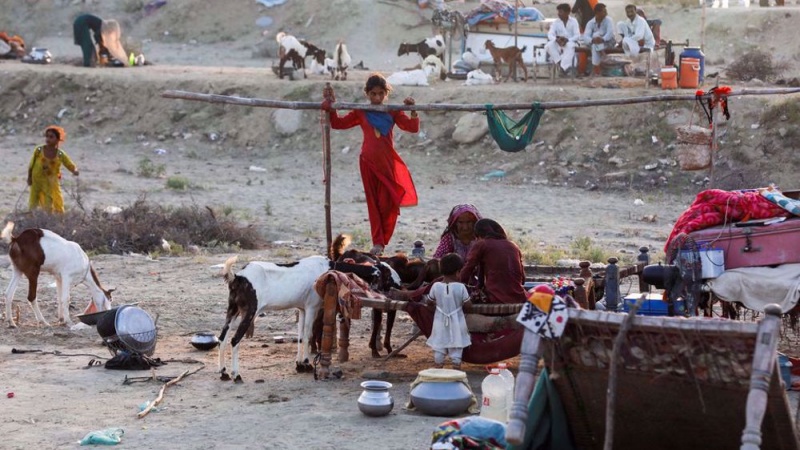
Hundreds of thousands of Pakistani people displaced by the torrential rains and flooding are living in the open and stagnant waters have led to serious health issues nationwide.
The authorities called for the acceleration of aid delivery.
Pakistan's health system already faces a host of shortcomings. The displaced families complain about being forced to drink and cook with disease-ridden water.
"The aid is slow to arrive," said Farah Naureen, Mercy Corps' country director for Pakistan after visiting several submerged regions.
"We need to work in a coordinated manner to respond to their immediate needs," Naureen said, adding that health and nutrition stand out as the most crucial needs of the displaced after clean drinking water.
The southern Sindh provincial government announced on Wednesday that makeshift health facilities and mobile camps in the flooded areas had treated more than 78,000 patients in the past 24 hours, and more than two million since the monsoon flooding started in July.
The provincial government said six people had also lost their lives over the past day.
The country's disaster management agency says well over 1,500 people have been killed in the flash floods, including 555 children and 320 women.
Over the past few weeks, authorities have thrown up barriers to keep the flood waters out of key structures such as power stations as well as homes. Farmers who stayed to try and save their cattle faced a new threat as fodder began to run out.
SS