Analysis | Trump’s empty threats and erosion of U.S. power
-
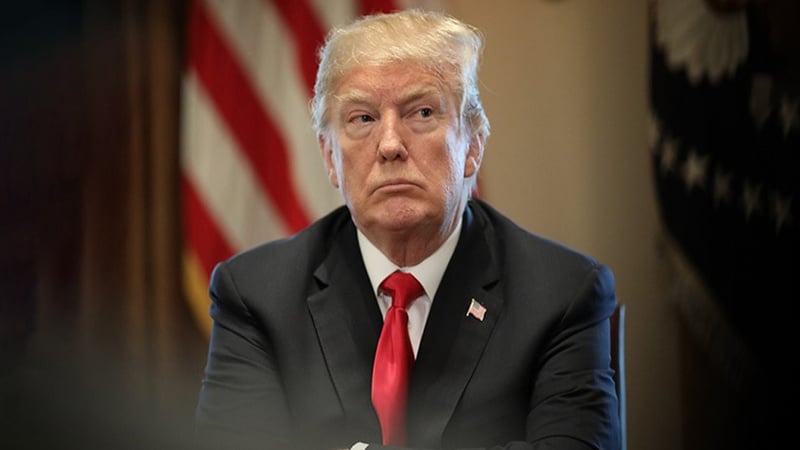
Donald Trump
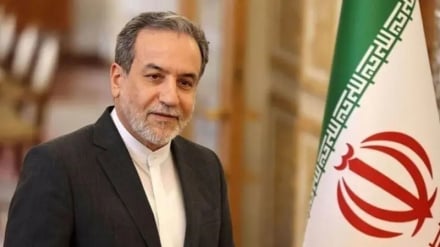
Pars Today – Donald Trump has once again threatened to bomb a country—this time Oman, a country that plays a role in talks related to Iran as well as developments concerning maritime traffic through the Strait of Hormuz.
Trump has said that if Oman obstructs U.S. actions, he would bomb the country heavily. This threat cannot simply be dismissed as an ordinary statement in U.S. foreign policy. Rather, it is part of a broader pattern in which the number of threats has increased, while the gap between making a threat and carrying it out has also widened.
Therefore, it would not be particularly surprising if Oman did not take Trump’s threats seriously. The Trump administration’s record with various countries has shown a significant gap between threats and actual action—a gap that has now become a strategic problem for Washington.
Trump is attempting to turn “unpredictability” into a tool for increasing U.S. power. But unpredictability, when it is not backed by a clear strategy, gradually turns into “unreliability.” Allies do not know what Washington’s next decision will be, while rivals are increasingly able to distinguish which threats can actually be carried out and which are made primarily as a means of political pressure.
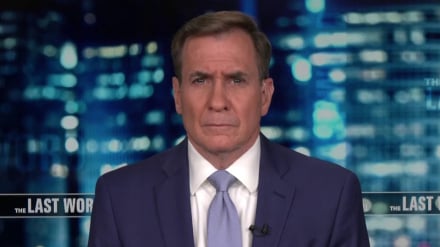
CNN sees the scope of this crisis as extending well beyond Iran. Oman is facing military threats from the United States on one side, while South Korea is under pressure from Washington on the other. Trump has criticized Seoul for refusing to enter the war against Iran, while at the same time taking positions on U.S.-South Korean military exercises that are increasingly aligned with some of North Korea’s demands. This contradiction could send a dangerous message to U.S. allies. Washington expects them to stand alongside it, while simultaneously sending mixed signals about its own security commitments.
Under such circumstances, Trump increasingly views alliances more like financial contracts: an ally is expected to pay its share and participate in missions that Washington considers important. This approach transforms an alliance from a long-term strategic asset into a short-term transaction.
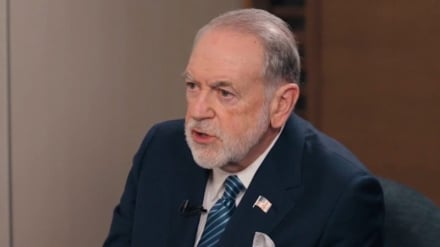
Richard Haass, the former president of the U.S. Council on Foreign Relations, has also warned about this trend. He described Trump’s claim that the United States owns the Strait of Hormuz as “stupid” and “destructive.” For years, the United States has emphasized the international status of the waterway, and such a claim could run counter to Washington’s long-standing foreign policy tradition.
Haass also considers the redeployment of some U.S. military capabilities from East Asia to West Asia dangerous. In his view, such a move could heighten concerns in Japan, South Korea, Australia, and the Philippines, while simultaneously giving China and North Korea greater opportunities to expand their influence.
These concerns are not merely theoretical. North Korea has continued developing its nuclear and missile programs, while Pyongyang’s relations with Moscow and Beijing have also deepened. Russia, meanwhile, has rejected Trump’s plans to end the war in Ukraine, and China has shown no signs of backing down in its economic and strategic competition with the United States.
As a result, the problem with Trump’s foreign policy is not simply the number of threats he makes; the central issue is the lack of a coherent strategy behind those threats. Trump seeks to extract concessions through pressure, but excessive pressure on allies can push them away from the United States. Repeatedly threatening rivals, when those threats are made again and again without being followed by action, gradually undermines their deterrent effect.
The United States is not necessarily facing a shortage of instruments of power today; the deeper crisis is the erosion of the credibility of using that power. An ally that no longer trusts U.S. commitments will look for alternatives, while a rival that senses hesitation in Washington will become more emboldened.
From Oman to South Korea, a common picture is emerging: Trump wants the world to fear American power, but a policy that substitutes threats for strategy may ultimately produce the opposite result.
If the world comes to the conclusion that Washington threatens more often than it acts, the cost of this situation for the United States could be greater than even the failure of a military operation. In international politics, the real erosion of power begins when others stop taking a power’s threats seriously.