Myanmar minister set to visit Rohingya refugee camps in Bangladesh
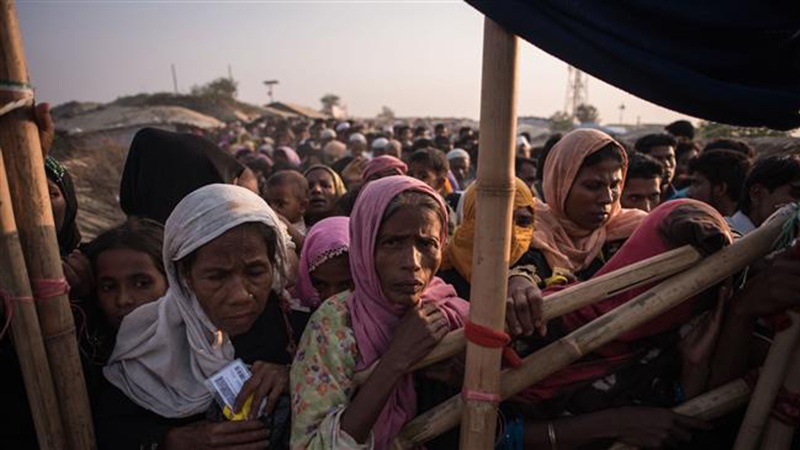
A Myanmar minister will tour camps for Rohingya Muslim refugees in neighboring Bangladesh, the first such visit since a crackdown by Myanmar's military drove thousands of the persecuted Muslim minority over the border.
Tareque Muhammad, a director-general at Bangladesh's Foreign Ministry, confirmed on Wednesday that Win Myat Aye, Myanmar's social welfare, relief and resettlement minister, would visit the congested camps. The visit is slated for April 11 or 12. "His program has not been fixed yet."
Win Myat Aye is the deputy head of a task force led by Myanmar's de facto leader Aung San Suu Kyi on the crisis in Rakhine state. He is also overseeing a stalled agreement with Bangladesh to repatriate thousands of Rohingya refugees.
Suu Kyi has done virtually nothing to stop crimes committed by the military against the Rohingya. Suu Kyi’s government has snubbed and obstructed UN officials who have sought to investigate the situation and it has prevented aid agencies from delivering food, water and medicines to refugees.
Bangladesh and Myanmar signed an agreement late last year to repatriate some 750,000 Rohingya Muslim refugees who have crossed the border since August to escape a brutal crackdown by the military. The repatriation was delayed due to a lack of preparation as well as protests staged by Rohingya refugees against the plan to send them back to Myanmar while conditions were not safe for their return.
Myanmar has approved several hundred Rohingya Muslims from a list of thousands to return to their homeland but not a single one has yet crossed back.
The camps in southeastern Bangladesh are home to nearly one million Rohingya refugees in total. Even before the latest influx began last August, the camps were home to roughly 300,000 Rohingya Muslims who fled previous waves of violence.
Myanmar’s government troops have been committing killings, making arbitrary arrests, and carrying out arson attacks in Muslim villages in Rakhine over the past months.
The UN has stopped short of officially designating the purge of Muslims from Myanmar as genocide, but it has reiterated that the crackdown, which has seen many people killed, lots of homes and villages torched and women raped by the military and Buddhist mobs, is a textbook example of ethnic cleansing.
The UN has also described the 1.1-million-strong Muslim community as the most persecuted minority in the world.
SS