Yalda Night
Dec 21, 2017 04:17 UTC
Iranians and all peoples living in the territory of Iranian culture have celebrated for many centuries the eve of the winter season which is the longest night of the year.
The last night of autumn and the Iranian month of Azar is marked with especial ceremonies and traditions all over Iran and the peoples of the historic land of Iran. This night is called Yalda. "Yalda Night" is the result of the Iranian culture's view toward this natural event and one of the most important national celebrations after Nowruz.
The history of the winter feast has a long record. Ancient Iranians believed that it coincided with the birthday of the sun on the first day of the winter called "Khorramruz". This festivity has been of great importance to the people whose life is based on agriculture and animal husbandry and has been a very popular Iranian celebration among the rural masses.
Yalda celebration owes its persistence to a number of factors, some which are as follows: Yalda is related with nature and the beginning of a new season; it is correlated with the lifestyle and kind of work of the Iranian farmers and rural community; and it indicates the spirit of gathering together among Iranians since old times.
Yalda "is a Syriac word for birth. According to ancient Iranian beliefs, the sun is born on the last night of autumn, the very last night of the month of Azar. The great Iranian polymath and genius of the 10th century AD, Abu Rayhan Biruni, celebrated the feast with the name "Milad Akbar" (Great Birth) and also called it the birth of the sun. It is possible to see the exact time of this birth in the book "Al-Tanbih Wal Ashraf” by Massoudi, a Muslim historian and scholar who lived in the 10th century. He deals with the divisions of the year into four seasons and when he speaks about the third season of the year, the last night of autumn was preceding the winter revolution. Abu Rayhan Biruni also referred to the first day of the month as "Khor", which in some sources was called "Khorram Day" (Pleasant Day). Ferdowsi has attributed Yalda and "Khor Day" to Hooshang, one of the kings of Pishdadian dynasty.
The Yalda Night feast is also called " Shab Chelleh" (Night of Forty), because it is the beginning of the first day of the period covering the entire month of Dey to the tenth of the month of Bahman, considered to be the climax of the winter's cold days. On this night, people would keep vigil all the night till sunrise by relating stories, reading Shahnameh and poems of Hafez. According to an old account, as the sun rises on the day following the Yalda Night, it will defeat the dark demon and will remove darkness from the life of people.
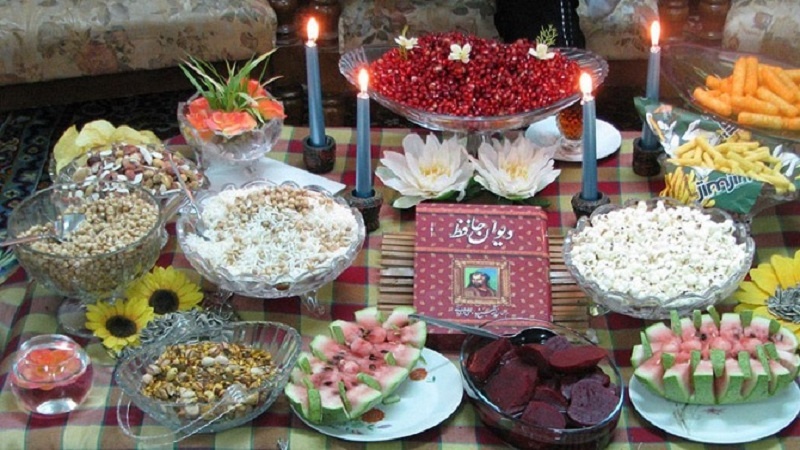
The forecasting of the future has also been among old traditions of the Iranian people in every season. Writer and researcher, Ali Bolukbashi writes: "This tradition has existed in the most ancient civilizations of the world, including the Sumerian-Babylonian civilization, like the celebration of Akitu feast to get aware of one's fate." Seeking help from Hafez and his pomes on Yalda Night is one of the most common issues among Iranians. By reading the Divan of Hafez, people try to see what he portends for them in his poems. Shahnameh reading and narration of epic tales composed by Ferdowsi is another common practice of Yalda Night. In addition, other rituals and beliefs have been common among Iranians on this night, which differs from region to region. But what is common among all Iranians is the gathering of family members, friends and acquaintances on Yalda Night and spending the last night of autumn together. People will spread their tablecloth on this night, sit around it and celebrate the feast. In some areas, the tablecloth is called "Khan Shabchara" and it is different in each region due to the climatic, social and cultural qualities of the ethnicities.
In general, the tablecloth of Yalda Night is decorated with a variety of foods and fruits, especially apple, pomegranate and watermelon, along with nuts. Eating watermelon and pomegranate has a mysterious meaning, as the red and purple pomegranate and watermelon are a symbol of the warmth of the sun in the cold weather of winter, and their eating helps human health in the coming cold season.
Yalda Night has greatly impacted the Iranian art, and artists have referred to various customs and aspects of this Iranian feast on different occasions. For example, the word "Yalda" was used by poets such as Onsori, Rumi Balkhi, Hafez, Sa'adi, Attar Naishburi, Naser Khosrow, Saeb Tabrizi and Masoud Saad Salman. These poets have used the word Yalda in their lyrics in the "tall and dark" sense of the word. With all the descriptions of this Iranian tradition, this question may cross your mind that, what can be the role and function of the feasts like the Yalda Night or Nowruz and what is their message for the man of the 21st century?!
The reality is that the world we live in today is so busy that getting rid of these bonds and chains we have created for ourselves seems very difficult. Yet, there are voices that the world is on the path to rationality, but this path separates humanity and disconnects emotional links more or less. Even the claims that people have been brought closer to each other on social networks are not that substantive, and the passage of time has shown that these networks exacerbate human loneliness. According to the latest research, people in these networks only feign being in good conditions. The study found that people who check all social networks more than 58 times a week are three times more likely to feel lonely than those who go to these networks less than nine times a week.
If one wants to live calmly and enjoy a healthy life in the current world, he must inevitably be aware of the context of the culture of ancient communities as the basis for today's traditions and customs. The celebration of Yalda Night and other Iranian feasts symbolizes their continuity in place and time. The smallest role and function of these celebrations may be the gathering of family members and friends and acquaintances, and to consolidate family ties and social relationships. What makes these feasts more significant and constructive is the fact that the relatives usually gather in the house of the grandparents. This links the national traditions with religious ones and bolsters emotional relations. These celebrations create cultural unity among different classes of the people in Iran from all ethnic, linguistic and religious groups. They also consolidate the Iranian cultural and national identity throughout the region. Therefore, Yalda Night can be viewed from this perspective and is considered as a necessity in the current circumstances.
AS/ME
Tags