Startling facts about Saudi palace coup
Jul 24, 2017 10:47 UTC
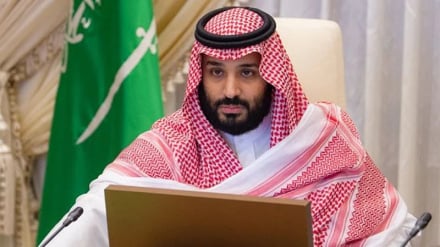
Last month the Wahhabi regime of the spurious entity called Saudi Arabia, yet again violated its own tribal laws and moved towards absolute dictatorship by unceremoniously removing Heir Apparent of the past two years, Mohammad bin Nayef, and replacing him with the impulsive 32-year old Mohammad bin Salman, the 7th son of the ailing 81-year old king Salman bin Abdul Aziz.
It is worth recalling that since Britain created Saudi Arabia in 1932 for its agent, the desert brigand, Abdul-Aziz, his sons had been succeeding him as kings and heirs-apparent, and the last such heir-apparent was his 35th son Muqrin, whom Salman sacked on becoming king in April 2015 and placed in his stead the now displaced Mohammad bin Nayef. Stay with us for interesting article on the palace coup in Riyadh where the puppeteer controlling the strings from behind is undoubtedly Uncle Sam and the next victim will soon be the senile Salman himself.
On Tuesday June 20 Mohammad bin Nayef, a powerful figure in Saudi Arabia's security apparatus for the past two decades and the next in line to the throne, was summoned to meet King Salman bin Abdul-Aziz on the fourth floor of the palace in Mecca.
There, according to a source close to MbN, as he is known, the king ordered him to step aside in favour of the king's favourite son, Mohammed bin Salman – known as MbS. The reason given was an addiction to painkilling drugs that was allegedly clouding MbN's judgment.
A source close to the regime said: The king came to meet MbN and they were alone in the room. He told him: 'I want you to step down, you didn't listen to the advice to get treatment for your addiction which dangerously affects your decisions'."
The new details about the extraordinary meeting between the king and MbN that touched off the de facto palace coup help to explain the events that are reshaping the leadership of Saudi Arabia.
MbN's alleged addiction, however, has not been confirmed. A senior Saudi official, who refused to give his name, said "this is totally unfounded and untrue.”
Sources with knowledge of the situation said however that Salman was determined to elevate MbS – his third wife’s son and the 7th of his own, who with the backing of the Americans and the Zionists has come to dominate the Aal-e Saud clan – to be heir to the throne and used MbN's alleged drug problem as a pretext to push him aside.
Sources said MbN was surprised when to be ordered to step aside. They said: “It was a big shock to MbN. It was a coup. He wasn't prepared.”
The sources further said MbN did not expect to be usurped by the often impulsive MbS, who MbN considered to have made a number of policy blunders, such as his handling of the Yemen conflict and cutting financial benefits to civil servants.
The high-stakes power grab has placed sweeping powers in the hands of the 32-year-old MbS, and appears designed to speed his accession to the throne. Should he get the job, he will preside over a country facing tough times from depressed oil prices, the conflict in Yemen, rivalry with an emboldened Iran and a major diplomatic crisis in the Persian Gulf.
The source close to MbN acknowledged that he had health issues, which were aggravated after an al-Qaeda attacker tried to blow himself up in front of him in his palace in 2009.
An Arab source with close Saudi links also provided a similar account of the meeting at which King Salman asked MbN to step down because of his alleged drug addiction. These sources said MbN had shrapnel in his body that could not be removed and he depended on drugs such as morphine to alleviate the pain. One source said MbN had been treated in clinics in Switzerland on three occasions in recent years. Reuters was unable to confirm this independently.
King Salman moved ahead of a meeting of the Political and Security Council. The meeting was due to start at 11 pm, but a few hours before that, MbN received what he viewed as a routine phone call from MbS. According to the source close to MbN, MbS told him that the king wanted to see him.
In the hours that followed the meeting in which MbN was dismissed, the Aal-e Saud's Allegiance Council, comprising the ruling family's senior members, were informed of a letter written in the name of the king. Drafted by palace advisers to MbS, it said MbN had a medical condition - drug addiction - and "we have been trying for over two years to persuade him to seek treatment but to no avail. Because of this dangerous situation we see that he should be relieved of his position and that Mohammed bin Salman be appointed in his place."
The letter was read over the phone to members of the Allegiance Council, while MbN was kept isolated in a room all night, his mobile phone removed, and cut off from contact with his aides. His bodyguards from elite paramilitary interior ministry units were also replaced.
Envoys were sent to council members to get their signatures. All but three of 34 signed. The coup had worked. Calls by council members who backed MbN's removal were recorded and played to him by a palace adviser to demonstrate the strength of the forces against him and to discourage any urge the 57-year-old crown prince might have to resist.
According to two Saudi sources with links to the palace, only three members of the council opposed his overthrow: Ahmed bin Abdul-Aziz, a former interior minister, Abdul-Aziz the son of late king Abdullah, and Mohammad bin Saad, a former deputy governor of Riyadh. The three could not immediately be reached for comment.
At dawn MbN gave up. He told a palace adviser that he was ready to see the king. The meeting was short. MbN agreed to step down and signed a document to that effect. When MbN left the king's quarters, he was surprised to see MbS waiting for him, the adviser said. MbN was embraced and kissed by MbS while television cameras rolled. Soon afterward a pre-written statement was released announcing the king's decision to make his son the next Heir-Apparent. This was the clip that would play on all Saudi and Persian Gulf Arab media over the coming hours and days.
As for MbN, he remains under house arrest to keep him out of circulation following his overthrow, with no visitors allowed except close family members. He is not taking calls, the source close to MbN said. In the past week he was only granted permission to visit his elderly mother with the new guards assigned to him. The source close to MbN said he would like to take his family to Switzerland or London but the king and MbS had decided that he must stay. "He wasn't given any choice."
The White House and CIA declined to comment. A senior administration official said Washington knew that MbS was the favourite of the king but "beyond that it's very opaque".
The elevation of MbS had been predicted by some Saudi and Western officials, but it came much sooner than expected with a rushed exit for MbN.
Since King Salman's accession, there had been clear indications that MbS was favoured over MbN, setting the stage for the younger cousin to eclipse the formal heir to the throne.
MbS was given unprecedented power by his ailing 81-year-old father, which he used to reorder the top jobs in the political, oil, security, security and intelligence sectors, often without the knowledge of MbN, according to diplomats and Saudi political and security sources.
Since Salman took the helm just over two years ago, MbS has placed his men in key positions. MbS has been interfering in MbN's interior ministry, appointing, promoting and firing officers without informing him.
The succession quarrel, the sources said, began in 2015 when MbN's personal court was disbanded and merged with the court of the king, preventing MbN from bestowing independent patronage and cultivating support. This was followed by the sacking of Saad al-Jabri, MbN's security adviser.
When the quixotic US president Donald Trump took formal charge at the White House, MbS cultivated contacts in Washington to offset the strong support that MbN had in the US security and intelligence establishment because of his successes against al-Qaeda.
The source close to MbN said the putsch went ahead after MbS struck up a strong relationship with Trump's pro Zionist Jewish son-in-law and adviser, Jared Kushner.
With MbS's sudden ascent, there is now speculation among diplomats and Saudi and Arab officials that King Salman may soon be forced to abdicate in favour of his son. Quoting a witness at the palace, one Saudi source said Salman this month pre-recorded a statement in which he announces the transfer of the throne to MbS. The announcement could be broadcast at any time, perhaps as soon as September.
AS/ME
Tags