Roots of Saudi purge lie in Washington
Nov 28, 2017 13:58 UTC
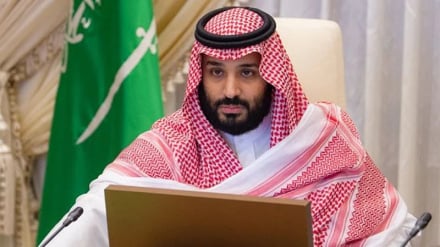
It was Jared Kushner’s un-announced visit to Saudi Arabia only days before Saudi Arabia’s night of long knives that appears to have set the stage for the great purge in Saudi Arabia, leading to the emergence of Muhammad Bin Salman, MBS, as the kingdom’s most powerful leader.
There is hardly any doubt that MBS is poised to take over as the new King, and there is hardly any doubt that the US is not only facilitating this take over by supporting it but also set to profit from it by selling weapons worth billions of dollars and by receiving Saudi investments in the US. In addition to it, by embracing MBS as the new king, the US, under president Trump, hopes to consolidate alliance against Iran and use the kingdom’s unprovoked kind of enmity towards Iran to its own advantage. As such, notwithstanding the EU’ anti-purge rhetoric, the political economy of the purge and MBS’ consolidation is such that international opposition stands little to no chance of leaving any meaningful impact, let alone reverse the ‘revolution.’ Salman Rafi Sheikh, research-analyst of International Relations and Pakistan’s foreign and domestic affairs, has more on the Saudi policy of destabilization.
This is pretty evident from the way the US president has backed up the purge. Even while he was on his very important maiden tour of Asia, the president wasted no time in using twitter to express his support. He stated in unambiguous terms in one of his many tweets “I have great confidence in King Salman and the Crown Prince of Saudi Arabia, they know exactly what they are doing … Some of those they are harshly treating have been “milking” their country for years!”.
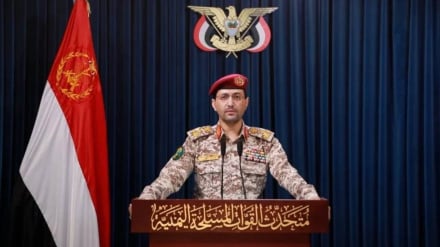
But that wasn’t that. That the US support for the purge is part of the larger US strategy for the region, particular vis-à-vis Iran, became evident in the White House’s statement of November 8, 2017. The statement, underscoring Saudi Arabia’s unfounded narrative on Iran’s involvement in Yemen said that the United States welcomes the Kingdom of Saudi Arabia’s statement exposing the Iran’s support for the Yemeni revolutionaries, including the supply of illegal arms such as ballistic missiles. In the statement they condemned Iran’s activities and stand with Saudi Arabia and the US partners in the Persian Gulf against what it called Iran’s aggression and blatant violations of international law! Expressing their support for Saudi Arabia’s war on Yemen, the statement said further that the US would continue working with other like-minded partners to respond to these attacks and expose the alleged Iran’s destabilizing activities in the region. However, the Saudis’ destabilizing and devastating policy is crystal clear for all from the impoverished nation of Yemen under the Saudi bombs to the Syrian and Iraqi refugees at the hands of Saudi-backed terrorists to the Lebanese people just recently in terms of the plots hatched against their sovereignty.
One is tempted to ask how does Saudi Arabia’s war on Yemen and baseless accusations against Iran coincide with the US support for MBS’ purge? There is a direct connection. The US is supporting MBS because they know that MBS is eager to make poisonous the Middle East including the independent Islamic Iran—something that the kingdom can’t hope to do without the support of the US both in terms of the latter’s active involvement in Yemen, and in terms of weapons that the US would sell to the kingdom to destabilize the region. Another reason that explains the US support for MBS is the expectation of Saudi investments in the US.
In one of his tweets Trump said that he wants the $2 trillion float of Saudi oil giant Aramco to take place in New York stock exchange. The US president added he had raised the matter in the call to the Saudi king as well. Even the information given in the White House’s readout on the call makes its explicit that the reason why the US is supporting MBS in his purge is nothing but potentially huge economic benefits. Apart from the above mentioned trillion float and listing of Aramco on US stock exchange, the readout also mentioned the so-called potential ‘defense’ deal, worth billions of dollars. It said, “President Trump thanked the King for military purchases, including a $15 billion investment in Terminal High-Altitude Area Defense (THAAD) and billions more in commitments and investments. The US president assured the Saudi King that he would support the purchase of appropriate military equipment that would keep Saudi Arabia safe and help create American jobs.
This is evident that Trump’s goal is to create new jobs at home, increase GDP, and boost the economy, crucial elements for his re-election in 2020. Rich allies like Saudi Arabia, finding themselves in a tight fix, are a perfect means of achieving this end. As such, it was hardly surprising to see MBS obliging a few months ago, to invest in the US economy of more than $380 billion over ten years.
What these high-level policy articulations from the president and the Kushner’s un-announced visit to Saudi Arabia mean in geo-political terms is the making of new wars in the Middle East as part of Saudi’s push to tilt the region’s balance of power to its favor. This could not have happened without prior consolidation at home, the purge or opponents, and support from their chief security guarantor and ally, the US.
But still the question of whether Saudi Arabia, under MBS as its king, will be able to control the process of political upheavals it has itself set in motion remains unanswered. In one of the many possible scenarios, the crackdown on Saudi elites may trigger uncertainty among businesses that could intensify capital flight or derail the so-called ‘reforms’ and discourage potential investors at a time when the protracted oil slump has created financial difficulties for the regime. Equally important is the question of rising tension in the domestic political arena. Will MBS be able to gain support from the Saudi society? That society has not known taxation; therefore, it remains to be seen how it reacts to MBS’ heavy taxation polices and what impact it leaves on the regime.
While we shall see how things unfold in Saudi Arabia, what is clearly on the horizon is that the US-Saudi nexus is in full swing and inching towards a fresh escalation of conflict in the Middle East, which is only beginning to recover from the havoc that ‘Daesh project’ has caused. For the battle hardened people of the Middle East, the defeat of Daesh, therefore, doesn’t appear to be the dawn they were waiting for. They should be aware of new plots by Ale-Saud family, acting as a stooge at the hands of Zionists and the US imperialism.
EA
Tags