How Saudi Arabia tried to bully Jordan and failed
Dec 31, 2017 10:37 UTC
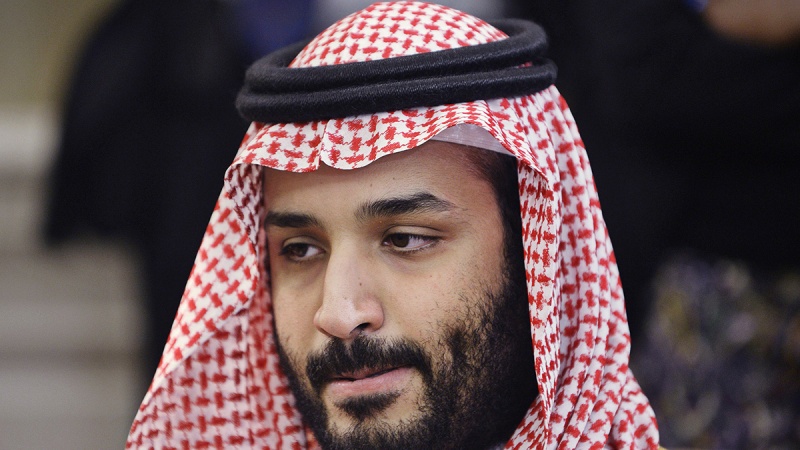
Whatever Saudi Arabia has done, since Mohamed bin Salman (or MBS) imposed himself upon his father, King Salman bin Abdul-Aziz, as the principle decision-maker and then declared himself Heir Apparent, has badly boomeranged on Riyadh.
Palestinian-Jordanian journalist Rami G Khouri has written an interesting piece on the issue.
At a first glance, Saudi Arabia's brief detention of billionaire Palestinian-Jordanian businessman Sabih al-Masri last Tuesday appears to be one of the most bizarre recent developments in the Arab world relating to wealthy individuals. But if we analyse the recent behaviour of Saudi Arabia's leadership, we can easily see that Masri's detention was not a surprising or unusual action.
This episode was in line with the current Saudi pattern of harsh arm-twisting, war-mongering, and intimidation that aim to bludgeon smaller Arab states to pursue the policies it favours.
Unfortunately for Riyadh, most of its actions have failed to achieve their goals, and in almost all cases they have backfired. These include the Saudi Arabia and United Arab Emirates (UAE)-led calamitous war in Yemen, the failed siege of Qatar, the unravelling of Saudi-backed rebels in Syria, and the embarrassing forced detention and "resignation" of Lebanese Prime Minister Sa’d Hariri.
These actions instantly prompted smaller Arab states to defy the Saudis and their allies, and also created new openings for non-Arab powers to develop strategic links across the Arab region (especially Iran, Turkey, Russia, some European nations, and perhaps China, soon).
The Saudis have said nothing of substance about Masri's case, as happened with the Hariri detention, so any analysis of the billionaire businessman's ordeal is limited to reasoned speculation.
Within the kingdom, such speculation saw Masri's detention within the context of continued anti-corruption initiatives by Heir Apparent MBS and the business links between Masri and detained Saudi billionaire Prince Waleed bin Talal.
Outside Saudi Arabia, analysts mostly saw a heavy-handed power play to force Palestine and Jordan to follow Saudi orders. It is a brutal message to Jordan and Palestine
The Saudi detention of Masri was a crude but brutal political message to Jordan's King Abdullah and Palestine's President Mahmoud Abbas on how to behave on the Jerusalem issue and regional alignments.
Riyadh wanted to signal to the Jordanian and Palestinian leaderships that it could swiftly cripple their economies and trigger existential crises in which banks would suffer terminal runs, the governments would fail to pay their employees, and the economies would sputter to a halt. The first signs of this appeared in recent days with the drop in the value of Arab Bank shares, which are an important savings and investment vehicle for middle-class Palestinians and Jordanians.
Masri was the perfect instrument to send this apocalyptic message. He is an important figure for both Jordan's and Palestine's economies as a leading investor, and as chairman of the Arab Bank that dominates both the Jordanian and Palestinian banking sectors. The bank has even bailed out these liquidity-stressed governments several times in the past.
This is why the brief Saudi action against just one man sparked instant and widespread concerns about the economic wellbeing of both these economies. Citizens also feared that Riyadh might follow up by barring Jordanian and Palestinian expatriate workers and exports to Saudi Arabia, which would shatter both economies and plunge 15 million Jordanians and Palestinians into deep crisis.
The presumed tripartite Saudi message was this: Amman and Ramallah should lighten up their criticisms of Donald Trump's recognition of the occupied Islamic city of Bayt al-Moqaddas as capital of the Zionist state of Israel; not join the Organization of Islamic Cooperation emergency summit that convened in Turkey earlier this month; and, support Saudi Arabia's desire to promote another so-called Israel-Palestine "peace plan" that is being developed by the White House.
Palestinians and Jordanians widely oppose the plan that they mostly see as reflecting Israeli priorities, rather than a balanced approach anchored in existing United Nations resolutions.
Jordan and Palestine - like Qatar, Yemen, Syria, and Lebanon before them - instantly rejected Riyadh's wishes, defied its threats and intimidation, and pursued policies that more closely aligned with the sentiments and interests of their own people.
King Abdullah and President Abbas attended the summit in Turkey, strongly denounced the US move on Jerusalem, and for good measure also placed themselves next to Turkey's President Rajab Tayyeb Erdoghan in the ceremonial summit photo.
The continuing pattern of bold but unsuccessful Saudi policies, often with Emirati backing, suggests several lessons to keep in mind.
First, small Arab states can defy the threats and withstand the militancy of big regional powers by standing firm on the only genuine source of security and well-being they have - the solidarity, interests, and sentiments of their own citizens.
Second, a rapidly evolving regional and global strategic order allows threatened small states to momentarily weather short-term storms by quickly reconfiguring their trade, transport, and strategic relationships with states near and far (as Qatar has done).
Third, Arab foreign policies anchored in the interests of Israel and the United States will always be rebuffed by Arab populations that increasingly reject the fickle nature of foreign support.
AS/EA
Tags