MBS: Death, Power Dealer
Apr 10, 2018 05:28 UTC
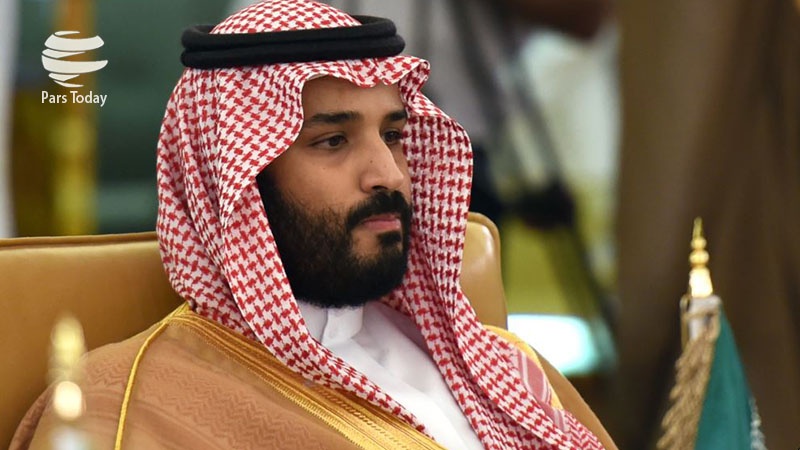
The betrayal of the Palestinian cause by Saudi Arabia, which has now openly allied itself with the illegal Zionist entity, on the orders of godfather US, has drastically changed the situation of the region, if not of the whole Muslim World, which is still in a state of shock at the now repeated statements of friendship with Israel by the self-imposed Heir Apparent, Mohamed bin Salman or MBS, as he is known.
Stay with us for an analysis that appeared on the ABNA website titled: “MBS: Death, Power Dealer”.
The Palestinian developments are coming to the surface again after a period of stagnation and marginalization that followed a string of developments in West Asia region including the eruption of popular uprisings in the Arab states, rise and demise of the Daesh terrorist group, and recently the revelation of US plans for the region like revival of the so-called Arab-Israeli peace process. This, of course, highlights the importance of the stances of the rival regional powers, especially those with political influence and a record of playing a role in the Palestinian cause.
In the first place, the players postures can leave impacts on plans for Palestine cause, either by helping them succeed or foiling them, including recognition of al-Quds as the capital of the Israeli regime by Trump, the so-called “deal of the century”. These actors' stances also can change the balance that governs the choice of compromising with Tel Aviv or militarily resisting its occupation of the Palestinian lands. Their positions can also unite or divide the Muslim states.
In the second place, the Palestinian case comes as a key issue among other active and important regional cases over which regional powers contest to build their favorable future regional order.
One of the countries with constant claims of leading the Arab front in the fight against the Israelis and supporting the Palestinian rights against the Israeli violations is Saudi Arabia. But the Wahhabi regime, which is experiencing a turbulent period of social, cultural, economic, and political transformation under the de facto leadership of the young self-imposed Heir Apparent MBS, has recently made a strategic shift which has called the regional and international attention.
MBS, who is in practice the ruler of the monarchy as he masterminds all of the state’s decisions, has recently in an interview with The Atlantic website during his recent visit to the US said the Israelis “have the right to have their own land”, referring to the lands usurped from the Palestinians nearly seven decades ago to establish the Israeli regime. The comments were taken as the prince’s recognition of the Israeli regime, something which has been a taboo among the Muslims around the world for decades.
The remarks, many analysts suggest, do not mark a great shift in Riyadh's approach to Tel Aviv as the two have ties on the sly. A couple of years ago, the secret relationship between the two was exposed by some parties. Also, the Saudi Foreign Minister, the Jewish looking Adel al-Jubeir earlier assured the Israeli leaders that if they allow a Palestinian state to form, the Saudis along with certain other Arab states will be ready to recognize an Israeli state and normalize diplomatic relations with it. But MBS’ recent talk of the “right” of the Israelis has sent strong messages to both the Palestinians and the Israelis.
MBS’ comments come on the heels of the largest Palestinian rallies, under “March of Return” title. The march, marked one week on Friday since the beginning, is a weeks-long protests in which almost 1.3 million of Gaza’s 2 million inhabitants who are refugees are demanding their right to return to their original homelands.
The six-week protest is set to end on May 15th, the 70th anniversary of the Palestinian Nakba, or “catastrophe,” when the fake Israeli regime was created, leaving some 750,000 Palestinians and millions of their descendants as refugees.
Tel Aviv regime’s brutal crackdown on Palestinian’s peaceful protest has so far claimed lives of 22 civilians and injured tens of hundreds more, making the protests deadliest in years.
This coincidence, the experts argue, is never accidental. The incident drew wide anger and condemnation of the international organizations and rights groups. Various Palestinian groups asked the international community, and especially the Muslim world, to put strains on Tel Aviv and force an investigation into the development, something Washington roundly rejected. In the meantime, the Saudi Arabian diplomatic apparatus’ head not only declined to show solidarity with the Palestinians but also closed eyes to the Israeli crime and even took stances most beneficial ever to the Israeli interests and most detrimental to the Palestinian cause.
By using the word “the right of Israel”, MBS alluded to formally accepting the Israeli occupation of the Palestinian lands annexed by Tel Aviv after 1967 as a result of the settlement and other illegal projects, including the eastern part of Al-Quds which the Palestinian Authority argues is the capital of a potential Palestinian state.
Over the course of past four decades, Saudi Arabia, supporting the Egyptian efforts to broker a deal between the Israelis and the Palestinians, has supported the compromise talks with Tel Aviv. The regime in Riyadh is one of the proposers of the two-state initiative which suggests Israeli and Palestinian states co-exist side-by-side.
So, the comments of MBS, who is expected to rule the absolutely-governed oil-wealthy Arab monarchy in the event of smooth power transition and not facing surprise happenings, signal that Riyadh has retreated from the demand for the establishment of a Palestinian state with pre-1967 borders and Eastern al-Quds as its capital.
In early December last year, Trump announced the recognition of al-Quds as the Israeli capital and relocation of the American embassy from Tel Aviv to the so-called new capital, meeting a several-year-old demand of the pro-Israeli lobbies in the US and also the Israeli leaders. The announcement, however, sparked global fury and prompted unprecedented White House isolation worldwide. In an effort to break the heavy pressure building on it, Trump administration massively pressed its Arab allies, specifically Riyadh, to set their postures in accordance with that of Washington. Initially, the Saudi rulers showed impractical objection to the American al-Quds move to save their face among the Muslim public and for the fear of reaction by home Islamists like the Muslim Brotherhood factions.
But things have changed for MBS now. The US administration has undergone a reshuffle that brought to office the warlike John Bolton as the national security advisor and Mike Pompeo, the former head of CIA, as the new Secretary of State, replacing Rex Tillerson. Moreover, the Saudi intervention in Yemen and Syria, Iraq, and even Lebanon did not go as they wished. Hoping to win the American and Israeli contentment, green light, and help in his fight for rule, in which loss could destructively shake his place and the image of his reforms, MBS has traded the Palestinians' right and ideal to return to their ancestral lands without fear of more Israeli hostilities.
AS/MG
Tags