An eternal journey through charming alleys of Astarabad, old city of Gorgan
-
An eternal journey through charming alleys of Astarabad, old city of Gorgan
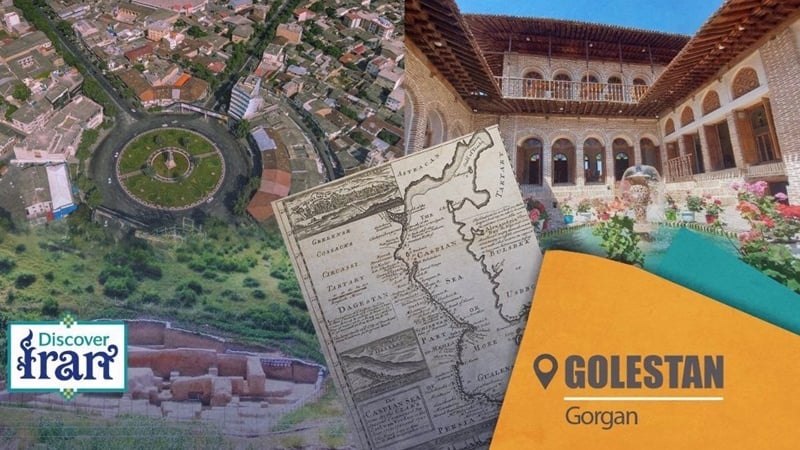
Pars Today – In the heart of modern Gorgan in northeastern Golestan Province, beneath the bustling development of a provincial center, lies one of Iran’s most historically significant and resilient urban fabrics: the old city center, known for centuries as Astarabad.
The old city of Astarabad, now known as Gorgan, is not a frozen relic but a continuously evolving entity. Its architectural patterns—from defensive walls and hierarchical alleyways to inward-facing houses with distinctive windcatchers—offer deep insight into the adaptation of urban life in the southeastern Caspian region throughout the Islamic era, particularly during the transformative Safavid and Qajar periods.
According to Pars Today, quoting Press TV, the architectural identity of old Astarabad is inseparably linked to its unique geographical and historical context.

Situated on the southeastern edge of the Caspian Sea, this city occupies a transitional zone between the semi-tropical humidity of western Mazandaran Province and the dry steppes of Turkmenistan to the northeast.
Bounded to the south by the majestic Alborz Mountains and to the north by the Gorgan River, the city enjoys a moderate climate while also serving historically as a vulnerable frontier, exposed to invasions and a strategic prize for rival powers.
Historically, Astarabad rose from the shadow of the ancient metropolis of Gorgan (Jorjan), located some 70 kilometers northeast near the modern city of Gonbad-e Kavus, which was devastated by the Mongols and a catastrophic 12th-century earthquake.
Migration and shifts in the focus of urban life led to the prosperity of Astarabad. The city’s significance grew further when it became the familial fortress and administrative center (dar al-mulk) of the Qajar tribe, and it was ultimately the birthplace of Agha Mohammad Khan Qajar, the founder of the Qajar dynasty, which ruled Iran from 1789 to 1925.
Throughout the Arab conquests, the conflicts of the Buyids and Ziyaris, Mongol upheavals, Timurid intrigues, and the wars between the Safavids and Uzbeks, Astarabad’s urban fabric was physically shaped and reshaped. Each cycle of destruction and reconstruction added a new layer to the city’s architectural narrative.
The fundamental structure of the old city of Astarabad was defined by a strong, inward-facing urban fabric enclosed within formidable defensive fortifications. The city was surrounded by a mud-brick wall approximately 5 to 6 kilometers long, reinforced with towers and protected by a deep moat.
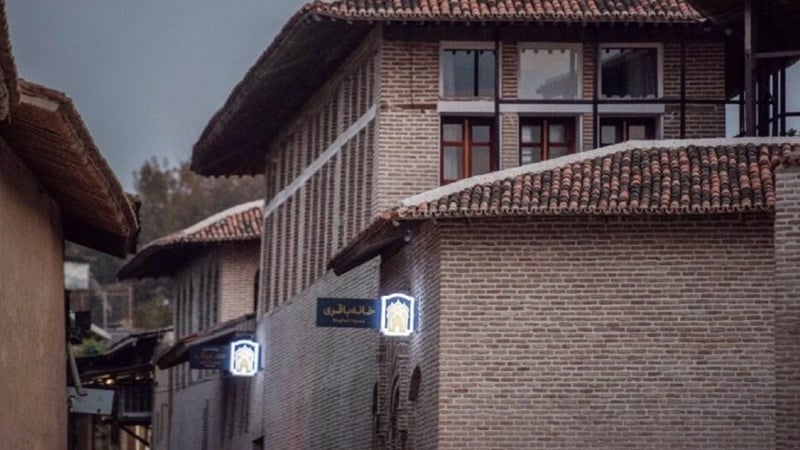
Residential architecture in Astarabad is a unique example of local adaptation to the humid, temperate climate of the Caspian region. Houses were primarily inward-facing and organized around central courtyards, which provided natural light, ventilation, and private open space.
The main building volumes were usually aligned along an east-west axis, with principal living spaces—such as three-door (seh-dari) and five-door (panj-dari) rooms—facing north and south to maximize sunlight and beneficial breezes.
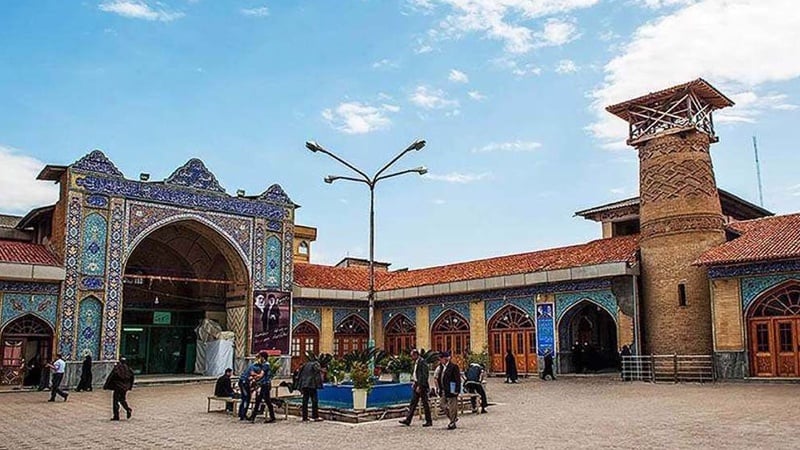
One of the most distinctive features of Astarabad’s skyline, especially among wealthier homes, was the windcatcher—a tower-like structure that captured cooler, elevated breezes and directed them into the interior spaces of the house.
Roofs were gently sloped and covered with clay, supported by sturdy wooden trusses that often extended well beyond the walls to create protective eaves against rain.
The building materials were entirely local: baked and sun-dried bricks, timber from the Alborz forests, and clay plaster.
The exterior façades, while generally simple, could feature decorative brickwork or plaster bands with inscriptions (katibeh) displaying Qur’anic verses or poetry. Inside, the focus was on spacious, high-ceilinged rooms with intricate wooden verandas (eyvans), niches (taqcheh), and in more luxurious examples, finely detailed plasterwork (gachbori).
The old Astarabad, now the center of Gorgan, represents a rare example of continuous habitation and organic evolution. Unlike many historic cores in Iran that have been abandoned or fossilized, this urban fabric remains a living, vibrant city center.
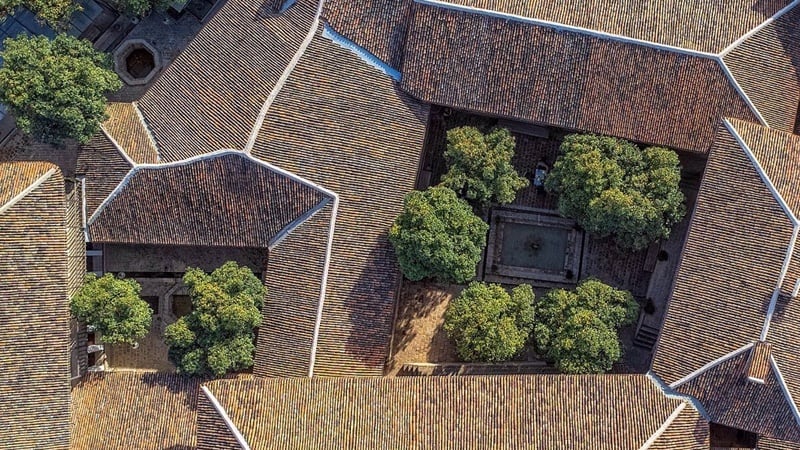
However, this very vitality carries the risk of unplanned development and deterioration. In recognition of its immense value, the old city fabric was registered as a national heritage site (No. 41) in early 1931.