From bird sanctuary to historical landmark: Story of Ashuradeh Island
-
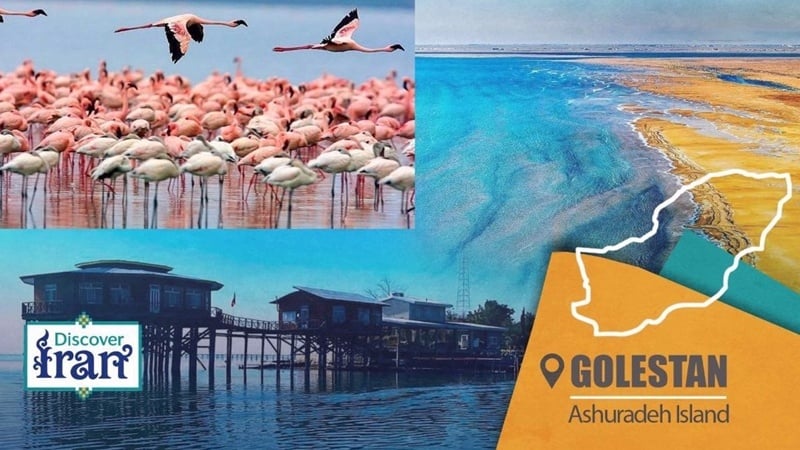
Ashuradeh Island
Pars Today – Ashuradeh, the only Iranian island in the Caspian Sea, is located near the Miankaleh Peninsula and is recognized as a sanctuary for migratory birds and unique wildlife species.
Ashuradeh Island, which is now largely uninhabited, was historically a stopover for Turkmen herders and fishermen and has long been exposed to climatic and environmental changes. According to Pars Today, citing Press TV, Ashuradeh is located 10 kilometers from Bandar-e Turkmen and 40 kilometers from Gorgan, bordered by the Caspian Sea to the north, the Chapaq Oqhli Strait to the east, the Khazini natural channel to the west, and the Gorgan Gulf to the south.
The island was originally part of an archipelago consisting of three islands, but with rising sea levels, the two smaller islands were submerged, leaving only the main island. Due to erosion and rising waters, Ashuradeh’s area has decreased from 1,200 hectares to about 400 hectares. Nevertheless, the island is recognized as one of Iran’s biosphere reserves, is covered under the Ramsar Convention, and is considered an internationally protected area.
Geological and environmental features
Geologically, Ashuradeh is composed of alluvial deposits from the Goharbaran (Neka) River delta, and its soil is sandy, lacking clay, making it highly susceptible to erosion. The island is characterized by tall sand dunes and sparse vegetation, including raspberry bushes, wild thorns, and sour pomegranate trees. Although overgrazing has led to the loss of traditional crops such as dates and cotton, the existing grasses play a crucial role in stabilizing the soil and preventing further erosion.
Wildlife and ecological importance
Ashuradeh is home to a diverse range of wildlife, including jackals, foxes, wild boars, and wild horses adapted to saline environments. Although the Caspian tiger, which once inhabited the island, became extinct due to overhunting, the island remains a critical corridor for migratory birds, hosting species such as pelicans, flamingos, swans, and ducks from Siberia and northern Russia. Economically, the waters surrounding Ashuradeh provide about 40% of Iran’s caviar and serve as a habitat for valuable fish species, including sturgeon, carp, and caviar-bearing fish.
Historical background
Historical evidence suggests that Ashuradeh may have been known by its ancient name, Abaskun, and it is said that Sultan Muhammad Khwarazmshah fled to this island during the Mongol invasions. During the Safavid era, Ashuradeh became a royal hunting ground, and in the Qajar period, due to its strategic location, it became a focal point of tensions between Iran and Russia. In the 19th century, the Russians occupied the island and established military and commercial facilities, until in 1921, under a friendship treaty, Ashuradeh was returned to Iran. Settlement on the island thrived until the 1970s, but rising sea levels and the floods of 1993 led most residents to leave. Today, only a few fishermen and fisheries staff live on the island.
Ashuradeh, as a symbol of the interplay between nature and history, with its unique ecological values and rich historical background, is considered one of Iran’s most important natural and cultural heritage sites in the Caspian Sea region. Protecting this island is essential not only for preserving its biodiversity but also for safeguarding its historical identity.