Why cognitive and media warfare against Iran intensified ahead of nuclear talks
-
Why cognitive and media warfare against Iran intensified ahead of nuclear talks
Pars Today – On Wednesday night, less than two days before the new round of nuclear talks between Iran and the United States in Oman, some U.S. media outlets claimed that the negotiations had been canceled.
Some media outlets then claimed that the United States, with the mediation of several Arab countries, was ready to hold talks with Iran. These reports were denied by Seyed Abbas Araghchi, Iran’s Foreign Minister, who confirmed that the negotiations will take place on Friday in Oman.
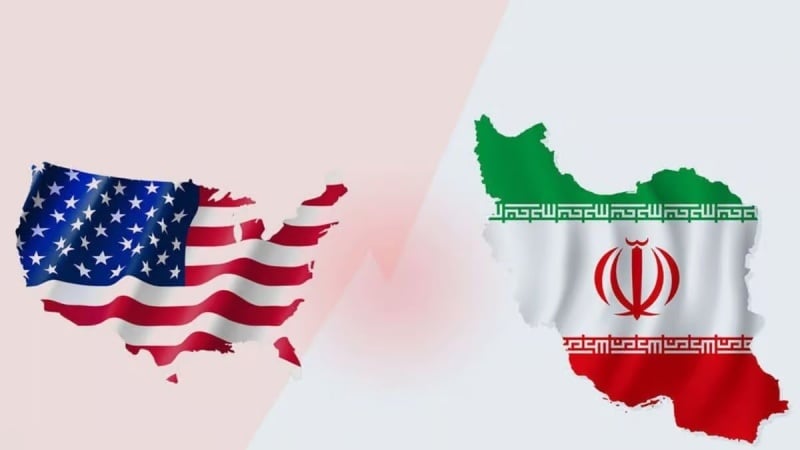
Following unprecedented tensions between Iran and the United States and the rising risk of a new war in West Asia, it was agreed—through the mediation of certain regional countries—that Tehran and Washington would begin a new round of negotiations. Muscat, the capital of Oman, hosts this round of Iran–U.S. talks, scheduled for Friday, February 6.
However, without any official announcement from U.S. political authorities about the cancellation of the talks, media outlets affiliated with the U.S. widely reported that the negotiations had been called off. Although disagreements between Iran and the United States are significant, it appears that the report by the American media outlet Axios had cognitive objectives and was part of a broader cognitive and media campaign against Iran.
The question arises: why has cognitive warfare against the Islamic Republic of Iran gained importance ahead of the negotiations? It seems that the primary goal is to maintain pressure on Iran in order to extract maximum concessions. The Americans and Zionists are fully aware that the Islamic Republic of Iran will not negotiate on its red lines, particularly regarding its missile capabilities. At the same time, they continue to make the miscalculation that Iran is in a weak position and incapable of defending itself in a future conflict.
Operating under this false assumption, cognitive warfare is sustained until the very last moments to try to extract maximum concessions from Iran at the negotiating table. However, the stability and firmness of Iran’s political authorities have demonstrated that Iran is neither in a weak position nor willing to yield to the U.S.’s excessive demands.
Another objective is that, on the eve of the new round of Iran–U.S. talks in Muscat, Washington sought to test Iran’s resolve and red lines by creating uncertainty about whether the negotiations would take place and by insisting on broadening the scope of the discussions.
Araghchi’s tweet, emphasizing that the negotiations are strictly nuclear, demonstrated that the Islamic Republic of Iran is fully aware of this type of “planned psychological operation” aimed at applying maximum pressure and will not be influenced by it. Iranian officials have firmly reiterated their commitment to the previously established framework, interpreting this U.S. behavior as a sign of its “lack of seriousness.”
A third objective of these operations is to send a false and misleading message to global public opinion. After failing in its military buildup scenario against Iran and being unable to project any image of Iranian submission to the world, the U.S. has turned to psychological warfare. The goal of this operation is to create the impression that Tehran has yielded to negotiations under pressure in order to meet Washington’s demands.
Araghchi’s tweet undermined this narrative of pressured negotiation, showing that Iran enters talks on its own terms and with initiative, not in reaction to military threats or temporary pressures. This tweet can be seen as a precise counterstrike in the battle of narratives and a direct response to targeted cognitive warfare.