Ziarat Village: Where spirituality, architecture, and nature intertwine
-
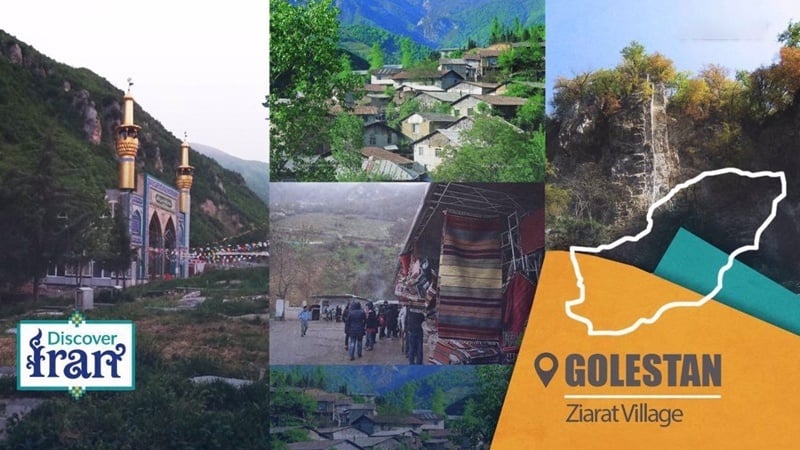
Ziarat Village in Golestan Province
Ziarat Village in Golestan Province, situated at an approximate altitude of 1,000 meters above sea level, lies nestled between two forested hills and is nourished by natural hot springs.
For decades, Ziarat Village in Golestan Province—just 17 kilometers from Gorgan and adjacent to the popular Naharkhoran Forest Park—has been known as a spiritual stopover, a summer retreat, and increasingly, a destination for eco-tourism. According to Pars Today, citing Press TV, Ziarat’s location within the Hyrcanian forests on the eastern edge of the Caspian Sea—one of the world’s oldest ecosystems—has preserved its pristine environment amid the steady growth of modern tourism.
Like many historic villages and towns in Iran, Ziarat’s identity centers around the shrine of Imamzadeh Abdullah, a descendant of Imam Musa al-Kadhim (PBUH), the seventh Shia Imam. It is this sacred presence that gave the village its name: “Ziarat,” meaning “pilgrimage.” Long before asphalt roads connected Gorgan to the surrounding mountains, families from across the region traveled here to visit the shrine. According to locals, the entire village developed around this holy site.
The landscape of Ziarat Village
Ziarat’s unique topography—with its steep slopes, forested valleys, and scenic mountains—offers an open invitation to tourists eager to explore the natural wonders of northern Iran. The Ziarat Waterfall, one of the area’s most popular sights, is surrounded by dense forests and accessible via a well-trodden hiking trail. Nearby, a natural hot spring flows with mineral-rich waters containing calcium, magnesium, and sulfur, located close to the mountain path leading to the village.

With a temperature of around 40°C, this hot spring is locally renowned for relieving muscle pain, rheumatism, and skin ailments. Several other springs surround the village, the most famous of which is the Sorkhrud Spring. Its clear, ever-flowing waters contribute to the local water supply, and the surrounding area makes an ideal spot for picnics.
Situated at a higher altitude than the city of Gorgan, Ziarat remains cool even at the height of summer. During the months of June–August, when Gorgan experiences intense heat over the Caspian plains, the village offers a pleasant climate. In spring, gentle rains bring the entire village to life with blooming flora. Autumn arrives with morning mist and forests painted in shades of yellow and red, while in winter, the surrounding hills are blanketed in snow. Locals believe the best time to visit Ziarat is from late April to early June, or in early autumn, when the forests display their peak autumn colors.
Archaeology and architecture of Ziarat
Archaeological evidence and local history indicate that Ziarat Village dates back to the early centuries of Islam. Its secure location within the mountains, protected by dense forests and abundant water resources, made it a safe haven against external invasions. Historical remains at sites such as Takht-e Khosrow, Takht-e Diga, Esfandiar Mahalleh, and other areas point to long-term habitation during the Qajar and Pahlavi periods.
Ziarat is even recognized as one of the “ten historically valuable Assyrian villages,” a designation highlighting its ancient heritage and the longevity of human settlement in the area. While this does not imply that the village was directly established by the Assyrians, the classification underscores the presence of archaeological sites, ancient structures, and historic buildings that reflect thousands of years of continuous human habitation.
Ziarat, with its distinctive traditional architecture, is also a remarkable example of human adaptation to nature. Most houses are built in a stepped design along the mountainside, using local materials such as stone, wood, and brick. The architectural layout is fully suited to the region’s mountainous climate: sloped roofs help channel rainwater, and inclined streets allow floodwaters to pass—both key features of this traditional design.
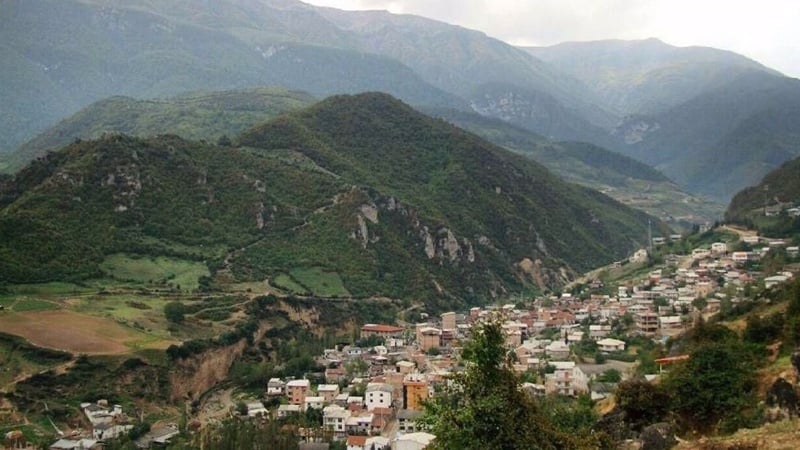
Houses are generally two or three stories high, with balconies overlooking natural landscapes that offer stunning views of the surrounding forests. Latticed wooden windows, thick walls for maintaining indoor temperature, and the use of earthy tones on exterior facades are among the elements that give the village a warm, authentic atmosphere.
At the heart of the village, public structures such as the mosque, the old school, and the shrine of Imamzadeh Abdullah are also built in the same traditional style. Many of the older houses still feature traditional decorations, clay ovens, and small water basins. Beyond their aesthetic appeal, this traditional architecture is highly effective in responding to the local climate, thanks to the use of native materials and efficient design.
A deep-rooted culture in the land
The people of Ziarat live a life closely connected to their mountainous environment. Agriculture, livestock farming, horticulture, and beekeeping shape the daily rhythm of life. Visitors are often welcomed with local honey, mountain herbs, and stories from the village’s past. Most products come from the surrounding lands: wildflower honey, pickles, pomegranate paste, verjuice, syrups, and dried medicinal herbs such as borage, yarrow, and thyme.
Some families also produce jajim (handwoven rugs), woven textiles, and wicker baskets—traditional crafts deeply tied to local customs. In Ziarat, life beats in harmony with the mountains and forests. Daily routines, long-standing traditions, and the surrounding natural beauty blend together, offering visitors a portrait of a village where history, culture, and nature coexist in perfect balance.