Nasir al-Din al-Tusi: A genius from land of Iran
-
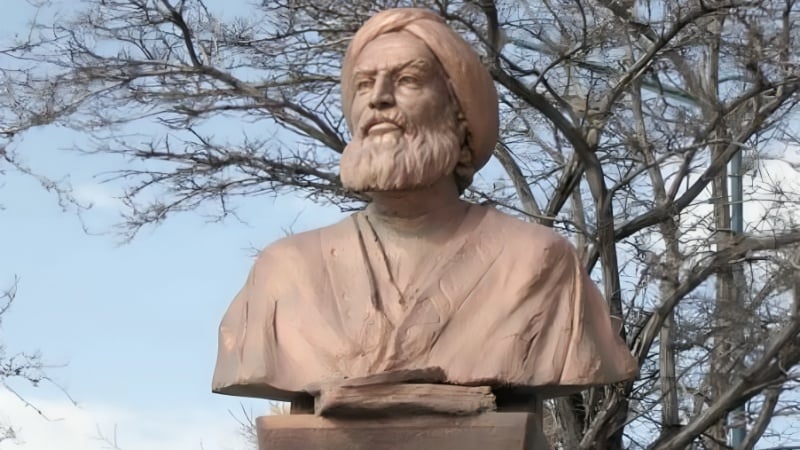
Iranian thinker Nasir al-Din al-Tusi
Pars Today – The fifth day of Esfand 5 in the Iranian calendar is dedicated to commemorating Nasir al-Din al-Tusi, a name closely associated with the rise of science in Iran.
Nasir al-Din al-Tusi was a philosopher, theologian, mathematician, astronomer, and engineer who not only pushed the boundaries of knowledge but also helped preserve rational thought during some of the most turbulent periods of history. His birthday, the fifth of Esfand in the Iranian calendar, is also designated as Engineers’ Day in Iran.
This article reviews the life and legacy of this great Iranian scholar.
Birth in Iran and journey to Iraq
Nasir al-Din al-Tusi was born on the fifth of Esfand 5, 579 SH in the city of Tus, during the return journey of a scholarly family from a pilgrimage trip.
His father, Sheikh Wajih al-Din Muhammad ibn Hasan, a prominent scholar from Qom, named the child “Muhammad” with inspiration from the Quran. Later, he became known by the honorific title “Nasir al-Din” and was remembered in history as the “Master of Humanity.”
The young Muhammad began his education under his father’s guidance and later studied mathematics and logic under his uncle, Nur al-Din Shia’i. He was subsequently granted the clerical title “Nasir al-Din” by Nasir al-Din Abdullah ibn Hamza.
Driven by an intense thirst for knowledge, he traveled from Tus to several scientific centers, including Nishabur, Ray, Isfahan, and later to Mosul and Baghdad, a scientific journey that shaped him into a truly multidisciplinary scholar.
Saving knowledge from the Mongol storm
During the Mongol invasion, peace vanished from the land of Iran. Nasir al-Din al-Tusi had taken refuge in the Alamut castles of the Ismailis, where he spent about 26 years in captivity. Even in prison, he never abandoned writing and continued composing scientific papers.
After the Mongols under Hulagu Khan attacked the Alamut fortresses, the situation changed. Through diplomacy and dialogue, Tusi persuaded the castle authorities to surrender. This decision not only saved the lives of thousands of people but also preserved the great Alamut library from certain destruction.
He later became a minister and adviser to Hulagu Khan. According to a statement attributed to Imam Khomeini (God bless his soul), Tusi did not enter the Mongol administration to serve as a minister but to “civilize them.” Through his influence, he is said to have restrained Mongol violence and transformed a threat into a source of relative security.
Architect of knowledge: From trigonometry to ethics
Nasir al-Din al-Tusi was not only a philosopher and astronomer but also an architect who contributed to mathematics, logic, and scientific methodology. In the history of science and engineering in Iran, he is regarded as a pioneering figure whose work helped advance disciplines such as trigonometry, astronomy, and ethical philosophy.
His achievements are often interpreted as embodying the idea of “engineering” in its broadest sense—namely, the construction of knowledge, society, and human understanding rather than only physical structures.
Nasir al-Din al-Tusi revolutionized mathematics by separating trigonometry from geometry, establishing it as an independent scientific discipline. His works in this field were taught for centuries in universities across both Europe and Asia.
In astronomy, he established the Maragheh Observatory in Iran—not merely as a simple structure but as a comprehensive scientific center equipped with precise observational instruments and a library that reportedly contained more than 400,000 volumes, making it one of the world’s largest scientific institutions of its time.
In ethics, he authored the enduring work Akhlaq-e Naseri, a masterpiece of practical philosophy that integrated wisdom, science, and religion in the pursuit of human flourishing.
His intellectual breadth earned him the title “Master of Humanity.” Among his notable students were scholars such as Allamah Hilli, Qutb al-Din Shirazi, Ibn Maytham al-Bahrani, Ibn al-Fuwati, and Sayyid Rukn al-Din—names that each helped strengthen the foundation of Islamic scientific civilization.
A name written on the face of the Moon
The legacy of Nasir al-Din al-Tusi extended beyond Earth. Western scholars also recognized his contributions; his trigonometric works were translated into French in the 16th century.
Today, a lunar impact crater with a diameter of about 60 kilometers is named Nasireddin in his honor. In 1979, the asteroid numbered 10269 was also named 10269 Tusi.
The fifth day of Esfand 5 serves as a reminder that engineering is not only about building structures but also about shaping the future. Nasir al-Din al-Tusi symbolizes the rational spirit that, even amid chaos, helped build the future of science and etched his name both in history and on the Moon.