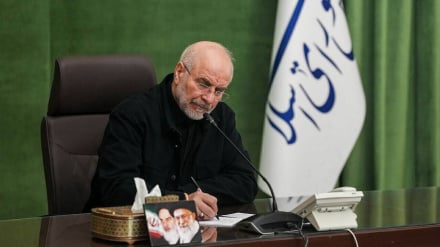
Baqaei: Islamabad Memorandum focuses on ending war on all fronts; possible signing in coming days
-
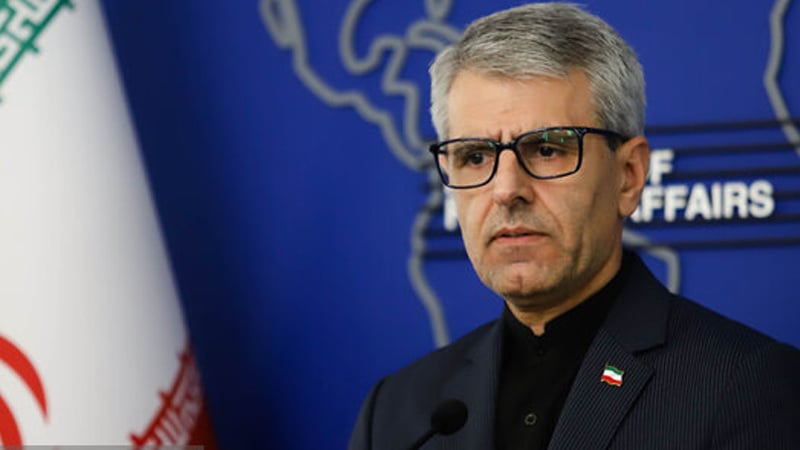
Foreign Ministry spokesperson Esmaeil Baqaei
Pars Today – The spokesperson for the Ministry of Foreign Affairs of the Islamic Republic of Iran said that the Islamabad Memorandum, which is currently being pursued, focuses on ending the war across all fronts, and that at this stage it has been decided not to discuss the nuclear issue.
According to Pars Today, citing IRIB News Agency, Foreign Ministry spokesperson Esmaeil Baqaei said at a press briefing on Saturday that, referring to U.S. bad faith toward Iran, Iran has a responsibility to approach the diplomatic process with skepticism, adding that “a year and a half of negotiations with the American side, along with their breaches of trust and actions during previous talks, require us to proceed with extreme caution and foresight.”
Baqaei noted that issues between Iran and the United States are highly complex. He added that, based on past experience, the current focus is on ending the war on all fronts, including Lebanon, and it has been decided that the nuclear issue will not be discussed at this stage. He said discussions on that matter are expected to take place within a 60-day period.
He also said that attacks on Iranian shipping and issues related to the Strait of Hormuz are among the topics being discussed in this phase, adding that the possibility of signing an agreement between Iran and the United States in the coming days cannot be ruled out.
Referring to the Strait of Hormuz, Baqaei emphasized that, under international law, the strait lies within the territorial waters of Iran and Oman as the two coastal states, and that Iran’s exercise of sovereignty in this area is in line with safeguarding national security and the exercise of its sovereign rights—something also recognized in international law.
The Foreign Ministry spokesperson further noted that commitments are being structured in a reciprocal manner, meaning that at every stage, if the other side fails to fulfill its obligations, Iran would likewise be entitled to take countermeasures.
Baqaei added that the Iranian people have shown determination in defending their interests, dignity, and independence, saying that in “these 40 days of defending the country,” they have delivered an unforgettable lesson to the adversary.
The spokesperson for Iran’s Foreign Ministry also said that Iran’s policy of repairing relations with other countries is very important, adding that Iran has never said—and does not believe—that it has problems with regional countries. He stressed that Iran has no hostility toward any of its neighbors, and that neighboring states are highly respected by Tehran.
He noted that what has occurred was the result of a military aggression by the United States and the Israeli regime, and, regrettably, the failure of some regional countries to fulfill their legal and moral responsibilities to prevent aggressor parties from using their territory and sovereignty—including bases and facilities—to attack Iran.