Analysis | U.S. fired more, but Iran fought with greater precision
-
U.S. fired more, but Iran fought with greater precision
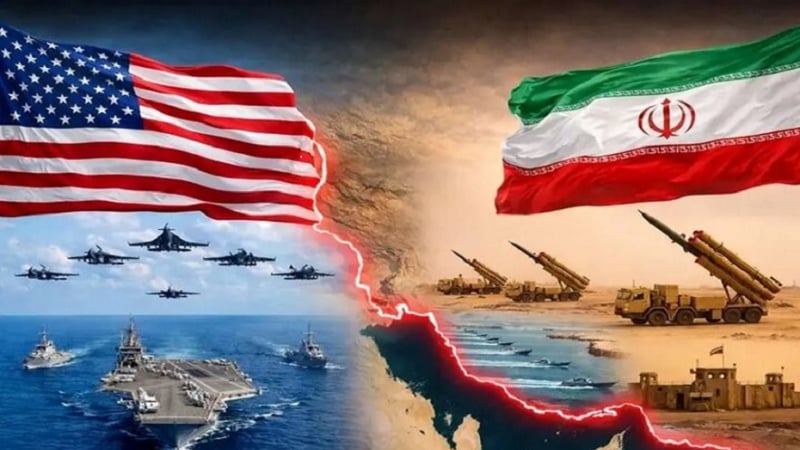
Pars Today – On the battlefield, the advantage does not always belong to the side that fires the most shots. Sometimes, what matters more than the volume of fire is where each strike lands, which part of the enemy’s capabilities it disrupts, and to what extent it can alter the opponent’s calculations.
Wars cannot be analyzed solely by counting fighter jets, missiles, and drones. Firepower matters, but it is not always the decisive factor. In many conflicts, the side that understands its targets better, chooses the right moment more accurately, and employs its resources more strategically can create serious difficulties for a larger and better-equipped adversary.
According to Pars Today, two different approaches have emerged on the battlefield in recent days. The United States has sought to pressure Iran’s communications and logistical infrastructure through extensive and repeated attacks. Iran, meanwhile, has avoided entering a purely quantitative contest and has instead focused on targets that play a direct role in American command and control, reconnaissance, aerial refueling, and operational support.
The U.S. objective was clear: to disrupt Iran’s support network and reduce its military response capability in the shortest possible time. Attacks on parts of southern, southwestern, and central Iran were carried out within this framework. Areas around Bandar Abbas and Bandar Khamir, as well as locations in Chabahar, Bushehr, Ahvaz, Qeshm, Sirik, Yazd, Andimeshk, and Lar, were among the targets.
However, developments on the ground differed from Washington’s initial objectives. While some infrastructure sustained damage, Iran’s command structure and operational capabilities remained intact. Alternative supply routes were established, military forces continued their activities, and the country’s ability to respond militarily was preserved. This indicated that Iran’s defense structure is not dependent on only a few fixed locations and that various contingencies had been anticipated for times of crisis.
More importantly, after enduring the first wave of attacks, Iran moved beyond a defensive posture. Tehran’s response was not merely symbolic. The targets it selected played a direct role in sustaining U.S. operations, ranging from radar systems and command centers to ammunition depots, drone facilities, and aerial refueling aircraft.
This approach can be described as a form of active deterrence. In practical terms, it means that Iran is not simply waiting for the next attack but is also attempting to target the enemy’s capacity to launch future operations. Such a strategy could restrict the operational freedom of American commanders and compel them to factor the potential costs of an Iranian response into their planning before undertaking any new military action.
In the strikes carried out against U.S. bases across the region, Tehran sought to distinguish between the host countries and American military facilities. Iran’s message was that its confrontation is not with neighboring nations and their peoples, but rather with the military infrastructure that uses regional territory to conduct operations against Iran.
Accordingly, surveillance radars in Oman, the U.S. special operations center at Al-Tanf in Syria, facilities at Muwaffaq Al Salti Air Base in Jordan, and parts of Al Udeid Air Base in Qatar were targeted. In Bahrain, installations linked to unmanned vessels, intelligence processing, and operational support reportedly came under attack. In Kuwait, HIMARS launch platforms, weapons depots, and radar systems were among the designated targets, while in the United Arab Emirates, sites within Zayed Military City were struck. In northern Iraq, armed groups and bases that could potentially play a role in ground operations or sabotage against Iran were also targeted.
The selection of these targets suggests that Iran has sought to focus not on the broader footprint of the U.S. presence in the region, but rather on its more sensitive components—those whose loss would make future operations more complex, costly, and time-consuming.
In the maritime domain, Tehran also sought to demonstrate that its ability to respond is not confined to land-based targets. The strike on a military vessel in the northern Indian Ocean and actions against ships that were allegedly operating outside the announced guidelines in the Strait of Hormuz formed part of this message. Iran aimed to signal that it closely monitors the waterways around it and that, should the conflict expand, it has the capacity to influence the regional maritime balance as well.
The fundamental difference between the two sides may perhaps be summed up in a single sentence: the United States fires more, while Iran seeks to ensure that each strike produces a more specific effect.
The U.S. campaign has relied heavily on the extensive use of fighter jets, naval missiles, and loitering drones. The repeated targeting of certain locations also suggests that some high-value objectives may have already been struck and that the current emphasis is on the gradual degradation of infrastructure.
Iran, by contrast, has employed a combination of Shahed and Arash drones, ballistic missiles, and cruise missiles. The coordinated timing of the attacks and the simultaneous approach of airborne targets from multiple directions place significant pressure on air-defense systems. Under such conditions, even advanced defensive networks may face shortages of reaction time, interceptor missiles, or processing capacity.
Iran’s targets have generally been sites that play a central role in directing military operations: radar installations, intelligence centers, targeting systems, drone depots, and refueling equipment. Put simply, rather than merely striking the enemy’s arm, Iran has sought to put pressure on the brain and nervous system of its operations as well.
The fact that some Iranian missiles and drones penetrated defensive layers demonstrated that systems such as the Patriot are not impenetrable. No air-defense network can provide absolute protection against large-scale, combined attacks—especially when threats approach from different altitudes, at varying speeds, and along multiple trajectories.
At the same time, the increase in flights by American reconnaissance, refueling, and transport aircraft has revealed important aspects of the situation on the battlefield. The persistent presence of intelligence-gathering aircraft near Iran’s coastline and the Strait of Hormuz suggests that the United States requires extensive surveillance efforts to identify new targets and monitor Iranian activities.
The deactivation of position-transmitting systems on some aircraft during their missions may also indicate attempts to conceal flight paths. Such measures are often adopted when the opposing side possesses substantial capabilities to track and analyze aerial movements.
Meanwhile, the establishment of a large-scale air bridge using C-17s, C-130s, and various aerial refueling aircraft points to considerable strain on the U.S. logistical network. When aircraft are forced to remain airborne for longer periods or operate from more distant bases, the cost of each mission increases. Crew fatigue, fuel consumption, equipment wear, and the challenges of maintenance and repair also accumulate over time.
The extensive reliance on aerial refueling also suggests that some regional bases no longer enjoy the level of security they once did. Relocating aircraft and equipment from nearby bases to more distant locations may reduce the risk of direct damage, but it inevitably makes operations more complex and costly.
On the other side, one of Iran’s strengths has been the flexibility with which it deploys its forces and equipment. Mobile systems, multiple supply routes, and the dispersion of operational centers have made it difficult to completely eliminate Iran’s ability to respond. The more time and resources an adversary must devote to locating these assets, the greater the resulting operational strain.
Intelligence capabilities also play a crucial role. Identifying the locations of military equipment, intercepting communications, and determining the coordinates of launch platforms demonstrate that the conflict is not confined to the skies and the sea. A significant part of it is unfolding in the realms of intelligence, communications, and data analysis.
At this stage, Iran has sought to show that it possesses not only missiles and drones, but also the intelligence-gathering capabilities necessary to employ those systems effectively. Precision weapons have limited value without precise intelligence. What ultimately enhances the impact of military strikes is the combination of surveillance, decision-making, and operational execution.
Perhaps the most significant consequence of these developments has been the gradual shift in American calculations. Before the conflict began, it may have been assumed that a sustained and overwhelming campaign could rapidly cripple Iran’s military capabilities. Yet Iran’s continued responses have demonstrated that each attack carries the risk of retaliation against one of the United States’ key installations in the region.
From this point forward, American commanders can no longer focus solely on their offensive capabilities. They must also take into account the security of their radar systems, bases, refueling aircraft, ammunition depots, and command centers. This reality inevitably constrains the operational freedom of U.S. Central Command.
Washington now faces a difficult choice. Scaling back its attacks could be perceived as an acknowledgment of limitations in confronting Iran, while broadening the conflict would entail greater human, financial, and political costs. Sustaining large-scale operations over an extended period—particularly in a region where American bases remain within striking distance—will not be easy.
Iran, for its part, has demonstrated that it does not intend to expand the conflict indefinitely or without calculation. Its responses have been phased, and its targets selected according to the role they play in the adversary’s operations. This approach suggests that Tehran seeks both to demonstrate its capabilities and to maintain control over the escalation of tensions.
Ultimately, what is unfolding on the battlefield is a contest between two different forms of power. The United States continues to enjoy a substantial advantage in terms of aircraft, munitions, and logistical resources, but Iran has sought to challenge that superiority through precision, dispersion, mobility, and a deeper understanding of the operational environment.
The war is far from over, and both sides still possess significant capabilities. Nevertheless, one reality has already become apparent: Iran has not only withstood the initial wave of pressure, but has also managed to alter some of the dynamics of the conflict.
In such a confrontation, victory is not determined solely by who fires the greater number of weapons. Sometimes, the winner is the side that compels its adversary to think much more carefully before launching the next strike.