How boycotts threaten academic life in Israel?
-
Boycotts against the Zionist Regime
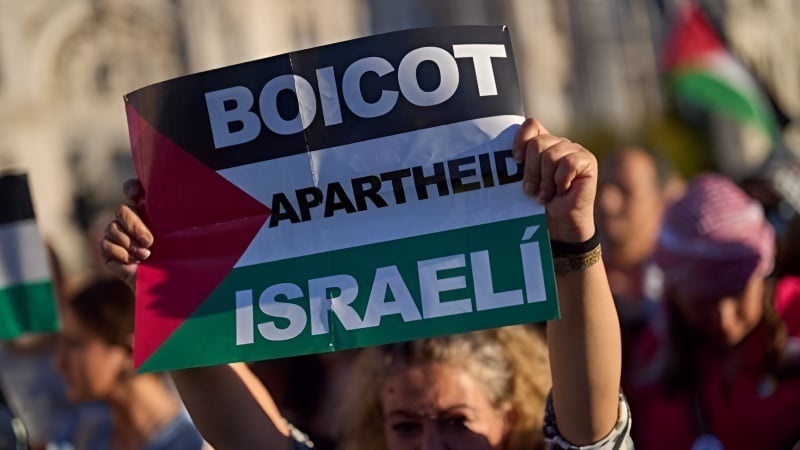
Pars Today – The Zionist media say that boycotts against the Israeli universities have made it a “very bad year” for these institutions, with the outlook remaining bleak.
Even after a ceasefire in Gaza, academic boycott against Israeli universities have continued. According to Pars Today, The Times of Israel has acknowledged that universities around the world have found creative ways to circumvent existing regulations in order to boycott Israeli universities without incurring penalties.
In early November, Federico II University of Naples—the world’s oldest public university and one of Europe’s largest—signed a resolution to boycott cooperation with Israeli institutions. The move came several weeks after a ceasefire was established in the two-year war between Israel and Hamas in the Gaza Strip.
The resolution stated that the university “hopes the ceasefire will become a genuine turning point toward lasting and stable peace.” Under the decision, the university announced it would suspend “the signing of any new agreements for scientific and educational cooperation with Israeli universities, institutions, and public or private companies.”
The statement was issued following a request by more than 230 professors and faculty members. As The Times of Israel admits, this step followed a path taken by other universities worldwide over the two years of the Gaza war against Israel.
Escalation of academic boycotts since October 7
Academic boycotts against Israeli institutions and scholars have intensified sharply since October 7, 2023. While such sanctions are officially banned in the United States and Europe, universities worldwide have found new ways to minimize ties with Israeli educational institutions. Israeli officials have warned that the situation worsened further in 2025.
Emanuel Nachshon, head of the task force combating academic boycotts at the Association of Israeli Universities, said: “Last year was already a very bad year in terms of sanctions, and at the beginning of 2025 the situation became even worse.” He said the association recorded 300 boycott cases in 2023 after the October 7 attack; that number rose to 700 the following year.
These boycotts have targeted hundreds of Israeli researchers and imposed restrictions on cooperation with international institutions and programs. Nachshon said that while a ceasefire in Gaza may eventually reduce the intensity of anti-Israel sanctions globally, no significant improvement should be expected in the short term.
He added that these are only the visible sanctions. There are also “silent sanctions,” such as Israeli researchers’ submissions to journals and international conferences going unanswered, or the Zionist scholars not being invited to conferences in their fields at all.
Dozens of European universities boycott Israel
Even European universities’ financial need for Israeli funding has not prevented boycotting measures. Israel has attempted to deter broader boycotts through financial pressure on many European universities. Nevertheless, the sanctions have not dropped to zero; they have only become more limited. According to Israel’s Ministry of Innovation, Science and Technology, about 38 percent of Israeli research is conducted in cooperation with European academics.
Many Israeli technology companies, including arms manufacturers, have lucrative contracts with universities. Much of this cooperation takes place within EU programs such as Horizon Europe and Erasmus, which provide substantial funding for research and education. An official boycott of Israel would mean foregoing billions of euros in research and development funding.
At the same time, efforts began in early 2025 in Europe to cut Israel’s access to EU research funds, but these failed following extensive lobbying by Israel. The head of the anti-boycott task force at the Association of Israeli Universities acknowledged that despite European universities’ financial dependencies, some—such as Ghent University in Belgium—have stated that their commitment to boycotting Israel is more important than receiving EU funding. According to the Zionist official, more than 30 European universities—mainly in Belgium, the Netherlands, Italy, and Spain—have voted at the institutional level to boycott Israel.
The shadow of “silent boycotts”
Israeli officials have acknowledged that universities worldwide are devising new methods, such as establishing “ethics committees,” to shift responsibility away from university administrators while still achieving the goal of cutting ties with Israel. According to Nachshon, universities are imposing “silent boycotts” by ignoring Israeli researchers or avoiding joint cooperation without providing explanations. He emphasized that these measures are being carried out in an “organized” manner across universities worldwide.
U.S. universities circumvent restrictions
Existing regulations and pressure from U.S. President Donald Trump have made it difficult for many American universities to impose open sanctions. However, according to Israeli officials, U.S. universities are boycotting Israeli researchers and professors through other means. Surveys indicate that many Zionist academics have been marginalized or excluded.
Despite legal efforts and various initiatives to strengthen cooperation between U.S. and Israeli universities, most experts believe the sanctions will not end anytime soon. Nachshon believes Israel will “likely face isolation for many years to come.”