Number of countries boycotting Eurovision over Zionist regime participation rises
-
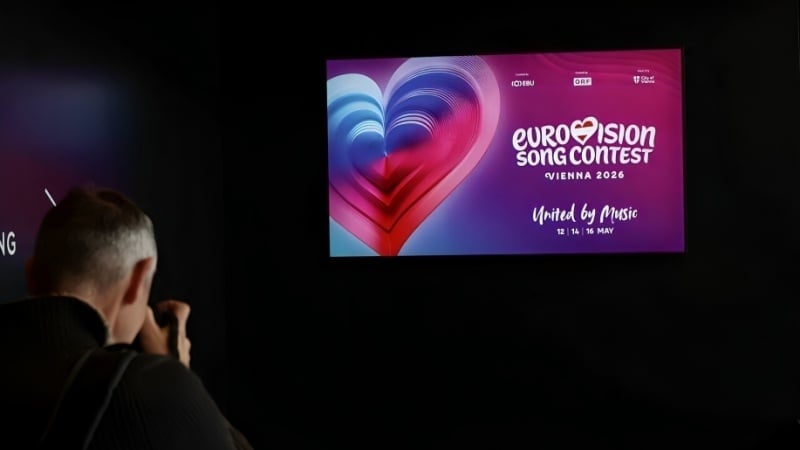
Image from the Eurovision 2026 teaser.
Pars Today – The number of countries boycotting the Eurovision contest in protest of the Zionist regime's participation is on the rise.
According to Pars Today, an increasing number of European countries have decided to boycott Eurovision due to the participation of the Zionist regime representative.
In this context, Iceland’s public broadcasting organization has decided not to participate in the Eurovision Song Contest 2026. Iceland’s withdrawal comes as a protest against Israel’s inclusion in the contest.
Following the decision to allow the Zionist regime to compete in Eurovision 2026, Ireland, Spain, the Netherlands, and Slovenia have also announced boycotts of the event.
The Eurovision Song Contest, one of the world’s largest music competitions, has been held annually since 1956 by the European Broadcasting Union. Originally intended to foster cultural unity among European nations, it has gradually evolved into a global music festival, with even countries outside Europe, such as Australia, participating. Eurovision’s significance goes beyond entertainment; it serves as a platform to showcase a country’s culture, language, and musical identity.
The growing number of countries boycotting Eurovision over the Zionist regime participation is considered one of the most significant cultural and political developments in recent European years. This move not only affects the artistic and entertainment aspects of the event but has also turned it into a forum for expressing political and ethical protests. The reasons and consequences of these boycotts can be summarized in several key areas.
Main reasons for the boycottThe primary reason cited for the boycott is the humanitarian crisis in Gaza and the deaths of tens of thousands of Palestinian civilians. Many countries and public media outlets believe that Israel’s participation in Eurovision ignores basic human principles and global values. For example, national media in Ireland, Spain, the Netherlands, and Slovenia have stated that participating while the Zionist regime is accused of war crimes and human rights violations would be unjustifiable. These countries emphasize that values such as freedom of the press, human dignity, and the right to life should not be sacrificed for the policies of the European Broadcasting Union.
A second reason concerns suspicions of the Zionist regime ’s direct involvement in Eurovision voting and promotion. Reports suggest that Israeli state institutions have attempted to influence the public voting process through targeted advertising and media campaigns. This has undermined trust in the contest’s neutrality, prompting some media outlets to declare that they no longer have confidence in Eurovision’s organization.
Consequences of the boycottThe first consequence of the growing European boycott is the declining credibility and legitimacy of Eurovision. Once promoted as a symbol of European cultural unity, the contest now faces a legitimacy crisis. The withdrawal of several European countries—including Ireland, Spain, the Netherlands, Slovenia, and most recently Iceland—indicates that a significant portion of Europe’s cultural community is unwilling to sacrifice ethical principles for entertainment. This could lead to a sharp decline in global viewership and reduce advertising and sponsorship revenue.
The second consequence is the deepening political divide in Europe. Some countries, such as Germany, have threatened to withdraw from Eurovision if Israel is excluded. This highlights a growing polarization in Europe over Palestine and Israel, which could weaken the cohesion of the European Broadcasting Union and potentially lead to a review of its regulations and management structures.
The third consequence involves broad cultural and social impact. The boycott sends a clear symbolic message to global public opinion: art and culture cannot be separated from politics, especially when human rights violations are involved. This action could resemble past cultural boycotts against apartheid South Africa and further isolate Israel internationally.
The increasing number of countries boycotting Eurovision in protest of the Zionist regime reflects the deep connection between culture and politics. These boycotts not only challenge the contest’s legitimacy but have also become a tool for political and ethical pressure against the Zionist regime . If this trend continues, Eurovision could shift from a European music festival to a stage for political and moral conflicts between countries supporting and opposing the Zionist regime , profoundly affecting its future.