Analysis | U.S. moves to replenish missile stockpiles more rapidly
-
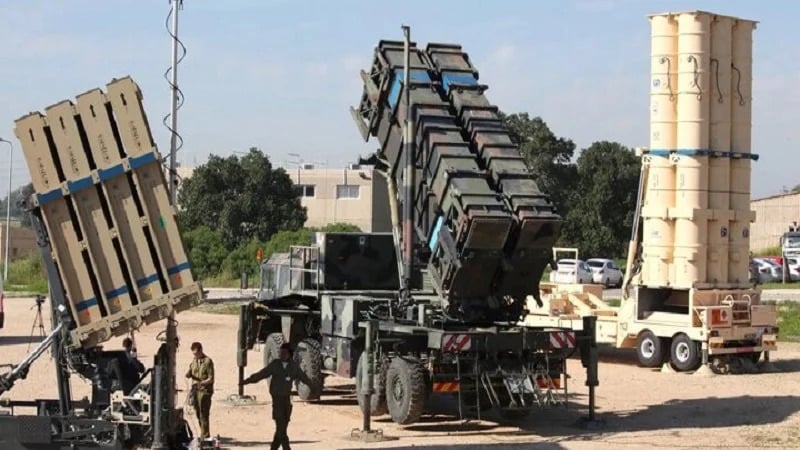
U.S. moves to replenish missile stockpiles more rapidly
Pars Today – The U.S. Department of War (Pentagon) has launched new efforts to accelerate the replenishment of its missile stockpiles.
According to Pars Today, the Pentagon has signed a seven-year contract with Lockheed Martin and L3Harris aimed at significantly increasing production of propulsion systems for the Patriot PAC-3 MSE and THAAD air defense missile systems.
The move, which comes amid the wars in Ukraine and Iran, reflects the Pentagon's determination to rebuild what the report describes as severely depleted strategic missile inventories and overcome supply chain bottlenecks. According to the report, the United States would require at least three years on average to replenish the advanced weapons it used in the war with Iran.
A report by the Center for Strategic and International Studies (CSIS) examined the time required to replace seven key categories of U.S. munitions that, according to the report, were heavily used in the war with Iran and would also be critical in a potential conflict with China. Based on current projections, replenishment timelines are estimated as follows:
- Tomahawk cruise missiles: by early 2031
- THAAD interceptor missiles: by late 2029
- Patriot air defense missiles: by mid-2029
- SM-3 interceptor missiles: by early 2029
- SM-6 missiles: by early 2029
- JASSM cruise missiles: by mid-2027
- PrSM (Precision Strike Missile): by late 2026
The report noted that the situation regarding Patriot interceptors is particularly complex, with the war in Ukraine further intensifying the challenge. In addition to rebuilding its own stockpiles, the United States must also fulfill orders placed by its allies and partners.
Given what the report describes as the critical state of U.S. missile inventories, the Pentagon is seeking to speed up replenishment by awarding new contracts to missile component manufacturers.
Under the agreements, L3Harris is expected to nearly triple production of propulsion systems for the Patriot PAC-3 MSE and quadruple production of key components for the THAAD system.
For the Patriot PAC-3 MSE, the company will increase production of advanced dual-pulse solid rocket motors, Attitude Control Motors (ACMs), and lethality enhancers, which provide the interceptor with the speed, range, and maneuverability needed to engage tactical ballistic missiles, cruise missiles, and enemy aircraft.
Under the THAAD contract, production will also be expanded for the solid rocket booster motor and the Liquid Divert and Attitude Control System (LDACS), which guides the interceptor during the terminal phase of flight.
Lockheed Martin had already signed a contract in January 2026 to increase annual production of Patriot PAC-3 MSEinterceptors from 600 to 2,000 missiles. In June 2026, the company also secured a $35 billion contract to quadruple production of THAAD interceptors.
The primary driver behind these efforts is the significant depletion of U.S. missile stockpiles following two simultaneous wars. According to the analysis, the United States used about half of its THAAD interceptor inventory and nearly half of its Patriot PAC-3 stockpile during the war with Iran. A single Patriot PAC-3 interceptor costs roughly $4 million, and the extensive use of these air defense missiles in recent conflicts has heightened concerns about Washington's ability to continue supplying Ukraine and other allies.
Beyond wartime consumption, the Pentagon is also facing a structural bottleneck in the solid rocket motor supply chain. Because only a limited number of companies manufacture these propulsion systems, they have long represented one of the key constraints on missile production.
Following its acquisition of Aerojet Rocketdyne in 2023, L3Harris has made substantial investments to expand manufacturing capacity. The company is currently constructing around 60 new facilities and plans to add nearly one million square feet of production space.
The Pentagon awarded these long-term contracts as part of its Defense Acquisition Transformation Strategy, which prioritizes multi-year procurement agreements to provide suppliers with stable, predictable demand and encourage long-term investment throughout the defense industrial base.
Overall, the recent contracts with L3Harris and Lockheed Martin indicate that the United States has entered a new phase of rebuilding its defense manufacturing capacity in response to what the report describes as a serious missile stockpile shortfall. According to the analysis, expanding production is essential not only to replenish inventories depleted by the wars in Ukraine and Iran, but also to maintain readiness for future contingencies and meet the defense needs of U.S. allies.
The report concludes, however, that achieving the ambitious goals of tripling and quadrupling production will require sustained investment, reliable long-term funding, and close coordination among the U.S. government, prime contractors, and the broader defense supply chain.