Analysis | U.S. Senate again rejects measure to halt war against Iran
-
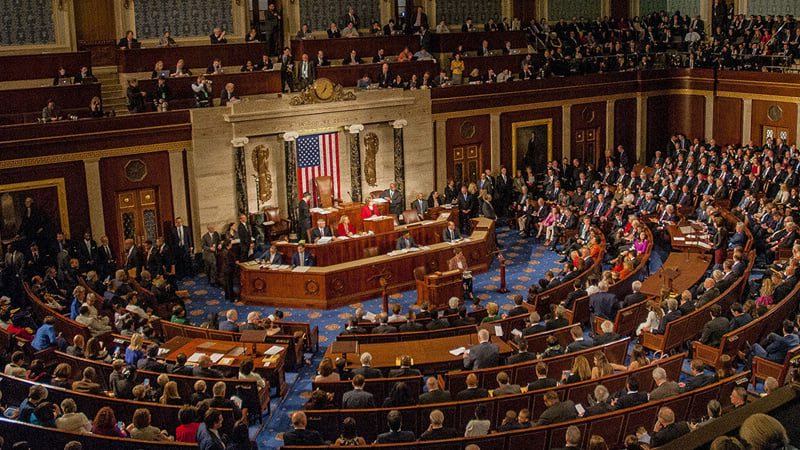
The U.S. Senate
Pars Today – The U.S. Senate has once again rejected a measure aimed at halting the war against Iran.
According to Pars Today, on July 30, the Senate voted down another largely symbolic proposal intended to stop the conflict with Iran. The measure failed by a 50–49 vote, marking the second war powers-related proposal concerning President Donald Trump to be defeated in the Senate within the past two weeks.
Earlier, on July 23, the U.S. House of Representatives passed a similar resolution introduced by Democratic Representative Pramila Jayapal. The measure was approved by a vote of 214 to 208, with four Republicans joining all present Democrats in supporting it. However, the resolution did not pass the Senate.
In June, both the House and the Senate considered war powers resolutions intended to prevent further U.S. military action against Iran without congressional authorization. According to the analysis, after Donald Trump met with Republican senators, the Senate rejected the measure in a subsequent vote. Trump has argued that such resolutions are unconstitutional and has said he would not consider himself bound by them.
The analysis argues that the Senate's rejection of the proposal—by the narrow margin of 50 votes to 49—reflects both the procedural nature of the vote and the deep political divisions in Washington. It notes that senators were not voting directly on the substance of the proposal, but rather on a procedural motion introduced by Democratic Senator Kirsten Gillibrand.
The procedural vote was intended to determine whether the measure should be discharged from the Senate Foreign Relations Committee and brought before the full Senate for debate and consideration.
Therefore, this was not a final vote on whether to stop or continue the war, but rather a vote on whether to continue the legislative process for considering the measure in the Senate.
Nevertheless, the defeat of the proposal by a margin of just one vote highlights the deeply divided political atmosphere in the Senate. The vote showed that opposition to the war is no longer limited to a single party, while support for it is also not entirely a partisan issue.
Three Republican senators — Susan Collins, Lisa Murkowski, and Rand Paul — joined Democrats in supporting the advancement of the measure. In contrast, Democratic Senator John Fetterman sided with Republicans and opposed moving the proposal forward. Notably, Republican Senator and former Majority Leader Mitch McConnell was absent from the vote; had he been present, the outcome would likely have shifted further in favor of opponents of the measure.
This vote was only one of 13 attempts by the U.S. Senate to limit presidential war powers during the conflict with Iran. These efforts reflect growing concerns in Congress that Donald Trump entered a prolonged war with no clear authorization from lawmakers and no defined path toward an outcome.
Interestingly, on June 23, 2026, the U.S. Senate had passed a similar resolution by a 50–48 vote calling for an end to military operations in Iran. Some analysts described that resolution as largely symbolic. However, its passage reportedly drew strong opposition from Trump, as the U.S. administration argued that American forces were not engaged in a “direct conflict” with Iran.
The Senate’s rejection of efforts to limit Trump’s war powers came as public opinion in the United States was reportedly strongly opposed to continuing the war. According to polls, around two-thirds of Americans believe the war is “not worth fighting.” This dissatisfaction comes as the costs of the conflict, according to claims by the U.S. Department of War, had reached $37.5 billion by late July 2026, with the Pentagon requesting additional funding.
The analysis suggests that the U.S. Senate’s opposition on July 30 to the proposal restricting Trump’s war powers regarding Iran was the result of a combination of a sensitive procedural vote and complex political alliances that crossed party lines. It reflects deeper challenges over how the war is being managed and the extent of presidential authority in directing military action.
At the same time, the vote demonstrated that, according to the analysis, for Republican senators, party loyalty and support for Republican President Donald Trump still take precedence over broader U.S. national interests.