Birthday of the Heroine of Karbala
Jan 23, 2018 07:26 UTC
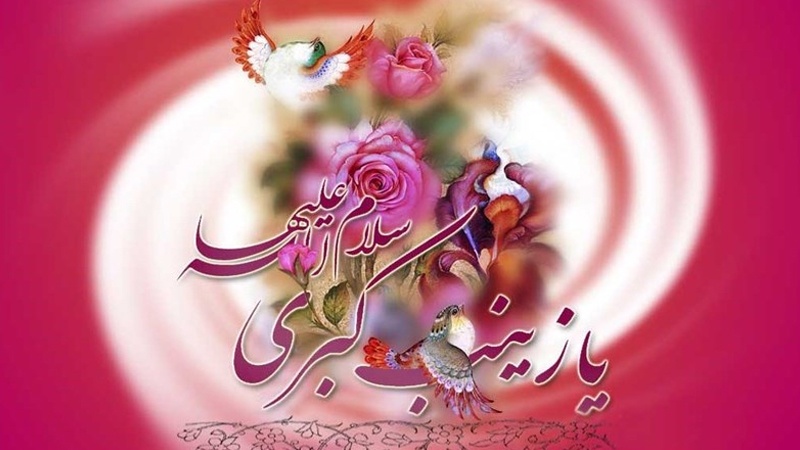
Welcome to a special feature on the auspicious occasion of the birth anniversary of a special lady, whose selfless endeavours, kept alive Islam and humanitarian values.
Today the 5th of the Islamic month of Jamadi al-Awwal is celebrated in the Islamic Republic of Iran as the “Day of the Nurse”, to honour the services to humanity of these paramedics, who strive day and night to ensure the recovery of patients suffering from various diseases. But what is the significance of this particular date for nurses. It is a good question, and the answer is obvious.
Today is that auspicious day in history when the virtuous lady that nursed Islam back to life was born in Medina in the year 6 AH. She was none other the Heroine of Karbala, Hazrat Zainab (peace upon her), the granddaughter of the Almighty’s Last and Greatest Messenger, Prophet Mohammad (blessings of God upon him and his progeny).
It is beyond the power of ordinary mortals to pen the merits and virtues of Hazrat Zainab (peace upon her), whose praise requires a tone as flawlessly eloquent as that of the Holy Qur’an; a heart as soothing as that of the Prophet of Islam; a tongue as expressive as that of her father the Commander of the Faithful, Imam Ali (AS); a soul as celestial as that of her mother, the Noblest-ever Lady Hazrat Fatema az-Zahra (peace upon her); minds as dynamic as that of her brothers, the Leaders of the Youths of Paradise, Imam Hasan and Imam Husain (peace upon them); and a spirit as indomitably pious as that of her nephew, the Survivor of the Tragedy of Karbala, Imam Zain al-Abedin (AS).
The genealogy of Hazrat Zainab (peace upon her) is impeccable. She was a blue blood scion of the monotheist House of Hashem, the noble leader of the Quraysh tribe who was descended from Prophet Abraham’s firstborn son, Prophet Ishmael. If her father Imam Ali (AS) continues to transcend history and all historical developments as the divinely-designated vicegerent of her grandfather, the Prophet of Islam, her mother is the greatest lady born on Planet Earth – the Prophet’s Immaculate Daughter, Hazrat Fatema Zahra (SA). If the Prophet of Islam as the “Mercy unto to the whole creation” was her maternal grandfather, her paternal grandfather was that protector of infant Islam, the Prophet’s beloved uncle and guardian, Abu Taleb – the consanguineous brother of the Prophet’s father Abdullah.
If her maternal grandmother was the “Omm al-Momineen” (Mother of all True Believers), Hazrat Khadija al-Kubra (peace upon her) – also known as Maleekat al-Arab for her fabulous wealth that she all spent for Islam – her paternal grandmother was Fatema bint Asad, the lady who brought up the orphaned Prophet as her own son following the death of the boy’s grandfather Abdul-Mutallib and of his mother Amena bint Wahb.
The merits of Hazrat Zainab (peace upon her), who gave her two youthful sons Aun and Mohammad as sacrifices for the cause of Islam at Karbala, do not end here, in view of the meritorious position in Islam of her husband, Abdullah, the son of her martyred uncle Ja’far at-Tayyaar – who in turn as the first migrant in Islam expounded monotheism and the merits of Prophet Jesus and the Virgin Mary in the court of King Negus of Abyssinia (Ethiopia).
Hazrat Zainab (peace upon her) was too great a lady to rest on family laurels. She explored a distinctive path of her own. That is the reason her virtues merited the title Sani-e Zahra. It means the lady who is second only to her impeccable mother, Hazrat Zahra (peace upon her), who needed an immaculate deputy to demonstrate to the women of the world the greatness of Islam and the practical meaning of piety, virtue and feminine rights. This motivated Hazrat Zainab (peace upon her), to rise to the occasion to carve out an immortal niche for herself in history. Although not infallible like the Prophets, the Imams and her own mother, she set a lasting example of flawlessness that not even the infallible Adam could match because of his slight negligence of Divine Commandment against approaching the forbidden tree while in heaven.
Hazrat Zainab (peace upon her) was the embodiment of practical knowledge. The Iranian scholar Shaikh Saddouq, who flourished over a thousand years ago, writes: “People used to refer to her in [jurisprudential] matters related to the sanctioned and forbidden until [her nephew, Imam] Zain al-Abedin (AS) recovered from his illness).”
In view of this statement, it is knowledge that unravels all realities. In other words there is no aspect of human life that does not require knowledge and awareness. Her father Imam Ali (AS) in his famous advice to his disciple Kumail ibn Ziyad (as mentioned in the Nahj al-Balagha) has beautifully outlined the indispensable nature of knowledge as more worthy than wealth, saying: “Knowledge guards you while you have to guard wealth. Wealth decreases by spending while knowledge increases by spending.”
In Islam, the pursuit of knowledge is not confined to men, but women are also urged to acquire it. Unlike other creeds and cultures, Islam restored the women to their natural status in society with emphasis on learning so that literate and knowledgeable mothers could properly groom their children, the future hope of the society. Thus Hazrat Zainab (peace upon her) was immune from any ignorance and possessed God-given knowledge with certitude. No less a personality than her nephew Imam Zain al-Abedin (AS) says about her: “You are by the grace of God a scholar unschooled by anyone and a sage by connation.”
The 4th Imam, in praise of her eloquent sermons in Kufa and Damascus when in the aftermath of the heartrending tragedy of Karbala the noble prisoners were brought before the Omayyud rulers, has said the realities and finer points of God-given intelligence and knowledge that his aunt demonstrated – a factor which is not easy to grasp by even the most erudite scholars.
Her clarity of language and choice of words in the court of the tyrant Yazid to expound the mission of her brother Imam Husain (AS) the Immortal Martyr of Karbala, is rather unique. History is incapable of doing full justice to her sermons that ensured eternity for the mission of Imam Husain (AS). Scholars, pointing to a single phrase from her memorable sermon in the court of Damascus, say that besides being an indicator of her firm faith, her trust in God, her sincerity of purpose and her dauntlessness under the most adverse circumstances, it shattered to pieces the power and pride of Yazid.
Her bold address to the seemingly proud self-styled caliph: “Ain al-adl yabna at-tulaqa (Is it justice O’ sons of freed slaves)” shook the very foundations of Omayyad rule and exposed its illegitimacy not only for those present at the court, including the Byzantine ambassador, but for all generations to come.
By her use of the word “tulaqa” (that is, plural of “taleeq” or freed slave), Hazrat Zainab (peace upon her) was actually reminding the tyrant Yazid that in 8 AH on the day of the peaceful surrender of Mecca to Muslims ruler how her grandfather the Prophet of Islam, had shown magnanimity to the arch infidel Abu Sufyan, his accursed wife Hind bint Otbah and his equally criminal son Mua’wiyah – the grandfather, grandmother and father of Yazid.
The Messenger of Mercy had demonstrated this clemency to his archenemies despite the fact that Hind bint Otbah had so savagely carved out the liver of the Prophet’s martyred uncle Hamza at the Battle of Ohod and tried to chew it. On the day of the liberation of Mecca, the Prophet had addressed Abu Sufyan, Mua’wiyah and their other idolatrous kinsmen as “tulaqa” or freed slaves, and had spared their lives by accepting their lip service to Islam in order to teach humanity a lasting lesson that what evil such despised ingrates do when opportunity comes their way to strike at the humanitarian principles that they had always opposed.
These ethereal qualities were displayed at their brilliant best by the Prophet’s granddaughter under the most adverse circumstances, in Karbala, in Kufa, in Damascus and in Medina to make Islam triumphant. For instance when the Godless Omayyad governor of Kufa, Obaidollah ibn Ziyad, gloated at the sight of the severed head of Imam Husain (AS), had tried to mock the Prophet’s Household. Hazrat Zainab (peace upon her) calmly replied to his utter exasperation: “I have seen nothing but the Grace (of God)”.
Thus, it is rightly said the immortal saga of Karbala would have remained incomplete if not for the endeavours of Hazrat Zainab (peace upon her).
AS/MG
Tags