Find out more about the Islamic Revolution (17)
Feb 16, 2019 06:11 UTC
Welcome to this week's episode of the series "Find out more about the Islamic Revolution". Today, we study the views of Mansoor Moaddel about Iran's Islamic Revolution.
Mansoor Moaddel is an Iranian theorist in the fields of politics, and religion in West Asia, who has penned numerous books on Iran's Islamic Revolution. His signature book is about Iran and the terms of emergence and culmination of the Islamic Revolution. Moaddel is a professor of sociology at Maryland University. Although his idea and theory is influenced by the occurrence of Iran's Islamic Revolution, there is a Marxist outlook in his theory, which leads him to present a number of standpoints in the analysis of the reasons behind the occurrence of Islamic Revolution that are not compatible as such with the realities of Iran's Islamic Revolution.
Moaddel clearly points out the influence of Iran's Islamic Revolution on the theories on revolutions. In relation to the emergence and culmination of Islamic Revolution, he notes: "In a short phase in time, as of 1977-1979, the Islamic Revolution swiftly grew, surprising foreign observers and revolutionaries, both. The emergence and victory of Islamic Revolution even astounded sociologists. The acceleration which the Islamic Revolution experienced; the solidarity of masses of people, who demanded the ouster of the former Iranian dictator, Shah; and the growing importance and significance of the religious ideology within the framework of the Islamic movement, were astounding."
He also underscores that Iran's Islamic Revolution occurred as the result of growth of the dialog of a Shia Revolution as the ideology of the opposition front. In fact, the growing dialog of Shia Revolution turned the economic problems and social discontents of the 1970s into a revolutionary crisis. The symbolic structures and religious beliefs assisted the revolutionary mobilization of people against the former despotic regime and provided an effective communication channel among the participants in the Islamic Revolution.
Moaddel's outlook about the Shia Revolution dialog is right, but he claims that Iran, in the pre-revolution era, was not facing a major political crisis. Meanwhile, the university professor, Dr. Mohammad Rahim Ayouzi, criticizes this aspect of Moaddel's outlook, pointing out the suppression of masses of people, and the presence of numerous political prisoners in Iran, in the pre-revolution era, as some of the manifestations of severe political crisis under the repressive rule of Pahlavi despotic regime.
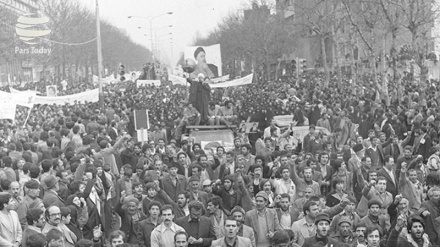
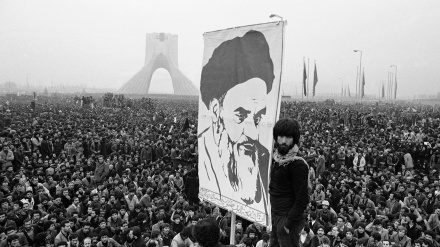
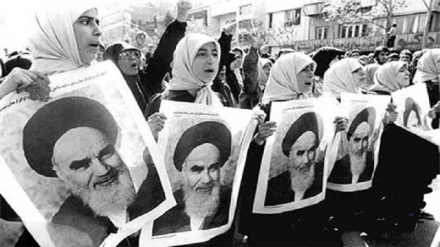
Mansoor Moaddel puts emphasis on the role of divine religion of Islam in the ouster of Pahlavi dictatorial regime and the occurrence and victory of Iran's Islamic Revolution. He notes that one of the unique features of Islamic Revolution is the presence of religious spirit and extensive usage of religious concepts, such as Jihad, martyrdom, selflessness, the epic of Ashura, the movement of the Third Infallible Imam of the Prophet of Islam's Household, Imam Hussein (AS), and the awaited reappearance of the Imam of the Age, Imam Mahdi (May God hasten his reappearance). He also adds that the demonstrations of masses of people against the former dictatorial regime mainly began in holy months within mosques.
Moaddel states that the importance of Shia School of Thought in the Islamic Revolution has turned ideology into the talking point of the theories on revolution and has shown that ideology plays a significant role in the occurrence of Islamic Revolution and within the process of revolution. Moaddel says that revolutionary measure is shaped by revolutionary ideology, with the economic and political factors playing a secondary role. As the Islamic Revolution has shown, the groups who are successful are the ones whose actions are compatible and in line with the logic of ideology. Hence, Moaddel, similar to majority of theorists, who have presented theories on the Islamic Revolution, considers a major role for ideology, as a cultural element, in the emergence and culmination of the Islamic Revolution.
Some of the viewpoints of Mansoor Moaddel in relation to the emergence of Islamic Revolution have been strongly criticized. Moaddel wrongly claims that "Iran's Islamic Revolution led to major bafflement in many of the existing theories on revolutions. Iran's Islamic Revolution took place while the then government was not broken down; while there was no major economic or political crisis; and in the absence of necessary organizational sources within the participating groups or strata for the ouster of the then government."
Meanwhile, the university professor, Dr. Mohammad Rahim Ayouzi, criticizes this view, and points out the fragility of this theory when it comes to political sociology, given that "revolution is defined as the collapse of the social system, which also covers the political system, resulting in a revolution. This collapse of the regime or government is one of the manifestations of revolution, its advancement and victory."
One of the other wrong viewpoints of Mansoor Moaddel in regard to Iran's Islamic Revolution is evident, when he baselessly claims that "the Islamic-revolutionary dialog was not a pre-existing ideology, reliant upon Shia political theory or the institutionalized growth of Ulema."
This view shows Moaddel's insufficient understanding of the sacred religion of Islam; given that the Shia political theory maintains age-old historical roots, and many Ulema and theologians founded the Shia political theory in the pre-revolution era, with the Islamic Revolution expanding Shia political theory.
MR/MG
Tags