Hazrat Fatema Zahra (SA), the perennial spring of Kowthar
Feb 26, 2019 04:48 UTC
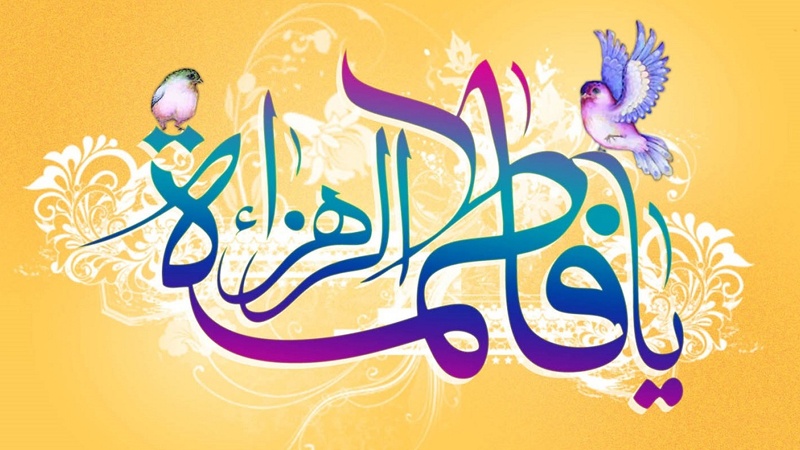
Salaam and heartiest congratulations to you on a very auspicious day. Today is the blessed 20th of the month of Jamadi as-Sani, the day when the city of Mecca was enlightened with the birth of a radiant daughter to the Almighty’s Last and Greatest Messenger, Prophet Mohammad (blessings of God upon him and his progeny).
She was none other than Hazrat Fatema az-Zahra (peace upon her), the Noblest ever lady that graced Planet Earth, and whose birth anniversary is celebrated in the Islamic Republic of Iran, Iraq, Lebanon, Bahrain, and many other places around the world as “Mother’s Day” and “Women’s Week”, since besides being the Lady-Par-Excellence for all women to emulate, she was the Perfect Mother to her children, the Impeccable Daughter to her father, and the Immaculate Wife to the Commander of the Faithful Imam Ali ibn Abi Taleb (AS).
Before we present you an exclusive feature on this glorious occasions, we recite to you Surah Kowthar of the Holy Qur’an which God Almighty revealed to the Prophet to ascertain the prime position of Hazrat Fatema (peace upon her) as the Perennial Spring of Munificence, while the arrogant and the ignorant who had prided on male offspring, were to become issueless in course of time with no trace of their progeny or their property.
“Indeed, We have granted you Kowthar;
So pray to your Lord, and offer sacrifice [a camel];
“Indeed, it is your enemy who is without posterity."
As we said, today, the 20th of Jamadi as-Sani, is the day when God granted Kowthar or Perpetual Abundance to His Last and Greatest Prophet, in the form of a blessed daughter, whose offspring that have multiplied and spread all over the globe, ensures the continuity of the progeny of the Seal of Divine Messengers.
She is Fatema az-Zahra (peace upon her), who was conceived of the Fruit of Paradise that God gave the Prophet to eat during his Me'raj (or ascension) to the highest points in the ethereal heavens and back again to Planet Earth in a fraction of a single night. It is thus clear that the Me'raj was a physical journey transcending time and space, and certainly not a dream or spiritual ecstasy experienced by the Prophet, as the weak of faith conjecture.
Unfortunately, there are some sceptics who try to cast doubts on the reference to Hazrat Fatema (peace upon her) in the opening Ayah of Surah Kowthar that we recited to you, and instead they like to restrict Kowthar to the spring on the Day of Resurrection from which only the faithful will quench their thirst.
It again shows the fickleness of faith of such persons, if not outright hypocrisy or disbelief. In view of wordings of the last Ayah of Surah al-Kowthar, the reference is clearly to the birth of the propitious daughter and continuation of abundance of progeny to keep alive forever the lineal descent of the Prophet of Islam, while persons like Aas bin Wa'el who had prided on male issue and mocked at God's Messenger on the death of his infant sons, would be long cut off from any issue.
No wonder, the Islamic Republic of Iran and the faithful throughout the world, mark the 20th of Jamadi as-Sani as Mother's Day and Women's Week in honour of the lady, who as the wife of Imam Ali (AS), the person whose merits are second only to the Prophet, gave birth to such exemplary sons as Imam Hasan and Imam Husain, and equally virtuous daughters like Hazrat Zainab and Hazrat Omm Kulthoum (peace upon them) – all of whom who played immortal roles in the history of humanity.
In other words, the Almighty has blessed Prophet Mohammad (blessings of God upon him and his progeny) with infinite favours, both in this transient world where he was sent to salvage mankind, and in the Hereafter where his intercession guarantees a drink of the limpid waters of Kowthar and entry into the blissful peace of Paradise.
For his part, the "Mercy unto to the creation" made clear at every step that the virtues of his daughter, the Lady of Paradise – as Muslims unanimously hail her – are not restricted to the Day of Resurrection, but as the pivotal figure of the blessed group called Ahl al-Bayt by God in the holy Qur'an, cover all aspects of our life and faith, as is evident by Ayah 33 of Surah al-Ahzaab.
"Indeed, Allah desires to keep away uncleanness from you Ahl al-Bayt, and preserve you thoroughly purified."
Time does not permit us to go into details of this Ayah at whose revelation the Prophet assembled under his cloak Hazrat Fatema, Imam Ali, Imam Hasan, and Imam Husain (peace upon them) – and no one else besides. The subsequent entry of this specific group – again no one else besides – on the field of the historic Mubahela with the Christians of Najran, confirm the fact that no other woman except the Prophet's daughter is mentioned in this particular Ayah.
In view of these undeniable facts regarding the paragon-par-excellence of all feminine virtues, isn't it a blasphemous idea, if out of the lingering tribal prejudices of the Days of Jahiliyya, one were to associate with the Ahl al-Bayt, the Prophet's wives, who were neither born pure and clean of any worldly impurity, nor many of them remained unpolluted from the political crimes that plagued the ummah after the passing away of the Prophet?
Thus, it is Fatema (peace upon her), the Perennial Kowthar of Munificence that cleanses the faithful of any worldly blemishes and keeps alive their faith for the eventual journey to the Spring of Kowthar and to Paradise.
So, instead of depriving ourselves of the blessings of God by blindly following lies and conjecture, let us sincerely stick to the brilliant path of guidance blazed for mankind by Fatema (peace upon her), her husband, her sons, and the Infallible Imams of her progeny, to ensure a virtuous life in this world and the blissful bounties of Kowthar in afterlife.
Thanks to Islam, and the status of Hazrat Fatema Zahra (peace upon her), all negative notions regarding daughters were changed for good. For the first time in history, women found themselves placed on the pedestal of dignity and honour, since the laws of God neither allow the abuse and commercialization of women as objects of carnal desire, nor do they impose excessive burden on the parents regarding dowry. At the same time, women have the right to education, own property, and chose the spouse.
The Hijab grants women freedom and liberty in the real sense of these terms, and with it dignity and respect in society that gives meaning to life. As the other half of the mankind, it is the woman who, in addition to providing peace and solace to the husband, plays the fundamental role in building a sound and healthy society by bringing up children in the proper manner, on the basis of faith and moral values – factors that rule out immorality and with it any agonizing thoughts for parents.
That is the reason Prophet Mohammad (blessings of God upon him and his progeny) told one of the neo Muslim Arabs who frowned on receiving news of the birth of a daughter to him: “The earth bears her, the heavens shade her and the Almighty gives her food. For you, she is like a flower, smell her fragrance”.
In order to remove misconceptions from the society, on another occasion, he said: “Twelve graces descend over the person’s house where there are daughters. Heavenly blessings are showered on that house and angels visit that house for a glimpse”.
The Almighty's Last Messenger was not a mere preacher but a practical demonstrator of whatever the All-Wise Creator revealed to him for the good of mankind. He set the personal example and it is for this reason the holy Qur'an calls him the "Excellent Exemplar".
It was the habit of the Prophet to salute his daughter every morning at the time of the Fajr Prayer. The Prophet showed the lofty position of women in Islam. He used to stand to his feet whenever his Immaculate Daughter entered his presence, and in order to show her prime position, he would make her sit on his own place. She was the last person, whom the Prophet would bid farewell when leaving Medina and the first person he would greet on arrival from his journey.
Peace upon Hazrat Fatema. Peace upon the Lady who continues to be the paragon of virtue for all aspiring women.
AS/MG
Tags