Artists' view on migration (1)
Jun 18, 2019 04:18 UTC
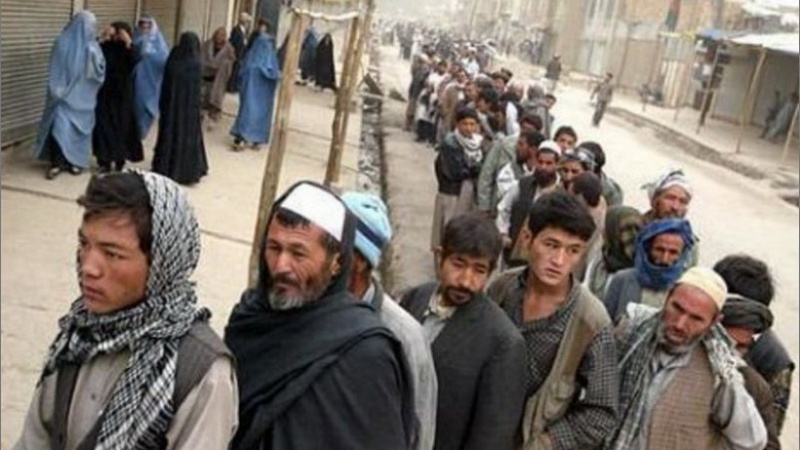
Although the phenomenon of migration has persisted through the 20th century and laws had been ratified for refugees after WWII, it had not been paid due attention in the cinema.
But with the outbreak of numerous wars and broad homelessness since the start of the 21st century, films and documentaries have been made about this issue at an unprecedented speed. In a few programs, we will dwell upon the phenomenon of migration through the eyes of artists.
Migration means displacement of people from one place to another for work or residence. People usually migrate to escape from unpleasant conditions such as poverty, food shortage, natural disasters, war, unemployment and insecurity. Attractive conditions such as more health facilities, better education, higher income and better housing can also be alluring. According to UN figures, there are nearly 258 million immigrants in different countries. This amounts to almost 3.4 % of the world population.
But the other aspect of migration is facing more difficult conditions or even death in the course of migration. Approximately 3400 migrants and asylum seekers lost their lives in 2018.
In addition, the anti-migration policies of the Trump administration are another stigma on the reputation of the United States. Trump's anti-migration policies led to the separation of thousands of children from their parents and put the innocent children in cages.
The US president recently announced his country's migration policies in 2019, which will be much harsher than the past. Reacting to the protests against his inhumane policies, he said, "I've built a lot of walls, I have a lot of money and I have built a lot of walls."
The only thing has been to replace the new frontier barriers with the previous ones. Even before running for president, Trump used to insult immigrants and always sought to stop migration.
Alejandro González Iñárritu, Mexican film director, producer and screenwriter, was the head of the 2019 Cannes Film Festival jury and one of the artists who have protested to Trump's acts. In a news conference, he declared his opposition to building walls on US-Mexico border, saying, "It is very wrong and oppressive to prevent the entry of poor people who escape poverty and even risk their life. Many lose their lives on the course of migration. They are either lost on the deserts or drowned in the sea and ocean. We all know how the story will end if we continue to do this. We think we are advancing in the age of technology and social media, but any tweets published by Trump will cause isolation and many threats."
In addition to the anti-American atmosphere of the Cannes Film Festival, these days in Italy and at the Venice Biennale exhibition, artists have exhibited their works in protest against the migration policies of the US and some other countries. The drowned boat of migrants, as the symbol of global migration crisis, has been displayed by the Swiss artist Christoph Buchelin at Venice Biennale. This boat was drowned on April 18, 2015 near Lampdosa Island, Italy while carrying over 1000 immigrants. This work which is called 'Our boat' and has now turned into an art memorial.
The spokesman of UN High Commissioner for Refugees (UNHCR), Carlotta Sami, stated, "I saw the dead in the boat, 24 young boys with staring eyes. This happened at dawn in April 2015 at Catania port. I later saw that monstrous boat came out of the water with 800 corpses. There was a sad moment that will always linger in my mind. "
The fifty-eighth session of the Venice art Biennale, which began on May 11, will continue until November 24. But the exhibition that has begun simultaneously has also focused on the issue of refugees and asylum seekers. The theme of this biennale, which is the world's largest art festival, is "Maybe you live in an attractive time".
The organizer of the exhibition Francesco Jubilee says: "The issue that the exhibition poses is that if we do not provide the opportunity for asylum seekers and immigrants, we will lose many of the 21st century artistic talents.'
Migration is one of the human phenomena which does not belong to a specific time, because it has played a determining role in construction of the early societies throughout history. These effects have had various dimensions, including intellectual, religious, economic, political, cultural, and even scientific. One of the most effective domains of migration is literary and artistic imagination. There has long been a deep connection between imagination and migration, and many of the great literary or artistic works have been affected by migration or migrants. Thus, migration is not merely a geographic event. Issues like identity, personality, alienation, homesickness, nostalgia, language, and many other issues are the constituents of the artist's work.
These days, the news photos from asylum seekers from West Asia, who are banned entry into Western Europe, have undermined the impact of many other photos and films. Publication of the pictures of terrified children clinging to their mothers' lap and desperate eyes of parents looking for a bottle of water or a shelter, makes the event more tangible.
Now let us have a look at the trend of migration in cinema since early 20th century.
The melodrama "The Immigrant" produced by Charles Chaplin in 1917 starts with images of a ship carrying migrants heading to the US in a stormy sea. With the arrival of the little stray character, the bitterness of the subject is balanced with the sweetness of his personality. The film first shows the dangers of reaching the destination, and then it displays the misery of life and finding work at this final destination. In both parts, Chaplin elaborates that life for an immigrant is an endless struggle, and no paradise is waiting for him at the destination.
The film is like a documentary: it contains a close look at life in New York and the Statue of Liberty – which is actually the symbol of slavery and arrogance of the US across the world. Then there is a sigh of relief that is breathed after the brutality of the police. The little stray in this film is a role model of immigrants in the cinema: hard-working, fragile, imperiled and determined to reach the goal. Chaplin says about the film: None of the films I've made have affected me like this one.
The Immigrant is an extraordinary comedy that is likely to remain with the scene where the migrants are staring at the Statue of Liberty. Since then, this scene has been repeatedly imitated in various films.
The film Casablanca produced by Michael Kortiz in 1942 is another work which has focused on the issue of immigration. While most viewers remember the film as a work of romance, Casablanca actually is an interesting work on migration from the war-torn regions of Europe during the Second World War. The people at the café of Humphrey Bogart are waiting to fly with one of the flights from Casablanca to the US while they have no idea about what is going to happen for them.
The merger of the theme of war and love is one of the most bitter and at the same time beautiful features which are seen in Casablanca. The biting dialogues of the film, especially during the scenes of war, give rise to an indescribable experience of the power of dialogue in the cinematic world. Most of the secondary actors in the film were political refugees and immigrants who had fled the Nazis during the war. Dear listeners we will continue our discussion in the next program.
FK/RM/ME
Tags